Old Maps of Old Tappan, New Jersey for Genealogy
Trace your family roots with 87 historic maps of Old Tappan. These high-res maps reveal old neighborhoods, homesites, landmarks, and streets — helping you uncover where your ancestors lived and how the area evolved over time.
- Explore historic neighborhoods: Identify where your relatives may have lived in the 1800s or 1900s.
- Compare maps over time: Trace the changes in streets, buildings, and landmarks for multi-generational research.
- Perfect for genealogy & ancestry research: Used by family historians and researchers to map out lineage and migration.
These maps are an incredible resource for exploring your personal connection to Old Tappan's past.
Old Tappan, NJ maps
(87)- 1888 Map of Paterson
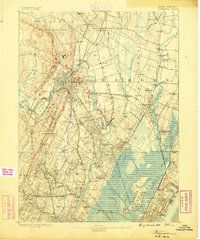 1888 Paterson1888 Print · USGSNortheastern New Jersey in the late nineteenth century was a complex network of industrial canals and rising commuter towns. Genealogists and historians can trace the Morris Canal, the Jersey City Waterworks, and early rail lines through Hackensack and Paterson.
 - 1891 Map of Ramapo
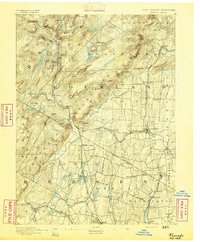 1891 Ramapo1891 Print · USGSThe Ramapo Mountains and northern New Jersey borderlands appear here in the decade before the turn of the century. Genealogists and local historians can trace the early rail networks through Sloatsburg and Suffern, or locate family sites in Pearl River and Ramseys.
 - 1891 Map of Harlem
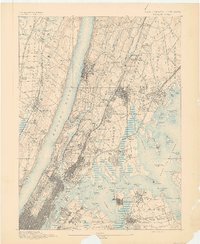 1891 Harlem1891 Print · USGSUpper Manhattan and the Bronx met the burgeoning towns of Westchester and Bergen County in the late 1800s. Researchers can trace the path of the Croton Aqueduct, locate the historic site of Bulls Ferry, and explore the early rail-connected villages of Schraalenburgh and Pelhamville.
 - 1892 Map of Paterson
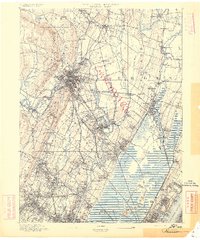 1892 Paterson1892 Print · USGSNorthern New Jersey and the industrial core of Paterson are seen here in the late nineteenth century as rail and water infrastructure expanded. Trace the development of early utility systems like the Jersey City Waterworks or explore the rail lines of the Lodi Branch R.R. and West Shore Railroad.
 - 1892 Map of Tarrytown
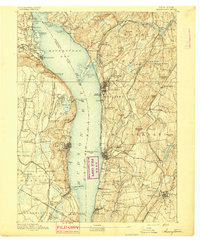 1892 Tarrytown1892 Print · USGSThe Hudson River valley in the late nineteenth century was a corridor of engineering and industrial growth. Researchers can trace the path of the Croton Aqueduct, locate the State Prison at Sing Sing, or find family names near Merritts Corners and Samsondale.
 - 1893 Map of Tarrytown
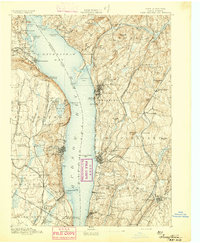 1893 Tarrytown1893 Print · USGSThe Hudson Valley was a powerhouse of transit and utility in the late 1800s, serving as the corridor for New York’s water and rail networks. Genealogists can trace family names and old landings from Haverstraw to Tarrytown, including features like the State Prison and the massive Croton Dam.3 unique versions available
 - 1893 Map of Ramapo
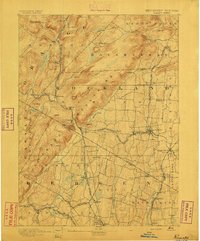 1893 Ramapo1893 Print · USGSThe Ramapo Valley and the New Jersey borderlands come alive in the late Victorian era, showing a landscape defined by mountain passes and a dense rail network. Genealogists can trace family names and early homesteads in Johnsontown, Eagle Valley, and Pearl River before modern development changed the region.6 unique versions available
 - 1897 Map of Harlem, 1956 Print
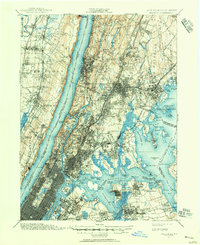 1897 Harlem1956 Print · USGSUpper Manhattan and Westchester thrive at the end of the nineteenth century as rail lines and reservoirs reshape the landscape. Trace early neighborhoods and landmarks like Schraalenburg, Woodlawn Cemetery, and the Jerome Park Reservoir.4 unique versions available
 - 1898 Map of Harlem
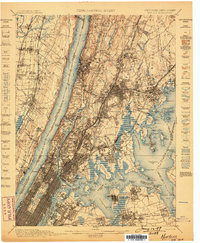 1898 Harlem1898 Print · USGSThe northern reaches of the city and its surrounding suburbs are shown in late-Victorian detail as rail lines expanded across the Hudson. Researchers can trace the early layouts of Woodlawn Cemetery, the site of Grants Tomb, and the fortifications at Fort Schuyler.
 - 1898 Map of Paterson
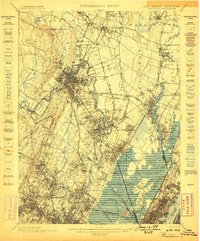 1898 Paterson1898 Print · USGSNorthern New Jersey's industrial and rail corridors are captured here in the late nineteenth century, from the silk mills of Paterson to the Hackensack marshes. Genealogists can locate family sites near Laurel Grove Cemetery, the Morris Canal, and early villages like Wortendyke.
 - 1900 Map of Passaic
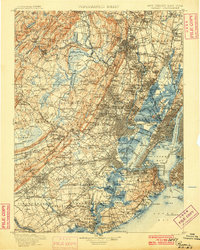 1900 Passaic1900 Print · USGSNorthern New Jersey and the New York Harbor are captured here at the close of the nineteenth century, showing a landscape defined by rail, river, and coastal defense. Researchers can trace the original path of the Morris Canal, locate Seton Hall College, and explore the batteries at Fort Wadsworth.
 - 1900 Map of Paterson
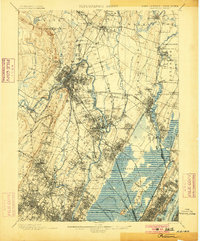 1900 Paterson1900 Print · USGSNortheastern New Jersey at the turn of the century shows a landscape defined by the Morris Canal and a dense network of early railroads. Researchers can trace ancestral roots through vanished rail stops and sites like Laurel Grove Cemetery, Wortendyke, and Sicomac.
 - 1900 Map of Harlem
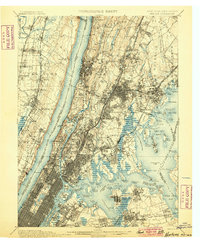 1900 Harlem1900 Print · USGSUpper Manhattan and the surrounding boroughs are shown at a pivotal moment of growth before the mid-century building boom. Genealogists can trace family footprints through the streets of Yonkers Park or locate ancestors in the sprawling Woodlawn Cemetery.16 unique versions available
 - 1902 Map of Tarrytown
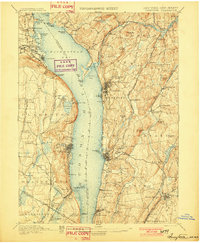 1902 Tarrytown1902 Print · USGSThe Hudson River valley at the turn of the century shows a landscape of busy river landings and nascent suburbs. Genealogists and historians can trace old homesteads and landmarks like Waldberg Landing, the State Prison at Ossining, and the Croton Aqueduct.11 unique versions available
 - 1903 Map of Paterson
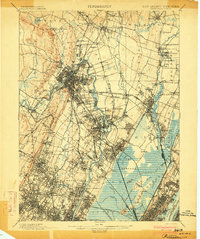 1903 Paterson1903 Print · USGSNorthern New Jersey's transition from an industrial river valley to a dense rail-connected region is captured here just after the turn of the century. You can trace the path of the Morris Canal, locate the old Dundee Dam, or find early settlements like Peetzburg and Etna.8 unique versions available
 - 1905 Map of Passaic
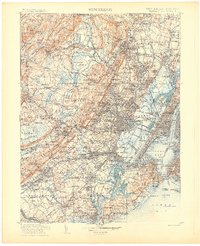 1905 Passaic1905 Print · USGSNorthern New Jersey and Staten Island appear here at a pivotal moment of early 20th-century growth and industrialization. Researchers can trace the development of transit hubs like Convent Sta. or locate legacy landmarks including Hillside Cemetery and the Moravian Cemetery.4 unique versions available
 - 1910 Map of Ramapo
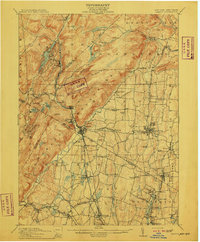 1910 Ramapo1910 Print · USGSThe Ramapo Valley at the turn of the century served as a vital transit corridor between New York and New Jersey, dominated by rail lines and river industry. Genealogists and local historians can trace the foundations of Sloatsburg, Suffern, and Pearl River, alongside landmarks like the Ramapo Cem. and the Powder Works.6 unique versions available
 - 1931 Map of Ramapo
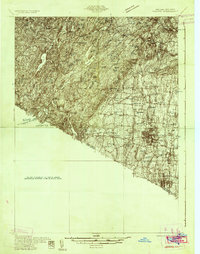 1931 Ramapo1931 Print · USGSRockland County in the late twenties and early thirties shows a unique mix of expanding suburban rail towns and state park wilderness. Genealogists and historians can trace Letchworth Village, the old Hogan Kamp Mine, and early schools like Bardonia Sch.3 unique versions available
 - 1934 Map of Park Ridge
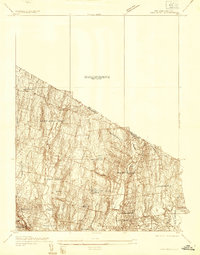 1934 Park Ridge1934 Print · USGSBergen County settlements were evolving into distinct residential hubs during the mid-1930s. Researchers can trace early infrastructure and local landmarks like Villa Maria Clare, the Western Reservoir, and the estates of Saddle River.
 - 1934 Map of Hackensack
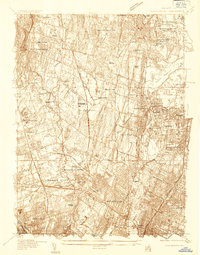 1934 Hackensack1934 Print · USGSBergen County suburban expansion is in full swing during the mid-thirties as rail lines and early state highways reshape the landscape. Trace family history through numerous burial grounds like Valleau Cemetery or locate landmarks such as the Radburn-Fairlawn Sta and Oradell Reservoir.
 - 1937 Map of Nyack
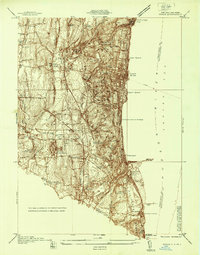 1937 Nyack1937 Print · USGSRockland County’s riverfront and wooded interior are shown here in the late 1930s as the rail-and-river economy remained in full swing. Genealogists and historians can trace family locations near the Rockland State Hospital, Piermont, and the St Catharines Cem.
 - 1937 Map of Tarrytown
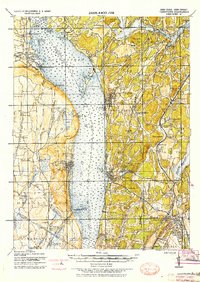 1937 Tarrytown1937 Print · USGSThe Hudson River valley during the 1930s serves as a busy corridor of rail, water, and infrastructure. Genealogists and local historians can trace the old landings at Waldberg Landing, the grounds of the State Prison in Ossining, and the rail lines through Nyack.
 - 1938 Map of Ramapo
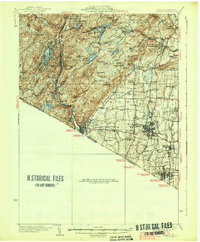 1938 Ramapo1938 Print · USGSRockland County in the late 1930s is revealed here as a landscape of institutional campuses, rail-side villages, and emerging parklands. Genealogists can trace family connections at Letchworth Village, St Agatha Home, and vanished hamlets like Sandyfield or Johnsontown.3 unique versions available
 - 1939 Map of Park Ridge
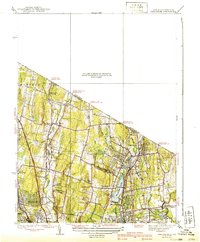 1939 Park Ridge1939 Print · USGSNorthwestern Bergen County and the New York state line are captured here during a period of steady suburban development along the rail lines. Trace the early layout of Montvale and Park Ridge or locate landmarks like Zion Tabernacle and Woodcliff Lake.2 unique versions available
 - 1940 Map of Hackensack
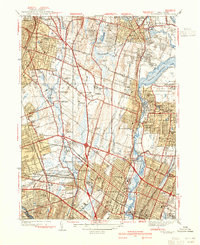 1940 Hackensack1940 Print · USGSBergen County suburban life comes into focus just before the mid-century boom, showing the transition from towns to dense residential grids. Genealogists can trace family plots at Riverside Cemetery or locate early schools like Steuben Sch and Willard Sch.3 unique versions available
Showing maps 1-25 of 87
Top cities near Old Tappan
- New York historical maps
- North Hempstead historical maps
- Yonkers historical maps
- Ramapo historical maps
- Paterson historical maps
- Greenburgh historical maps
See more
Frequently asked questions
- What are the different types of historical maps available for Old Tappan?
- What is the oldest map of Old Tappan?
- Where can I purchase historical maps of Old Tappan for my home or office?
- Where can I download high-res historical maps of Old Tappan?
- Are there historical topographic maps available for Old Tappan?
- Is there historical aerial imagery available for Old Tappan?
- Where are historical maps of Old Tappan sourced from?