Old Maps of Newark, New Jersey for Hiking & Exploration
Hike through history with 57 historic maps of Newark. Explore old trails, ghost towns, and forgotten backroads — perfect for outdoor adventurers and local explorers.
- Rediscover forgotten places: Map out old mining camps, roads, and footpaths that no longer exist on modern maps.
- Layer with modern tools: Combine with LiDAR or satellite views to plan hikes through historical terrain.
- Made for exploration: Popular among hikers, overlanders, and local history lovers.
Use these maps to find adventure and explore the hidden past of Newark.
Newark, NJ maps
(57)- 1888 Map of Plainfield
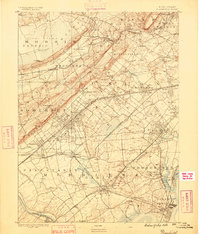 1888 Plainfield1888 Print · USGSNorth-central New Jersey is captured in the late nineteenth century as the rail network rapidly transformed small villages into vital industrial hubs. Genealogists and local researchers can trace the early footprints of Perth Amboy, Metuchen, and Dunellen alongside vanished local place names like Samptown.
 - 1888 Map of Paterson
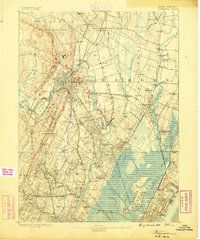 1888 Paterson1888 Print · USGSNortheastern New Jersey in the late nineteenth century was a complex network of industrial canals and rising commuter towns. Genealogists and historians can trace the Morris Canal, the Jersey City Waterworks, and early rail lines through Hackensack and Paterson.
 - 1892 Map of Paterson
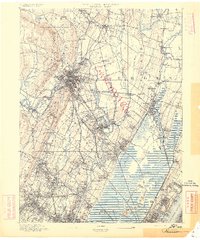 1892 Paterson1892 Print · USGSNorthern New Jersey and the industrial core of Paterson are seen here in the late nineteenth century as rail and water infrastructure expanded. Trace the development of early utility systems like the Jersey City Waterworks or explore the rail lines of the Lodi Branch R.R. and West Shore Railroad.
 - 1893 Map of Plainfield
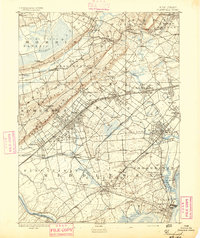 1893 Plainfield1893 Print · USGSIn the late nineteenth century, the corridor between the Orange Mountains and the Raritan River was rapidly transforming into a dense rail-and-commuter network. Trace the early footprints of settlements like Feltville and Chatham, or locate vanished industries near Branch Mills and Ash Swamp.2 unique versions available
 - 1898 Map of Plainfield
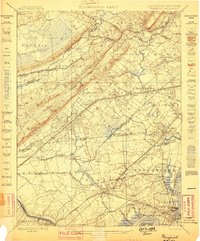 1898 Plainfield1898 Print · USGSNorth-central New Jersey at the close of the nineteenth century shows a landscape defined by the ridges of the Watchung Mountains and a rapidly expanding rail network. Genealogists and local historians can trace early property patterns and settlements like Feltville, Connecticut Farms, and the estates near Baltusrol.2 unique versions available
 - 1898 Map of Staten Island
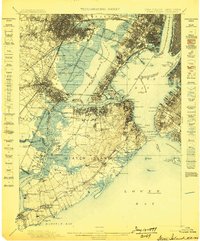 1898 Staten Island1898 Print · USGSGreater Staten Island and the industrial shores of New Jersey are captured during the peak of the Victorian maritime era. Genealogists can trace early neighborhood boundaries and landmarks like Moravian Cemetery, the Morris Canal, and the vanished industry of Linoleumville.
 - 1898 Map of Paterson
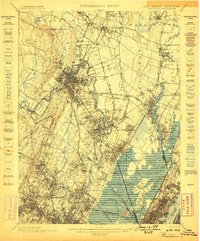 1898 Paterson1898 Print · USGSNorthern New Jersey's industrial and rail corridors are captured here in the late nineteenth century, from the silk mills of Paterson to the Hackensack marshes. Genealogists can locate family sites near Laurel Grove Cemetery, the Morris Canal, and early villages like Wortendyke.
 - 1900 Map of Passaic
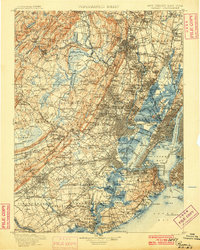 1900 Passaic1900 Print · USGSNorthern New Jersey and the New York Harbor are captured here at the close of the nineteenth century, showing a landscape defined by rail, river, and coastal defense. Researchers can trace the original path of the Morris Canal, locate Seton Hall College, and explore the batteries at Fort Wadsworth.
 - 1900 Map of Paterson
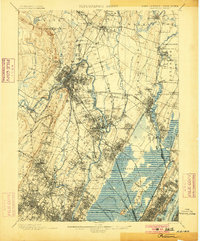 1900 Paterson1900 Print · USGSNortheastern New Jersey at the turn of the century shows a landscape defined by the Morris Canal and a dense network of early railroads. Researchers can trace ancestral roots through vanished rail stops and sites like Laurel Grove Cemetery, Wortendyke, and Sicomac.
 - 1900 Map of Staten Island
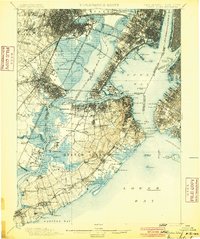 1900 Staten Island1900 Print · USGSThe New York and New Jersey harbor comes alive in the late Victorian era, showing Staten Island when small villages and defensive forts still defined the coastline. Trace family roots and vanished landmarks through Fort Wadsworth, the Morris Canal, and historic settlements like Rossville or Tottenville.10 unique versions available
 - 1903 Map of Paterson
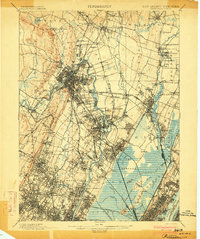 1903 Paterson1903 Print · USGSNorthern New Jersey's transition from an industrial river valley to a dense rail-connected region is captured here just after the turn of the century. You can trace the path of the Morris Canal, locate the old Dundee Dam, or find early settlements like Peetzburg and Etna.8 unique versions available
 - 1905 Map of Plainfield
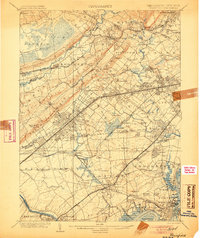 1905 Plainfield1905 Print · USGSNorth-central New Jersey at the turn of the century shows a landscape transitioning from rural townships to a bustling suburban and industrial network. Researchers can trace early property patterns and rail expansion through Great Swamp, Washington Rock, and Baltusrol.6 unique versions available
 - 1905 Map of Passaic
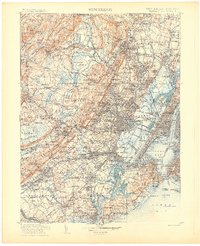 1905 Passaic1905 Print · USGSNorthern New Jersey and Staten Island appear here at a pivotal moment of early 20th-century growth and industrialization. Researchers can trace the development of transit hubs like Convent Sta. or locate legacy landmarks including Hillside Cemetery and the Moravian Cemetery.4 unique versions available
 - 1921 Map of Plainfield
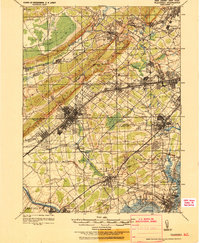 1921 Plainfield1921 Print · USGSNew Jersey's industrial corridor meets the ridges of the First and Second Mountains in the early twenties. Genealogists can trace family names and small settlements like Raritan Landing, Smalleytown, and the grounds of the New Jersey Reformatory.
 - 1942 Map of Passaic
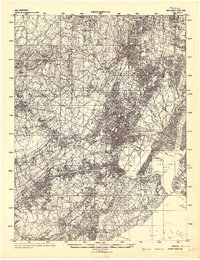 1942 Passaic1942 Print · USGSNorthern New Jersey and New York harbor appear in detail at the start of the war, showing a landscape of burgeoning suburbs and vital industry. Trace family roots and local history across the Passaic River valley, from Paterson to the Watchung Mountains.
 - 1943 Map of Roselle, 1947 Print
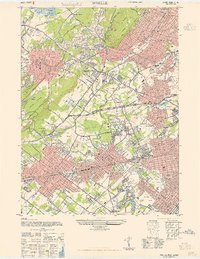 1943 Roselle1947 Print · USGSUnion County's industrial and commuter corridors are shown here at the height of the war years. Genealogists and rail historians can trace the complex junctions at Cranford Junction and locate family plots in Hazelwood Cem or Graceland Mem Park Cem.
 - 1944 Map of Newark, 1971 Print
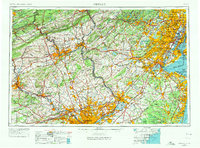 1944 Newark1971 Print · USGSThe industrial corridor from Philadelphia to New York was in a period of massive transition during the mid-forties. Genealogists and researchers can trace the rail lines of the Lehigh Valley RR, locate military installations like Picatinny Arsenal, and explore the early sprawl near Levittown.5 unique versions available
 - 1947 Map of Jersey City
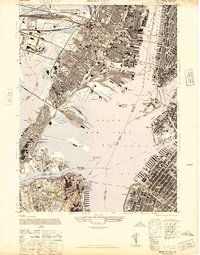 1947 Jersey City1947 Print · USGSThe harbor was a hive of industrial and maritime activity just after the war, featuring the intricate rail networks of the Lackawanna and Pennsylvania lines. Trace the early footprints of the Holland Vehicular Tunnels and landmarks like the Statue of Liberty.
 - 1947 Map of Elizabeth
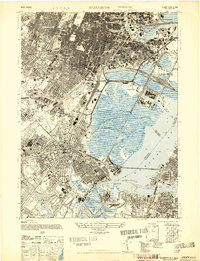 1947 Elizabeth1947 Print · USGSIn the late 1940s, the industrial corridor between Newark and Staten Island reached its peak of rail and maritime activity. Researchers can trace the development of Newark Airport, identify local parish sites like St James, and locate vanished rail stops such as Bay Way Sta.2 unique versions available
 - 1947 Map of Orange
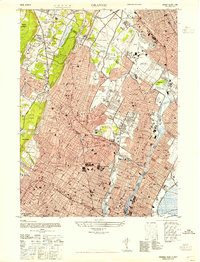 1947 Orange1947 Print · USGSEssex County in the late 1940s reveals a bustling landscape of industrial rail lines and developing suburban neighborhoods. Trace family roots and local landmarks from Overbrook Hospital to the fairways of Montclair Golf Course and Nutley.
 - 1947 Map of Roselle
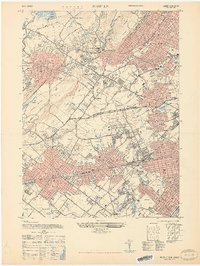 1947 Roselle1947 Print · USGSThe northern Union County suburbs were rapidly expanding in the late 1940s as rail networks and park systems matured. Genealogists and local historians can trace the development of Summit, Kenilworth, and Linden alongside landmarks like Cranford Junction and Fairview Cem.2 unique versions available
 - 1949 Map of Newark
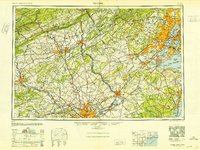 1949 Newark1949 Print · USGSThe industrial corridor between Philadelphia and New York comes alive in this post-war survey. Genealogists and historians can trace the massive rail networks of the Reading Railroad and locate major installations like Fort Dix or Picatinny Arsenal.2 unique versions available
 - 1955 Map of Elizabeth, 1958 Print
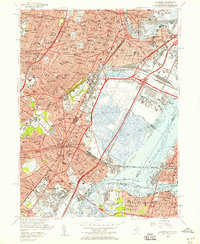 1955 Elizabeth1958 Print · USGSGreater Newark and Elizabeth are shown here at a peak of industrial and transit development during the mid-fifties. Genealogists and urban historians can trace local parish schools like St Marys Sch, the vast Evergreen Cemetery, and the early layout of Newark Airport.2 unique versions available
 - 1955 Map of Orange, 1958 Print
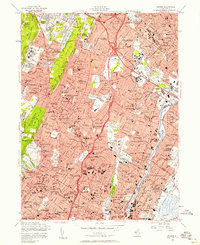 1955 Orange1958 Print · USGSEssex County enters the mid-fifties with a landscape of maturing suburbs and sprawling hilltop institutions. Genealogists can locate family landmarks like Holy Name Cemetery or Our Lady of Lourdes Sch while tracing the Erie RR and early Garden State Parkway.4 unique versions available
 - 1955 Map of Jersey City, 1958 Print
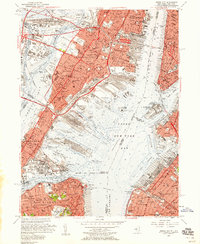 1955 Jersey City1958 Print · USGSMid-century Jersey City and the New York Harbor waterfront appear at their industrial peak, showcasing a landscape of massive rail yards and active piers. Researchers can trace the sprawling Greenville Yards, the Naval Reservation Bayonne Supply Depot, and local landmarks like Roosevelt Stadium.2 unique versions available
Showing maps 1-25 of 57
Top cities near Newark
- New York historical maps
- Jersey City historical maps
- Paterson historical maps
- Elizabeth historical maps
- Edison historical maps
- Woodbridge Township historical maps
See more
Top neighborhoods of Newark
- Oak Island Junction historical maps
- Roseville historical maps
- Teachers Village historical maps
- East Ferry historical maps
- University Heights historical maps
- The Ironbound historical maps
Frequently asked questions
- What are the different types of historical maps available for Newark?
- What is the oldest map of Newark?
- Where can I purchase historical maps of Newark for my home or office?
- Where can I download high-res historical maps of Newark?
- Are there historical topographic maps available for Newark?
- Is there historical aerial imagery available for Newark?
- Where are historical maps of Newark sourced from?