Old Maps of Ewing Township, New Jersey for Academic Research
Study the evolution of Ewing Township with 47 high-resolution historic maps. Whether you're teaching, researching, or modeling changes in land use, these maps provide essential visual documentation of urban, environmental, and geographic change.
- Analyze long-term change: Track patterns in development, transportation, and natural features.
- Ideal for environmental or urban studies: Support academic projects with primary historical map data.
- Use in the classroom or lab: Educators and researchers rely on these maps to bring historical context to life.
These maps are a powerful tool for teaching, research, and visualizing how Ewing Township has changed over the decades.
Ewing Township, NJ maps
(47)- 1888 Map of Princeton
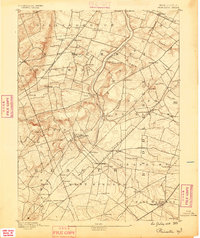 1888 Princeton1888 Print · USGSCentral New Jersey in the late nineteenth century is defined here by its critical canal and rail corridors connecting thriving agricultural villages. Genealogists and historians can trace family-named sites and early junctions like Grover's Mill, Griggstown, and the rail hub at Monmouth Junction.
 - 1890 Map of Lambertville
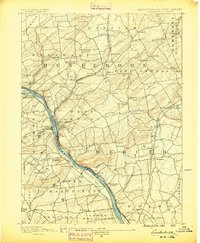 1890 Lambertville1890 Print · USGSThe Delaware River valley thrived at the end of the nineteenth century as a hub for both canal and rail transport. Genealogists can trace family names and legacy sites near Lambertville, Washington's Crossing, and the junctions at Ringoes.
 - 1890 Map of Burlington
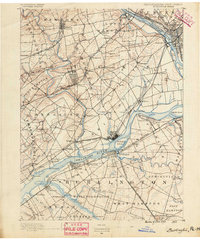 1890 Burlington1890 Print · USGSThe Delaware River corridor was a thriving network of canal commerce and rail lines in the late nineteenth century. Genealogists and historians can trace family-named landings and early settlements like Dunks Ferry, Hulmeville, and the State Lunatic Asylum near Trenton.
 - 1891 Map of Lambertville
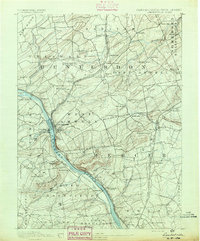 1891 Lambertville1891 Print · USGSThe Delaware River valley in the late 1880s is captured here at the height of the canal and rail era. Genealogists and historians can trace the early footprints of Lambertville, the course of the Delaware and Raritan Canal Feeder, and crossroads like Ringoes.
 - 1893 Map of Burlington
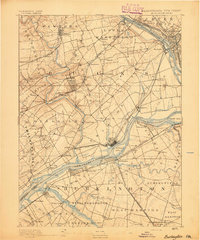 1893 Burlington1893 Print · USGSThe Delaware River valley thrived as a corridor of rail and river commerce in the late nineteenth century. Genealogists and historians can trace defunct transport hubs like Dunks Ferry, explore the grounds of the State Lunatic Asylum, and locate old stops along the Philadelphia and Newtown Railroad.3 unique versions available
 - 1894 Map of Princeton
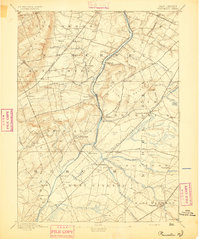 1894 Princeton1894 Print · USGSCentral New Jersey is captured here in the late nineteenth century as its river-and-canal economy transitioned to a powerhouse of rail travel. Genealogists and historians can trace the early footprints of Princeton, the industrial Delaware and Raritan Canal, and rural stops like Grover Mill.2 unique versions available
 - 1894 Map of Lambertville
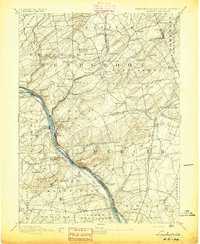 1894 Lambertville1894 Print · USGSThe Delaware River valley was a thriving hub of 19th-century commerce, where twin canals and the Belvidere Division railroad powered local industry. Researchers can trace ancestral lands through numerous family-named landmarks like Muirheads and Larison Corner, or locate the exact 1890s footprints of Lambertville and Hopewell.4 unique versions available
 - 1904 Map of Burlington, 1958 Print
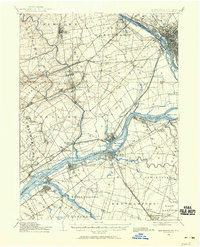 1904 Burlington1958 Print · USGSThe Delaware River corridor thrives during the early twentieth century as a hub of rail, canal, and river commerce. Genealogists and local historians can trace family roots through riverside landings like Borton Landing or follow the legacy of institutions such as the George School and the State Lunatic Asylum.
 - 1906 Map of Lambertville
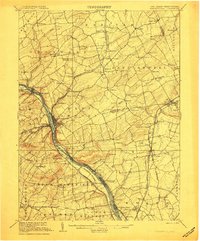 1906 Lambertville1906 Print · USGSThe Delaware River valley in the early 1900s is shown in transition, where water-borne trade meets the expanding rail network. Genealogists and historians can trace family-named corners like Vanlieu Corners and Marshalls Corner alongside the Delaware and Raritan Canal.6 unique versions available
 - 1906 Map of Burlington
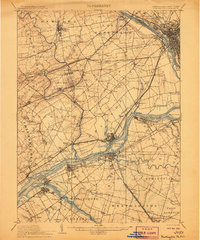 1906 Burlington1906 Print · USGSThe Delaware River corridor was a bustling hub of rail and water transport in the early 1900s. Genealogists and local historians can trace the development of riverside wharves like Andalusia Wharf and institutional landmarks such as the State Lunatic Asylum.6 unique versions available
 - 1906 Map of Princeton
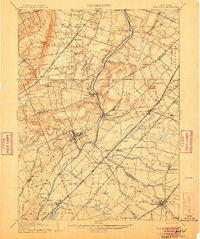 1906 Princeton1906 Print · USGSNew Jersey’s educational and transportation corridors are captured here in the early twentieth century, showing a landscape defined by canals and competing rail lines. Genealogists can trace family roots through settlements like Princeton, Rocky Hill, and Plainsboro.4 unique versions available
 - 1907 Map of Trenton
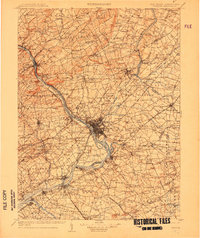 1907 Trenton1907 Print · USGSThe Delaware River valley hums with turn-of-the-century industry and transport as river canals and railroads converge between New Jersey and Pennsylvania. Genealogists and local historians can trace the footprint of the George School, find early post offices like Holland PO, or locate old mill sites such as Blackwells Mills.4 unique versions available
 - 1942 Map of Burlington
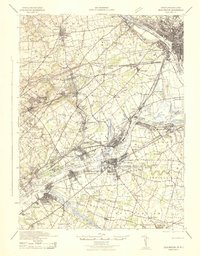 1942 Burlington1942 Print · USGSThe Delaware River valley thrived at the start of the 1940s as a hub of heavy rail and river commerce. Genealogists and local historians can trace family-named sites and old transit points like Dunks Ferry, Borton Landing, and Neshaminy Falls.
 - 1943 Map of Pennington
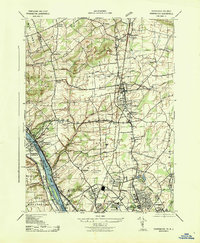 1943 Pennington1943 Print · USGSThe Delaware River borderlands between New Jersey and Pennsylvania are captured here during the Second World War. Genealogists and historians can trace riverside landmarks like Scudders Falls, old family hamlets like Bear Tavern, and the early footprint of Mercer Airport.
 - 1944 Map of Trenton West, 1950 Print
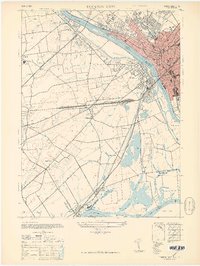 1944 Trenton West1950 Print · USGSThe Delaware River corridor near Trenton and Morrisville is captured here at the height of its mid-century rail and industrial era. Genealogists and historians can trace old property boundaries and landmarks from Fallsington to the landmark Wm Trent House 1719.
 - 1944 Map of Newark, 1971 Print
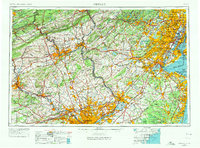 1944 Newark1971 Print · USGSThe industrial corridor from Philadelphia to New York was in a period of massive transition during the mid-forties. Genealogists and researchers can trace the rail lines of the Lehigh Valley RR, locate military installations like Picatinny Arsenal, and explore the early sprawl near Levittown.5 unique versions available
 - 1946 Map of Princeton, 1952 Print
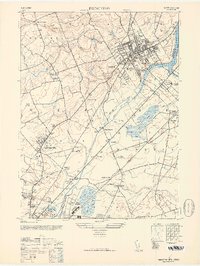 1946 Princeton1952 Print · USGSCentral New Jersey at the start of the post-war era reveals a landscape defined by its prestigious institutions and expanding rail corridors. Genealogists can locate family landmarks like Rosedale Chapel or trace the early grounds of the Lawrenceville School.
 - 1947 Map of Trenton West
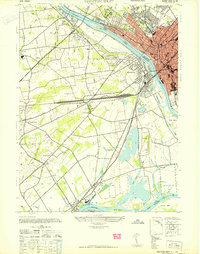 1947 Trenton West1947 Print · USGSThe Delaware River corridor near Trenton and Morrisville was a hive of rail and river activity just after the war. Genealogists and local historians can trace the foundations of Fallsington, locate the Wm Trent House 1719, and follow the Reading Company line through Woodside.
 - 1949 Map of Newark
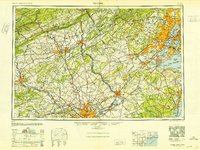 1949 Newark1949 Print · USGSThe industrial corridor between Philadelphia and New York comes alive in this post-war survey. Genealogists and historians can trace the massive rail networks of the Reading Railroad and locate major installations like Fort Dix or Picatinny Arsenal.2 unique versions available
 - 1952 Map of Princeton
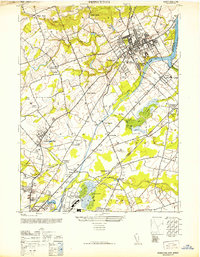 1952 Princeton1952 Print · USGSMid-century Central New Jersey shows a landscape shaped by academic institutions and the early growth of suburban hamlets. Genealogists and historians can trace Princeton University and the Lawrenceville School, or locate vanished industries like Maddocks Pottery Co.
 - 1954 Map of Princeton, 1956 Print
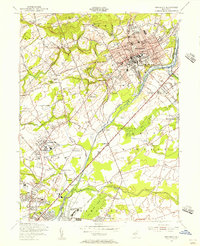 1954 Princeton1956 Print · USGSMid-century Princeton and Lawrenceville are captured here during a period of prestigious academic growth and steady infrastructure development. Genealogists and researchers can locate family-named landmarks and institutions like the Theological Seminary, Stony Brook Ch, and the Lawrenceville Cem.4 unique versions available
 - 1954 Map of Pennington, 1956 Print
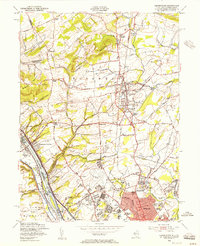 1954 Pennington1956 Print · USGSMid-century Mercer County was a landscape of expanding educational institutions and quiet crossroads hamlets. Genealogists and historians can trace the growth of Ewing and Pennington, as well as landmarks like Bear Tavern, St Hedwigs Cem, and the Reading railroad line.6 unique versions available
 - 1955 Map of Trenton West, 1957 Print
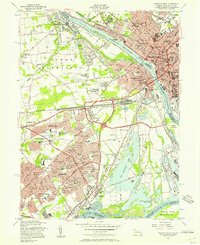 1955 Trenton West1957 Print · USGSThe Delaware Valley transformed during the mid-fifties as planned communities like Levittown and Fairless Hills rose beside the river. Researchers can trace early suburban development through family-centric neighborhoods like Oaktree Hollow and landmarks like Rider College or the 3 M Airport.5 unique versions available
 - 1956 Map of Newark
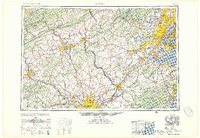 1956 Newark1956 Print · USGSThe industrial heart of the Mid-Atlantic is captured here at the dawn of the highway era, tracing the dense corridors between Newark and Philadelphia. Genealogists and local historians can map the rail networks of the Reading RR or locate mid-century military life at Fort Dix Military Reservation.2 unique versions available
 - 1957 Map of Newark
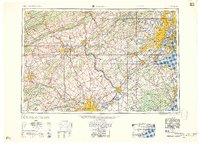 1957 Newark1957 Print · USGSThe industrial and military heart of the Mid-Atlantic is mapped during its post-war suburban boom. Genealogists and historians can trace the intricate rail corridors of the Reading Railroad and locate key landmarks from Princeton University to Fort Hancock.
Showing maps 1-25 of 47
Top cities near Ewing Township
- Philadelphia historical maps
- Hamilton Township historical maps
- Trenton historical maps
- Franklin Township historical maps
- Bensalem Township historical maps
- Levittown historical maps
See more
Top neighborhoods of Ewing Township
- Ewingville historical maps
- Fernwood historical maps
- Parkway Village historical maps
- Scudders Falls historical maps
- Somerset historical maps
- Wilburtha historical maps
See more
Frequently asked questions
- What are the different types of historical maps available for Ewing Township?
- What is the oldest map of Ewing Township?
- Where can I purchase historical maps of Ewing Township for my home or office?
- Where can I download high-res historical maps of Ewing Township?
- Are there historical topographic maps available for Ewing Township?
- Is there historical aerial imagery available for Ewing Township?
- Where are historical maps of Ewing Township sourced from?