1900s (20th Century) Maps of Monero, New Mexico
Explore 7 historic maps of Monero from the 1900s (20th Century). These maps offer a rare glimpse into what life looked like during the 1900s — showing old roads, neighborhoods, homes, and landmarks that have changed or disappeared over time.
Whether you're researching your family's past, planning a metal detecting trip, or studying how Monero's landscape evolved across the 1900s, these high-resolution maps are a powerful tool for exploring the history of this region.
- Focus on a specific era: All maps on this page are from the 1900s, giving you a focused view of this time period.
- See what’s changed: Compare century-old streets, trails, and buildings to today's modern landscape using overlays and satellite layers.
- Research with precision: Use these maps for genealogy, historical research, land use analysis, or educational projects.
- View, download, or print: Maps are fully viewable online in high resolution, and can be downloaded or printed for your own records.
Start exploring Monero's history through authentic maps from the 1900s. This is your window into the past.
Monero, NM maps
(7)- 1954 Map of Aztec, 1975 Print
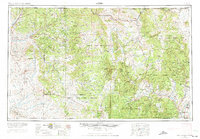 1954 Aztec1975 Print · USGSNorthern New Mexico and southern Colorado come alive in the mid-1950s, showing the high-country settlements and tribal lands of the San Juan Basin. Genealogists and historians can trace the path of the Denver & Rio Grande Western RR and locate communities like Abiquiu, Park View, and Lumberton.4 unique versions available
 - 1955 Map of Lumberton, 1957 Print
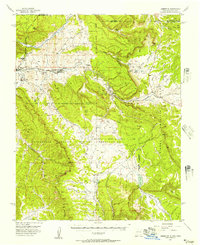 1955 Lumberton1957 Print · USGSLumberton and the surrounding Rio Arriba high country were centers of mining and rail activity in the mid-fifties. Genealogists and historians can trace the Denver and Rio Grande Western line to old stops at Monero and Amargo.4 unique versions available
 - 1958 Map of Aztec
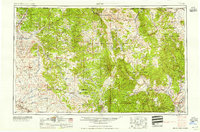 1958 Aztec1958 Print · USGSNorthern New Mexico and the southern Colorado border are captured here during the mid-fifties, showing the rugged intersection of national forests and tribal lands. Researchers can trace the Denver and Rio Grande Western rail line and locate remote outposts like Blanco Trading Post or Sargent Ranch.
 - 1962 Map of Aztec
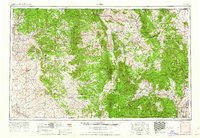 1962 Aztec1962 Print · USGSNorthwestern New Mexico in the early sixties showcases a landscape defined by the arrival of the Navajo Reservoir and the high-altitude timber of the Carson National Forest. Trace the path of the Denver & Rio Grande Western RR or locate historic settlements like Tierra Amarilla and Gobernador.
 - 1965 Map of Aztec
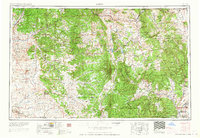 1965 Aztec1965 Print · USGSNorthern New Mexico and southern Colorado come alive in the mid-sixties, from the San Juan Basin to the high Jemez Mountains. Trace the narrow-gauge Denver & Rio Grande Western RR through Monero or locate old outposts like Blanco Trading Post.
 - 1981 Map of Chama, 1982 Print
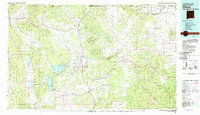 1981 Chama1982 Print · USGSNorthern New Mexico's high-country rail corridors and historic land grants are mapped here as they appeared in the early eighties. Genealogists and historians can trace traditional settlements like Los Ojos and Tierra Amarilla or follow the narrow-gauge Cumbres and Toltec Scenic Railroad.
 - 1983 Map of Monero
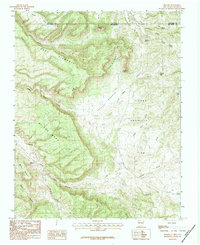 1983 Monero1983 Print · USGSThe high mesa country along the New Mexico-Colorado border is captured here in the early 1980s, shortly after the field checks of the late seventies. Researchers can trace the boundaries of the Tierra Amarilla Grant and locate landmarks like Crowley Reservoir, Mesa Diamante, and Monero Mountain.
End of results
Showing maps 1-7 of 7
Top cities near Monero
Frequently asked questions
- What are the different types of historical maps available for Monero?
- What is the oldest map of Monero?
- Where can I purchase historical maps of Monero for my home or office?
- Where can I download high-res historical maps of Monero?
- Are there historical topographic maps available for Monero?
- Is there historical aerial imagery available for Monero?
- Where are historical maps of Monero sourced from?