1900s (20th Century) Maps of Aztec, New Mexico
Explore 12 historic maps of Aztec from the 1900s (20th Century). These maps offer a rare glimpse into what life looked like during the 1900s — showing old roads, neighborhoods, homes, and landmarks that have changed or disappeared over time.
Whether you're researching your family's past, planning a metal detecting trip, or studying how Aztec's landscape evolved across the 1900s, these high-resolution maps are a powerful tool for exploring the history of this region.
- Focus on a specific era: All maps on this page are from the 1900s, giving you a focused view of this time period.
- See what’s changed: Compare century-old streets, trails, and buildings to today's modern landscape using overlays and satellite layers.
- Research with precision: Use these maps for genealogy, historical research, land use analysis, or educational projects.
- View, download, or print: Maps are fully viewable online in high resolution, and can be downloaded or printed for your own records.
Start exploring Aztec's history through authentic maps from the 1900s. This is your window into the past.
Aztec, NM maps
(12)- 1954 Map of Shiprock
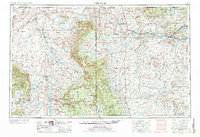 1954 Shiprock1954 Print · USGSThe Four Corners region in the mid-fifties reveals a vast landscape of tribal lands and desert landmarks. Researchers can trace the mid-century footprints of the Navajo Indian Reservation, identifying remote Trading Posts, the early growth of Farmington, and the iconic spire of Ship Rock.5 unique versions available
 - 1954 Map of Aztec, 1975 Print
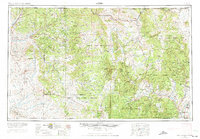 1954 Aztec1975 Print · USGSNorthern New Mexico and southern Colorado come alive in the mid-1950s, showing the high-country settlements and tribal lands of the San Juan Basin. Genealogists and historians can trace the path of the Denver & Rio Grande Western RR and locate communities like Abiquiu, Park View, and Lumberton.4 unique versions available
 - 1958 Map of Shiprock
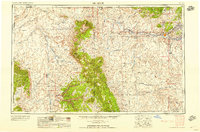 1958 Shiprock1958 Print · USGSThe Four Corners region in the mid-fifties shows a vast network of remote outposts and river settlements. You can locate numerous historic sites like the Emmanuel Mission and several commercial hubs such as Burnham Trading Post and Bisti Trading Post.
 - 1958 Map of Aztec
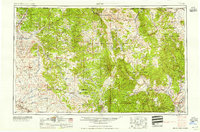 1958 Aztec1958 Print · USGSNorthern New Mexico and the southern Colorado border are captured here during the mid-fifties, showing the rugged intersection of national forests and tribal lands. Researchers can trace the Denver and Rio Grande Western rail line and locate remote outposts like Blanco Trading Post or Sargent Ranch.
 - 1959 Map of Shiprock
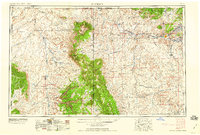 1959 Shiprock1959 Print · USGSThe Four Corners region comes alive in the mid-fifties, showing the high desert outposts and river-valley towns of the Navajo Nation and San Juan County. Genealogists and researchers can locate remote landmarks like the Burnham Trading Post, Two Grey Hills, and the early Helium Plant.
 - 1959 Map of Aztec, 1962 Print
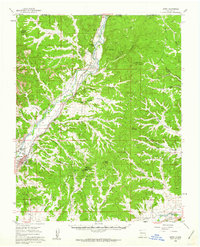 1959 Aztec1962 Print · USGSNorthern New Mexico in the late fifties was a landscape of river-valley rail towns and ancient history. Local researchers can trace the old rail lines of the Denver and Rio Grande Western R R and find landmarks like Aztec Ruins Nat Mon and McCoy Ave Sch.3 unique versions available
 - 1962 Map of Aztec
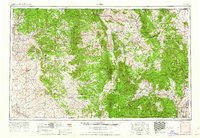 1962 Aztec1962 Print · USGSNorthwestern New Mexico in the early sixties showcases a landscape defined by the arrival of the Navajo Reservoir and the high-altitude timber of the Carson National Forest. Trace the path of the Denver & Rio Grande Western RR or locate historic settlements like Tierra Amarilla and Gobernador.
 - 1963 Map of Flora Vista, 1965 Print
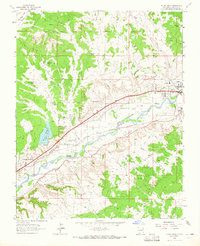 1963 Flora Vista1965 Print · USGSSan Juan County saw significant growth in the early sixties as the Animas River valley balanced agriculture and industry. Genealogists and historians can trace family locations near Flora Vista Cem, Elledge Mill, and the Aztec Ruins.4 unique versions available
 - 1965 Map of Aztec
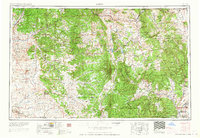 1965 Aztec1965 Print · USGSNorthern New Mexico and southern Colorado come alive in the mid-sixties, from the San Juan Basin to the high Jemez Mountains. Trace the narrow-gauge Denver & Rio Grande Western RR through Monero or locate old outposts like Blanco Trading Post.
 - 1980 Map of Farmington, 1981 Print
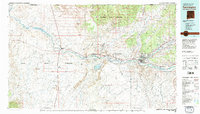 1980 Farmington1981 Print · USGSIn the San Juan Basin during the early 1980s, the energy economy was rapidly transforming the landscape around Farmington and Shiprock. Genealogists and historians can trace the growth of river towns like Kirtland or locate specific sites like the Navajo Mine and Aztec Ruins.2 unique versions available
 - 1980 Map of Navajo Reservoir, 1981 Print
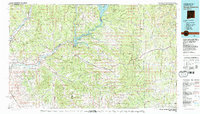 1980 Navajo Reservoir1981 Print · USGSThe high desert and river valleys of Rio Arriba and San Juan counties are captured here in the early eighties. Genealogists and local historians can trace the development of Aztec and Bloomfield or locate family sites along Gubernador Canyon and the Animas River.
 - 1985 Map of Aztec
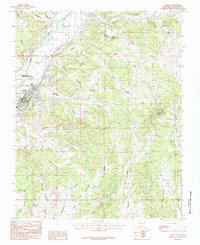 1985 Aztec1985 Print · USGSIn the mid-eighties, the high desert around the Animas River was a landscape of ancestral history and modern energy production. Researchers can trace the Old Railroad Grade, locate the Aztec Ruins National Monument, and explore the rugged drainages of Williams Arroyo and Potter Canyon.
End of results
Showing maps 1-12 of 12
Top cities near Aztec
- Farmington historical maps
- Bloomfield historical maps
- Aztec historical maps
- Eastern Navajo Agency historical maps
- Flora Vista historical maps
Top neighborhoods of Aztec
Frequently asked questions
- What are the different types of historical maps available for Aztec?
- What is the oldest map of Aztec?
- Where can I purchase historical maps of Aztec for my home or office?
- Where can I download high-res historical maps of Aztec?
- Are there historical topographic maps available for Aztec?
- Is there historical aerial imagery available for Aztec?
- Where are historical maps of Aztec sourced from?