1940s Maps of Broome County, New York
Explore 17 historic maps of Broome County from the 1940s. These maps offer a rare glimpse into what life looked like during the 1940s — showing old roads, neighborhoods, homes, and landmarks that have changed or disappeared over time.
Whether you're researching your family's past, planning a metal detecting trip, or studying how Broome County's landscape evolved across the 1940s, these high-resolution maps are a powerful tool for exploring the history of this region.
- Focus on a specific era: All maps on this page are from the 1940s, giving you a focused view of this time period.
- See what’s changed: Compare century-old streets, trails, and buildings to today's modern landscape using overlays and satellite layers.
- Research with precision: Use these maps for genealogy, historical research, land use analysis, or educational projects.
- View, download, or print: Maps are fully viewable online in high resolution, and can be downloaded or printed for your own records.
Start exploring Broome County's history through authentic maps from the 1940s. This is your window into the past.
Broome County, NY maps
(17)- 1942 Map of Binghamton West
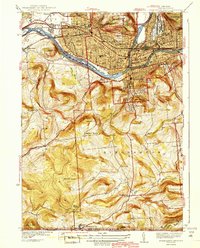 1942 Binghamton West1942 Print · USGSThe river confluence and bustling rail corridors of the early 1940s define this area as it transitions from city streets to upland farms. Researchers can trace historic family landmarks and rural school sites such as Crocker Cem, Bunn Hill Ch, and the Turkey Lane Sch.2 unique versions available
 - 1942 Map of Castle Creek
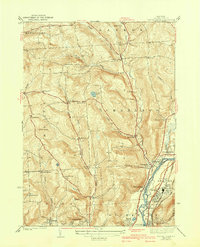 1942 Castle Creek1942 Print · USGSBroome County at the start of the 1940s reveals a region balancing river-valley industry with upland rural life. Genealogists can trace family roots through landmarks like the Camp Meeting Grounds, the Polish Cem, and schools like Finch Hollow Sch.3 unique versions available
 - 1942 Map of Chenango Forks
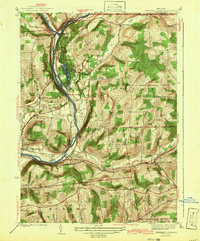 1942 Chenango Forks1942 Print · USGSUpper Broome County in the years before the war shows a landscape shaped by river junctions and burgeoning state park development. Local historians can trace early school districts and railroad routes through Chenango Forks, Sanitaria Springs, and the CCC Camp at Chenango Valley State Park.3 unique versions available
 - 1942 Map of Binghamton East
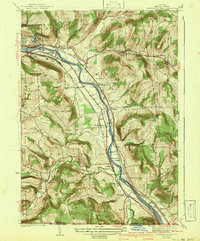 1942 Binghamton East1942 Print · USGSBroome County at the start of the 1940s was defined by the busy rail corridors and river towns along the Pennsylvania border. Genealogists and local historians can trace family-named landmarks like Stilson Hollow and rural school sites such as Acre Sch and School No 11.3 unique versions available
 - 1943 Map of Honesdale
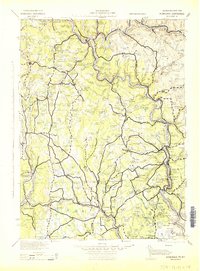 1943 Honesdale1943 Print · USGSThe northern Poconos and the Upper Delaware River valley appear here during the early war years, showing a network of mountain hamlets and riverfront rail towns. Genealogists can trace family roots through numerous remote institutions like Kingsbury Hill Church, Peakville P O, and the Hiawatha School.
 - 1943 Map of Montrose, 1957 Print
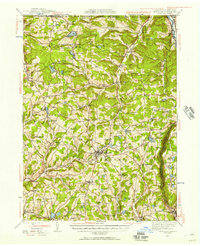 1943 Montrose1957 Print · USGSSusquehanna County at the height of the mid-century railroad era shows a landscape of upland farms and valley rail junctions. Researchers can locate long-standing family landmarks and rural hubs like South Montrose, the Lehigh Valley line, and Prospect Hill Cem.3 unique versions available
 - 1943 Map of Le Raysville, 1960 Print
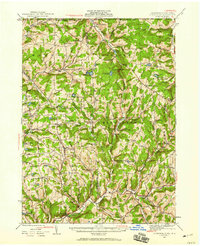 1943 Le Raysville1960 Print · USGSNortheastern Pennsylvania hill country is captured here during the mid-forties as it straddled the border of Bradford and Susquehanna counties. Genealogists can trace family names and small-town roots through Little Meadows, Le Raysville, and numerous country burial sites like the Centerville Cem.2 unique versions available
 - 1944 Map of Deposit
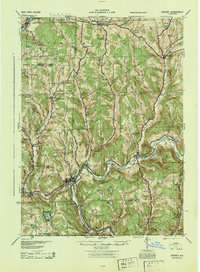 1944 Deposit1944 Print · USGSDelaware and Broome Counties come alive in the mid-1940s, showing the river-valley communities before later reservoir projects transformed the landscape. Trace genealogical roots through dozens of rural landmarks like McClure Settlement, Rock Royal, and Hale Eddy.
 - 1945 Map of Montrose
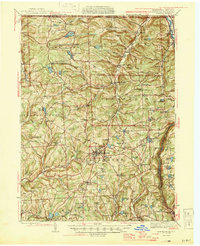 1945 Montrose1945 Print · USGSSusquehanna County is shown in the mid-1940s as a landscape of rural schoolhouses and established rail corridors. Genealogists and historians can locate family landmarks such as Prospect Hill Cem, tracing the paths between Montrose and the mills at Snows Mill.2 unique versions available
 - 1945 Map of Le Raysville
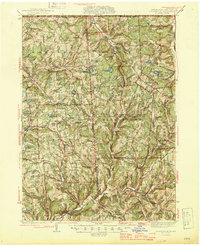 1945 Le Raysville1945 Print · USGSThe borderlands of Susquehanna and Bradford counties are captured here in the mid-1940s, showing a landscape of small farming hamlets and upland ridges. Genealogists can trace family roots through numerous remote burial sites and schools like Fowler Hill Cem or Logan Hill Sch.2 unique versions available
 - 1948 Map of Greene, 1968 Print
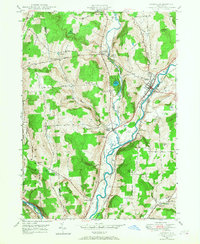 1948 Greene1968 Print · USGSChenango County is captured here in the years following the war, showing the river-and-rail economy of the central valley. Genealogists and local historians can trace the Catskill Turnpike, find the Greene Landing Field, and locate family plots at Barnes Cem and Eliot Cem.
 - 1948 Map of Smithville Flats, 1968 Print
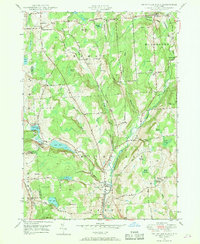 1948 Smithville Flats1968 Print · USGSChenango County's rural heartland is captured here in the late 1940s, showing a landscape defined by creek-side villages and upland farmsteads. Researchers can trace ancestral lines through family-named sites like Knickerbocker Cem, Wilcox Corners, and the historic schoolhouse at Mariams Sch.3 unique versions available
 - 1948 Map of Binghamton, 1980 Print
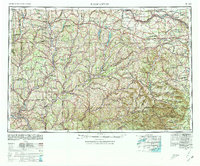 1948 Binghamton1980 Print · USGSCentral New York and the Southern Tier thrive in the late 1940s as a hub of rail traffic and mountain industry. Researchers can trace historic transit lines like the Erie Railroad through Binghamton or find old valley settlements near Oneonta and Delhi.
 - 1949 Map of Whitney Point, 1967 Print
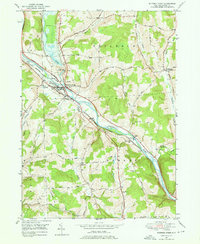 1949 Whitney Point1967 Print · USGSBroome County was defined by its river valleys and rail lines in the late 1940s. Genealogists and local historians can trace family locations near Whitney Point and Hydeville, or locate rural burial grounds like King Street Cem and Adams Street Cem.3 unique versions available
 - 1949 Map of Harford, 1967 Print
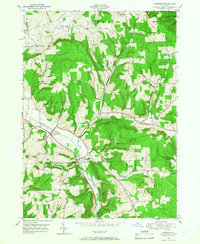 1949 Harford1967 Print · USGSCortland County at the close of the 1940s is a landscape of deep hollows and dairy country centered on the Lehigh Valley rail line. Genealogists can locate the Birthplace of John D Rockefeller and trace rural family homesteads near Harford and Franks Corners.
 - 1949 Map of Willet, 1970 Print
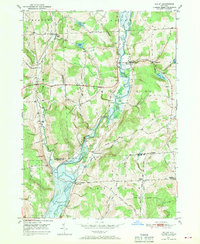 1949 Willet1970 Print · USGSThe Otselic River valley in the late 1940s reveals a landscape of dispersed hamlets and family-named hilltops. Genealogists and historians can trace old community centers like Upper Lisle and Texas Valley or locate local burials at Green Cem.
 - 1949 Map of Lisle, 1970 Print
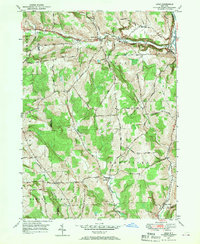 1949 Lisle1970 Print · USGSNorthern Broome County is shown here in the late 1940s, centered on the river valley around Lisle. Researchers can trace old family lands near Glen Aubrey, the path of the Catskill Turnpike, and rail activity along the Delaware Lackawanna & Western.2 unique versions available
End of results
Showing maps 1-17 of 17
Top cities of Broome County
- Union historical maps
- Binghamton historical maps
- Vestal historical maps
- Chenango historical maps
- Fenton historical maps
- Windsor historical maps
See more
Frequently asked questions
- What are the different types of historical maps available for Broome County?
- What is the oldest map of Broome County?
- Where can I purchase historical maps of Broome County for my home or office?
- Where can I download high-res historical maps of Broome County?
- Are there historical topographic maps available for Broome County?
- Is there historical aerial imagery available for Broome County?
- Where are historical maps of Broome County sourced from?