Old Maps of Chenango Bridge, Chenango for Metal Detecting
Plan your next treasure hunt with 25 historic maps of Chenango Bridge. Find old homesites, ghost towns, trails, and gathering spots that may be lost to time — perfect for identifying promising metal detecting locations.
- Locate forgotten sites: Uncover places like long-lost settlements, abandoned rail lines, or gathering spots.
- Plan better hunts: Use map overlays combined with LiDAR or satellite views to narrow in on historically rich areas.
- Made for detectorists: Thousands of hobbyists use these maps to discover relics, coins, and hidden history.
Use these historic maps to boost your research and find new opportunities beneath the surface of Chenango Bridge.
Chenango Bridge, Chenango maps
(25)- 1904 Map of Binghamton
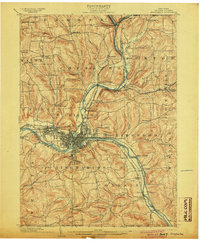 1904 Binghamton1904 Print · USGSBinghamton at the turn of the century serves as the heart of a massive rail network where the Chenango and Susquehanna rivers meet. Researchers can trace the early layout of industrial Lestershire, the hill-station at Sanitaria Springs, and the diverse hamlets of New Ireland and Port Dickinson.9 unique versions available
 - 1934 Map of Castle Creek
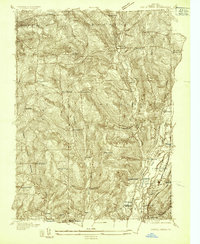 1934 Castle Creek1934 Print · USGSBroome County was transitioning into a regional transit hub during the mid-1930s as major railroads and highways began to reshape the river valleys. Genealogists can locate numerous rural schoolhouses and ethnic landmarks like the Polish Cem and Harry L Johnson Sch.
 - 1935 Map of Chenango Forks
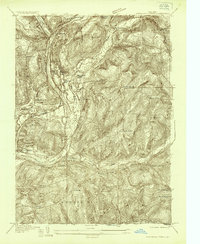 1935 Chenango Forks1935 Print · USGSThe river valleys and rail corridors of Broome County come alive in this mid-1930s survey of the Chenango Forks area. Genealogists can trace rural life through a network of local institutions like West Colesville Ch, Oak Hill Sch, and the C C C Camp.
 - 1942 Map of Castle Creek
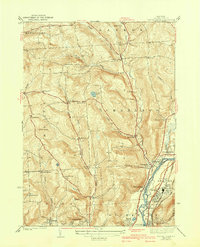 1942 Castle Creek1942 Print · USGSBroome County at the start of the 1940s reveals a region balancing river-valley industry with upland rural life. Genealogists can trace family roots through landmarks like the Camp Meeting Grounds, the Polish Cem, and schools like Finch Hollow Sch.3 unique versions available
 - 1942 Map of Chenango Forks
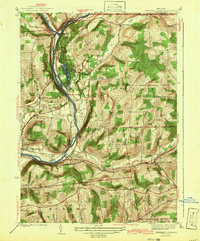 1942 Chenango Forks1942 Print · USGSUpper Broome County in the years before the war shows a landscape shaped by river junctions and burgeoning state park development. Local historians can trace early school districts and railroad routes through Chenango Forks, Sanitaria Springs, and the CCC Camp at Chenango Valley State Park.3 unique versions available
 - 1948 Map of Binghamton, 1980 Print
 1948 Binghamton1980 Print · USGSCentral New York and the Southern Tier thrive in the late 1940s as a hub of rail traffic and mountain industry. Researchers can trace historic transit lines like the Erie Railroad through Binghamton or find old valley settlements near Oneonta and Delhi.
 - 1950 Map of Binghamton
 1950 Binghamton1950 Print · USGSBinghamton and the surrounding Southern Tier are shown in the mid-century era, highlighting the intricate rail and river networks that drove local industry. Researchers can trace the path of the Erie Railroad and locate landmarks from Otsego Lake to Sidney Mountain.2 unique versions available
 - 1950 Map of Chenango Forks, 1951 Print
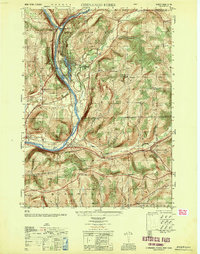 1950 Chenango Forks1951 Print · USGSThe river valleys and rail lines north of Binghamton converge here at the start of the 1950s. Genealogists and local historians can trace the rural school system from School No 29 to School No 5, or follow the rail-era growth of Port Crane and Sanitaria Springs.
 - 1958 Map of Binghamton
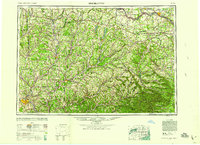 1958 Binghamton1958 Print · USGSCentral New York in the late fifties was a network of manufacturing cities and river valleys connected by vital rail lines. Genealogists and historians can trace family roots in Oneonta, Norwich, and Cooperstown or locate long-standing farms along Schoharie Creek.
 - 1960 Map of Chenango Forks, 1963 Print
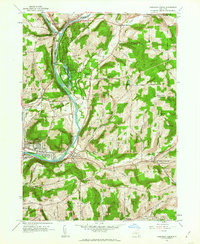 1960 Chenango Forks1963 Print · USGSThe river valleys of Broome County come alive in this early 1960s survey of the river confluence and the growing Chenango Valley. Genealogists and local historians can trace the foundations of Chenango Forks, the grounds of Chenango Valley State Park, and rural landmarks like Toombs Cem.
 - 1961 Map of Castle Creek, 1963 Print
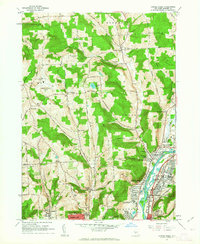 1961 Castle Creek1963 Print · USGSBroome County in the early sixties shows a landscape of growing valley towns and hilltop hamlets. Genealogists and local historians can trace family plots at Chenango Valley Cemetery or explore the development of Hillcrest and the Broome County Airport.
 - 1963 Map of Binghamton
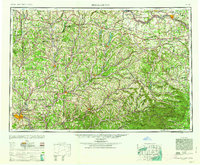 1963 Binghamton1963 Print · USGSThe Southern Tier and Catskill peaks are shown in the early sixties as new reservoirs reshaped the valleys. Trace historic rail corridors like the Erie Lackawanna RR and explore lakeside settlements such as Cooperstown and Oneonta.
 - 1968 Map of Castle Creek, 1972 Print
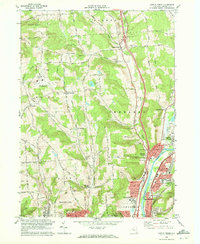 1968 Castle Creek1972 Print · USGSBroome County at the end of the sixties shows a region in transition as modern interchanges meet established valley towns. Genealogists can locate family plots in Sacred Heart Cem or Calvary Cem, while historians can trace the Erie Lackawanna rail lines.2 unique versions available
 - 1968 Map of Chenango Forks, 1972 Print
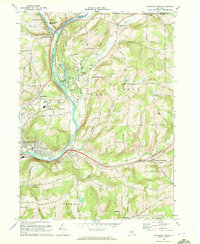 1968 Chenango Forks1972 Print · USGSBroome County at the end of the sixties reveals a landscape shaped by river confluences and the expansion of the regional rail network. Genealogists and local historians can trace family markers at Toombs Cem, explore the early footprint of Port Crane, and locate the Chenango Bridge Landing Field.2 unique versions available
 - 1985 Map of Binghamton, 1986 Print
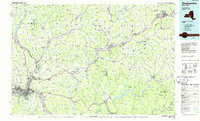 1985 Binghamton1986 Print · USGSThe Southern Tier during the mid-1980s shows a landscape of river-valley industry and expanding university campuses. Genealogists and local historians can trace family roots through riverside towns like Bainbridge, Sidney, and the Calvary Cem in the Binghamton area.2 unique versions available
 - 2010 Map of Chenango Forks, 2010 Print
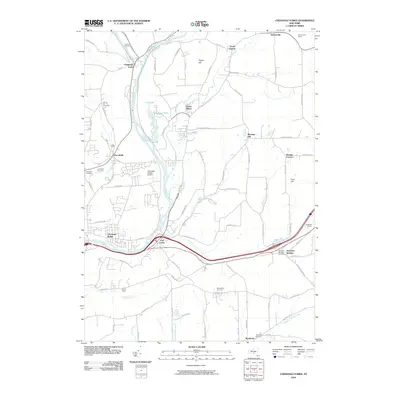 2010 Chenango Forks2010 Print · USGSThe Chenango and Tioughnioga rivers meet at the turn of the 21st century, illustrating the valley's settlement patterns near the Broome County border. Trace family roots at the Toombs Cemetery or locate the old rail-stop character of Sanitaria Springs and Port Crane.
 - 2010 Map of Castle Creek, 2010 Print
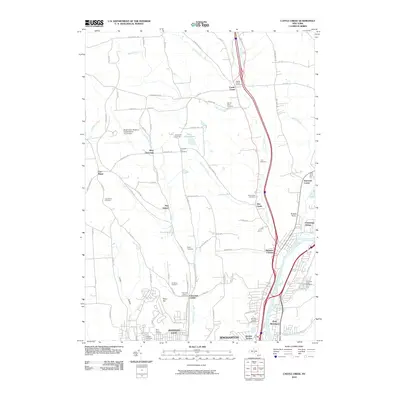 2010 Castle Creek2010 Print · USGSThe northern suburbs and rural valleys of Broome County are captured here in the early 2000s as development moved toward the hills. Researchers can locate numerous local burial sites like Lilly Cemetery and Polish Cemetery or trace landmarks such as Apple Hills Fruit Farm.
 - 2013 Map of Castle Creek, 2013 Print
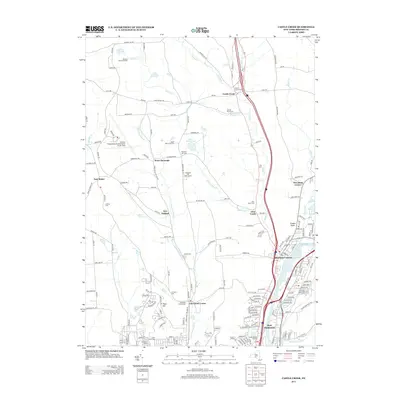 2013 Castle Creek2013 Print · USGSBroome County’s northern hills and river valleys come into focus in the early 21st century as the regional landscape balances modern infrastructure with historic hamlets. Genealogists and local historians can trace burial sites at Polish Cem and Lilly Cem or locate old crossroads like New Ireland and Hinmans Corners.
 - 2013 Map of Chenango Forks, 2013 Print
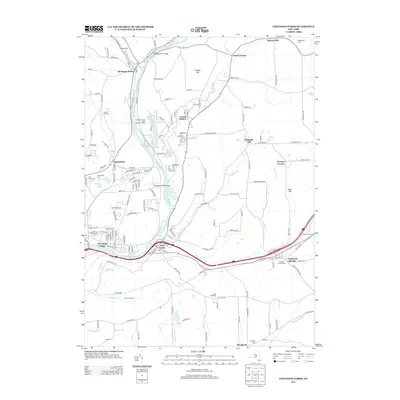 2013 Chenango Forks2013 Print · USGSThe river valleys of central New York are captured here in the early twenty-first century, showing the confluence at Chenango Forks. Researchers can trace local lineage through numerous burial sites like Toombs Cem and State Road Cem or locate old homesteads at Russwick Farms.
 - 2016 Map of Castle Creek, 2016 Print
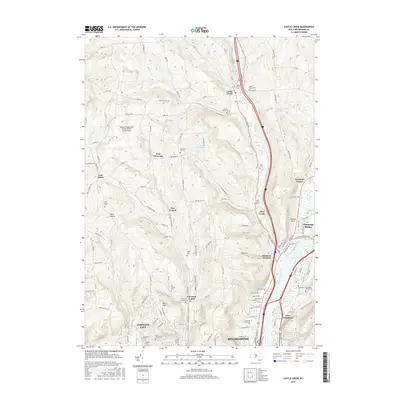 2016 Castle Creek2016 Print · USGSThe Broome County hills north of Binghamton are shown here in the mid-2010s, where suburban expansion meets rural history. Genealogists can locate several family and community burial grounds like Dimmick Hill Cemetery or trace the lands near New Ireland and Glen Castle.
 - 2016 Map of Chenango Forks, 2016 Print
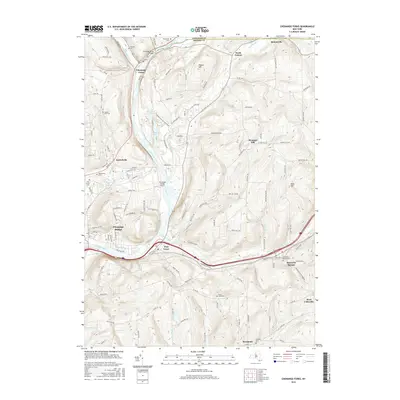 2016 Chenango Forks2016 Print · USGSThe confluence of the Tioughnioga River and Chenango River anchors this 2016 survey of the New York countryside north of Binghamton. Genealogists can locate several historic burial sites, such as Kattelville Cem, Oak Grove Cem, and Standley Cem.
 - 2019 Map of Castle Creek, 2019 Print
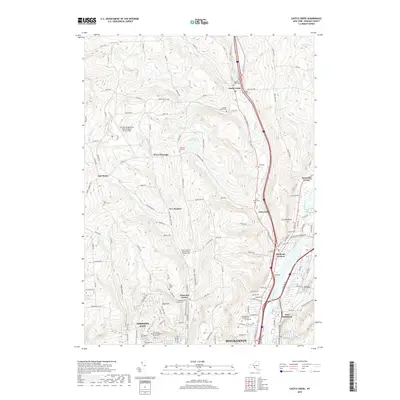 2019 Castle Creek2019 Print · USGSBroome County at the edge of the southern tier shows a landscape defined by the Chenango River and the growing footprints of BINGHAMTON and JOHNSON CITY. Genealogists can locate many burial sites such as Maple Grove Cem and Saint Stanislaus Kostka Roman Catholic Cem.
 - 2019 Map of Chenango Forks, 2019 Print
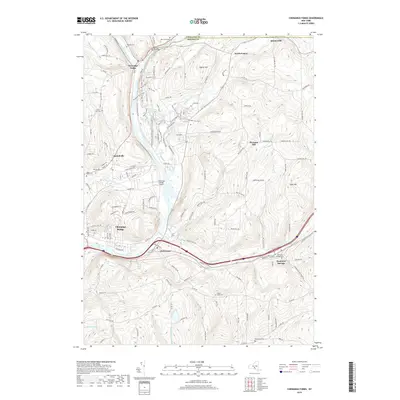 2019 Chenango Forks2019 Print · USGSThe Chenango and Tioughnioga rivers meet in this New York landscape during the late 2010s. Researchers can locate Sanitaria Springs Cem, trace the boundaries of Chenango Valley State Park, and explore the roads around Port Crane.
 - 2023 Map of Castle Creek, 2023 Print
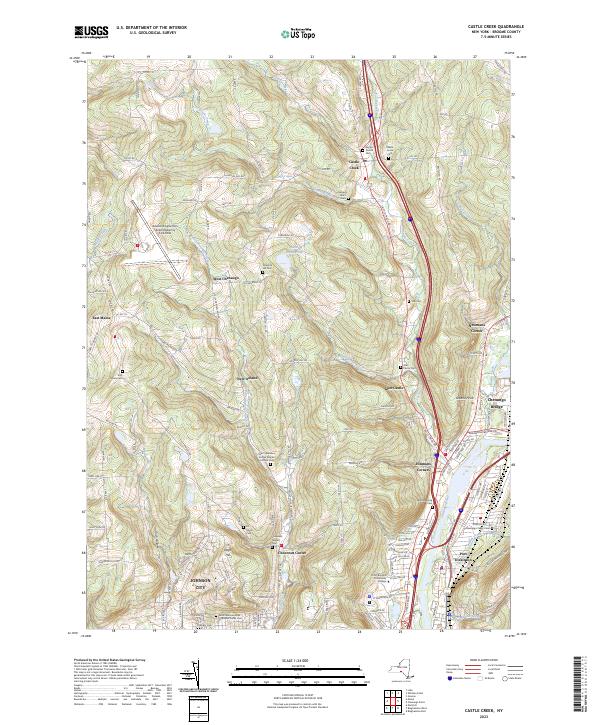 2023 Castle Creek2023 Print · USGSThe Chenango River valley north of Johnson City shows a landscape of institutional growth and upland hamlets. Genealogists can trace family names across Nimmonsburg Cem, the settlement at Castle Creek, and the grounds of SUNY Broome Community College.
 - 2023 Map of Chenango Forks, 2023 Print
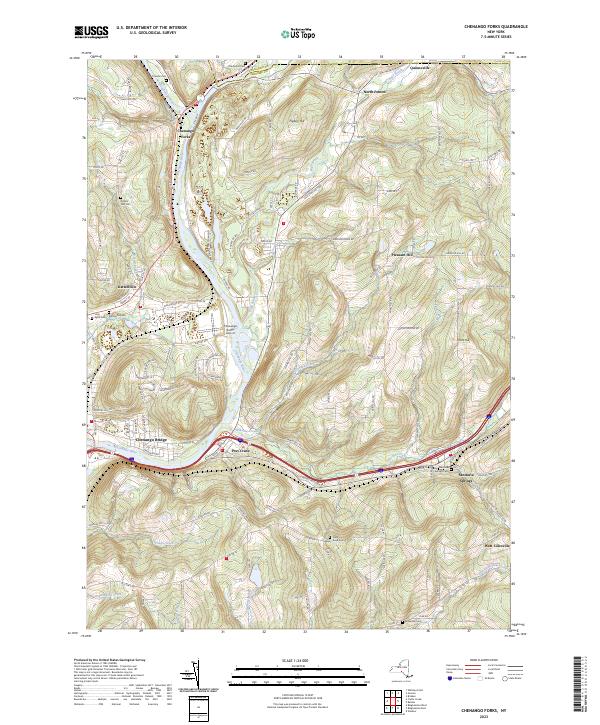 2023 Chenango Forks2023 Print · USGSThe northern Broome County landscape is captured here where the Tioughnioga River and Chenango River meet. Genealogists and local researchers can trace historic burial sites like Toombs Cem and Collins-Hall Cem alongside the small hamlets of Sanitaria Springs and Port Crane.
End of results
Showing maps 1-25 of 25
Top cities near Chenango Bridge
- Union historical maps
- Binghamton historical maps
- Vestal historical maps
- Johnson City historical maps
- Endicott historical maps
- Endwell historical maps
See more
Frequently asked questions
- What are the different types of historical maps available for Chenango Bridge?
- What is the oldest map of Chenango Bridge?
- Where can I purchase historical maps of Chenango Bridge for my home or office?
- Where can I download high-res historical maps of Chenango Bridge?
- Are there historical topographic maps available for Chenango Bridge?
- Is there historical aerial imagery available for Chenango Bridge?
- Where are historical maps of Chenango Bridge sourced from?