1900s (20th Century) Maps of Susquehanna Coummunity, Vestal
Explore 10 historic maps of Susquehanna Coummunity from the 1900s (20th Century). These maps offer a rare glimpse into what life looked like during the 1900s — showing old roads, neighborhoods, homes, and landmarks that have changed or disappeared over time.
Whether you're researching your family's past, planning a metal detecting trip, or studying how Susquehanna Coummunity's landscape evolved across the 1900s, these high-resolution maps are a powerful tool for exploring the history of this region.
- Focus on a specific era: All maps on this page are from the 1900s, giving you a focused view of this time period.
- See what’s changed: Compare century-old streets, trails, and buildings to today's modern landscape using overlays and satellite layers.
- Research with precision: Use these maps for genealogy, historical research, land use analysis, or educational projects.
- View, download, or print: Maps are fully viewable online in high resolution, and can be downloaded or printed for your own records.
Start exploring Susquehanna Coummunity's history through authentic maps from the 1900s. This is your window into the past.
Susquehanna Coummunity, Vestal maps
(10)- 1904 Map of Binghamton
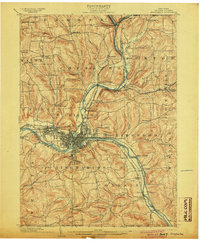 1904 Binghamton1904 Print · USGSBinghamton at the turn of the century serves as the heart of a massive rail network where the Chenango and Susquehanna rivers meet. Researchers can trace the early layout of industrial Lestershire, the hill-station at Sanitaria Springs, and the diverse hamlets of New Ireland and Port Dickinson.9 unique versions available
 - 1935 Map of Binghamton West
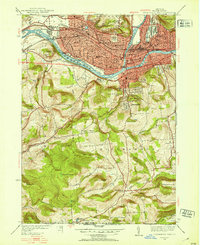 1935 Binghamton West1935 Print · USGSBinghamton and its surrounding hill country are captured in the mid-1930s, showing the city's riverfront core alongside quiet rural settlements. Researchers can trace historic family names and community landmarks from Bible School Park to remote rural sites like Turkey Lane Sch and Hawleyton.
 - 1942 Map of Binghamton West
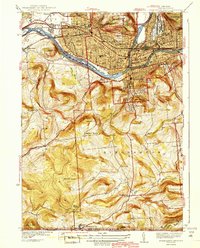 1942 Binghamton West1942 Print · USGSThe river confluence and bustling rail corridors of the early 1940s define this area as it transitions from city streets to upland farms. Researchers can trace historic family landmarks and rural school sites such as Crocker Cem, Bunn Hill Ch, and the Turkey Lane Sch.2 unique versions available
 - 1948 Map of Binghamton, 1980 Print
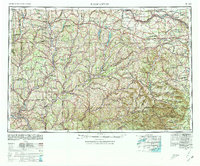 1948 Binghamton1980 Print · USGSCentral New York and the Southern Tier thrive in the late 1940s as a hub of rail traffic and mountain industry. Researchers can trace historic transit lines like the Erie Railroad through Binghamton or find old valley settlements near Oneonta and Delhi.
 - 1950 Map of Binghamton
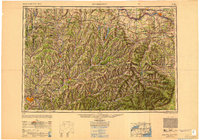 1950 Binghamton1950 Print · USGSBinghamton and the surrounding Southern Tier are shown in the mid-century era, highlighting the intricate rail and river networks that drove local industry. Researchers can trace the path of the Erie Railroad and locate landmarks from Otsego Lake to Sidney Mountain.2 unique versions available
 - 1958 Map of Binghamton
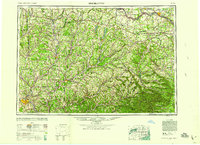 1958 Binghamton1958 Print · USGSCentral New York in the late fifties was a network of manufacturing cities and river valleys connected by vital rail lines. Genealogists and historians can trace family roots in Oneonta, Norwich, and Cooperstown or locate long-standing farms along Schoharie Creek.
 - 1961 Map of Binghamton West, 1964 Print
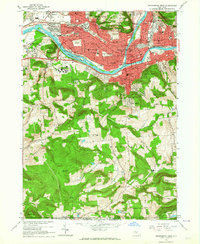 1961 Binghamton West1964 Print · USGSBinghamton and Johnson City are shown in the early sixties as they developed around the Susquehanna and Chenango Rivers. Researchers can trace historic local institutions like Harpur College, Spring Forest Cemetery, and the Erie-Lackawanna rail lines.
 - 1963 Map of Binghamton
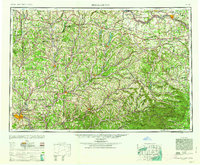 1963 Binghamton1963 Print · USGSThe Southern Tier and Catskill peaks are shown in the early sixties as new reservoirs reshaped the valleys. Trace historic rail corridors like the Erie Lackawanna RR and explore lakeside settlements such as Cooperstown and Oneonta.
 - 1968 Map of Binghamton West, 1972 Print
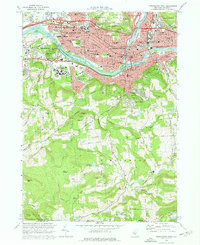 1968 Binghamton West1972 Print · USGSBinghamton and Johnson City are shown during a period of significant postwar growth along the Susquehanna and Chenango Rivers. Researchers can trace family roots at Floral Park Cemetery, locate the expanding State University of New York at Binghamton, or follow the Erie-Lackawanna rail corridor.3 unique versions available
 - 1985 Map of Binghamton, 1986 Print
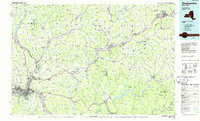 1985 Binghamton1986 Print · USGSThe Southern Tier during the mid-1980s shows a landscape of river-valley industry and expanding university campuses. Genealogists and local historians can trace family roots through riverside towns like Bainbridge, Sidney, and the Calvary Cem in the Binghamton area.2 unique versions available
End of results
Showing maps 1-10 of 10
Frequently asked questions
- What are the different types of historical maps available for Susquehanna Coummunity?
- What is the oldest map of Susquehanna Coummunity?
- Where can I purchase historical maps of Susquehanna Coummunity for my home or office?
- Where can I download high-res historical maps of Susquehanna Coummunity?
- Are there historical topographic maps available for Susquehanna Coummunity?
- Is there historical aerial imagery available for Susquehanna Coummunity?
- Where are historical maps of Susquehanna Coummunity sourced from?