1940s Maps of Plymouth, New York
Explore 11 historic maps of Plymouth from the 1940s. These maps offer a rare glimpse into what life looked like during the 1940s — showing old roads, neighborhoods, homes, and landmarks that have changed or disappeared over time.
Whether you're researching your family's past, planning a metal detecting trip, or studying how Plymouth's landscape evolved across the 1940s, these high-resolution maps are a powerful tool for exploring the history of this region.
- Focus on a specific era: All maps on this page are from the 1940s, giving you a focused view of this time period.
- See what’s changed: Compare century-old streets, trails, and buildings to today's modern landscape using overlays and satellite layers.
- Research with precision: Use these maps for genealogy, historical research, land use analysis, or educational projects.
- View, download, or print: Maps are fully viewable online in high resolution, and can be downloaded or printed for your own records.
Start exploring Plymouth's history through authentic maps from the 1940s. This is your window into the past.
Plymouth, NY maps
(11)- 1943 Map of Otselic, 1954 Print
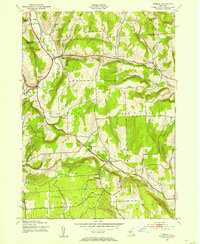 1943 Otselic1954 Print · USGSChenango County hills and valleys are captured here during the 1940s, showing a landscape of upland farms and remote school districts. Genealogists can trace family footprints near Maple Grove Cem or through small crossroads like Stanbro and Bonney.3 unique versions available
 - 1943 Map of Norwich, 1960 Print
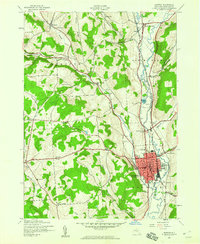 1943 Norwich1960 Print · USGSChenango County enters the mid-century as a hub of river-valley transport and upland farming, captured here just as the local rail network remained a fixture. Researchers can trace family plots at Packer-Mason Cem, locate the former County Home, or follow the New York Ontario and Western line through North Norwich.2 unique versions available
 - 1943 Map of East Pharsalia, 1960 Print
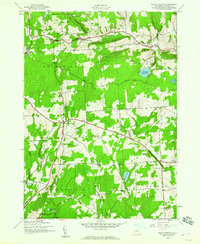 1943 East Pharsalia1960 Print · USGSChenango County's rural townships are shown here during the early war years, when small settlements and upland farms defined the landscape. Genealogists can trace family connections through local landmarks like Frink Cem, Rogers Cem, and various district schools like School No 10.3 unique versions available
 - 1943 Map of Earlville, 1960 Print
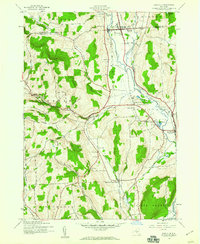 1943 Earlville1960 Print · USGSChenango and Madison counties are captured here during the mid-forties, showing the vital rail corridor through the Chenango River valley. Genealogists can trace family names and rural locations like Smyrna, Quaker Cem, and the abandoned path of the Chenango Canal.2 unique versions available
 - 1943 Map of Norwich, 1975 Print
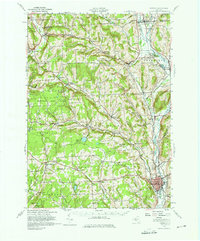 1943 Norwich1975 Print · USGSChenango County and the Chenango River valley are captured here in the 1940s, a time when rail travel still defined the region's economy. Genealogists can trace family names through dozens of rural landmarks, including Maple Grove Cem, Quaker Ch, and numerous numbered schoolhouses like School No 12.
 - 1944 Map of Earlville
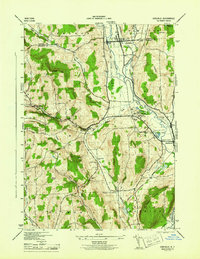 1944 Earlville1944 Print · USGSChenango County's river valley and uplands are captured during the mid-forties as a landscape of rail-connected villages and small rural school districts. Genealogists can locate family landmarks like Wilcox Cem, tracing the paths between Earlville, Smyrna, and the Rogers State Game Farm.
 - 1944 Map of Norwich
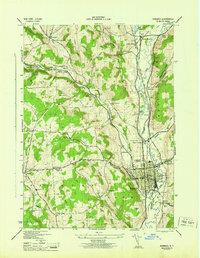 1944 Norwich1944 Print · USGSThe Chenango River valley in the 1940s was a critical rail corridor defined by the crossing of the New York Ontario and Western RR. Researchers can trace old family burial grounds like Harris Cem and identify numerous rural school sites from South Plymouth to Polkville.2 unique versions available
 - 1944 Map of Otselic
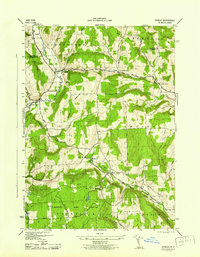 1944 Otselic1944 Print · USGSThe Otselic River valley and the highlands of Chenango County are captured here in the mid-1940s, showing a landscape of small hill farms and dispersed school districts. Researchers can pinpoint family homesteads near Otselic Center, Beaver Meadow, and the Maple Grove Cem.
 - 1944 Map of East Pharsalia
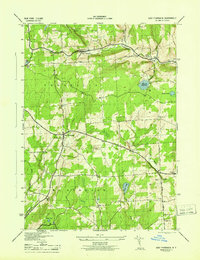 1944 East Pharsalia1944 Print · USGSChenango County's upland hamlets and state conservation lands are shown here in the mid-1940s. Researchers can trace rural school districts and family burial sites like Frink Cem or explore the early bounds of the Pharsalia Game Refuge.
 - 1944 Map of Norwich, 1960 Print
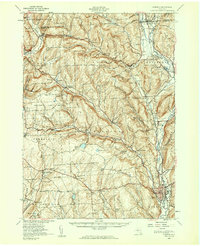 1944 Norwich1960 Print · USGSChenango County communities thrive along the river and rail lines during the mid-forties. Genealogists can locate family sites near Otselic Church, Preston Center, and several rural burial grounds like Slater Cem.2 unique versions available
 - 1948 Map of Binghamton, 1980 Print
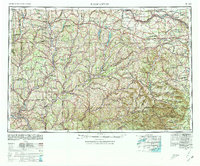 1948 Binghamton1980 Print · USGSCentral New York and the Southern Tier thrive in the late 1940s as a hub of rail traffic and mountain industry. Researchers can trace historic transit lines like the Erie Railroad through Binghamton or find old valley settlements near Oneonta and Delhi.
End of results
Showing maps 1-11 of 11
Top cities near Plymouth
- Norwich historical maps
- Hamilton historical maps
- Sidney historical maps
- Greene historical maps
- Unadilla historical maps
- Hamilton historical maps
See more
Top neighborhoods of Plymouth
Frequently asked questions
- What are the different types of historical maps available for Plymouth?
- What is the oldest map of Plymouth?
- Where can I purchase historical maps of Plymouth for my home or office?
- Where can I download high-res historical maps of Plymouth?
- Are there historical topographic maps available for Plymouth?
- Is there historical aerial imagery available for Plymouth?
- Where are historical maps of Plymouth sourced from?