Old Maps of Ancram, New York for Hiking & Exploration
Hike through history with 62 historic maps of Ancram. Explore old trails, ghost towns, and forgotten backroads — perfect for outdoor adventurers and local explorers.
- Rediscover forgotten places: Map out old mining camps, roads, and footpaths that no longer exist on modern maps.
- Layer with modern tools: Combine with LiDAR or satellite views to plan hikes through historical terrain.
- Made for exploration: Popular among hikers, overlanders, and local history lovers.
Use these maps to find adventure and explore the hidden past of Ancram.
Ancram, NY maps
(62)- 1885 Map of Sheffield
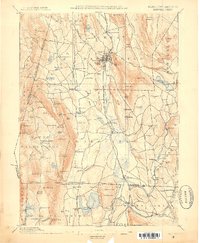 1885 Sheffield1885 Print · USGSThe Berkshires meet the Connecticut and New York borders during a period of heavy rail expansion and riverside industry. Genealogists can trace family roots through settlements like Gomorrah, Sodom, and North Egremont, or locate landmarks such as Union Church and Ashley Falls.
 - 1888 Map of Sheffield
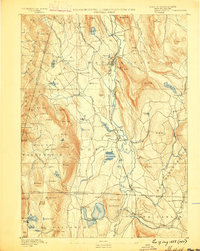 1888 Sheffield1888 Print · USGSThe Housatonic Valley in the 1880s is captured here at the height of its rail-and-mill era, spanning the borderlands of Massachusetts and Connecticut. Researchers can trace the original routes of the Housatonic Railroad and locate community landmarks like Union Church and Twin Lakes Station.
 - 1891 Map of Sheffield
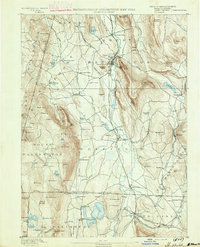 1891 Sheffield1891 Print · USGSThe Housatonic Valley in the 1890s reveals a bustling corridor of rail-and-river commerce at the foot of the Berkshire mountains. Genealogists and historians can trace Victorian-era settlements from Great Barrington to Sheffield, locating old landmarks like Union Church and Chapinville Station.
 - 1893 Map of Sheffield
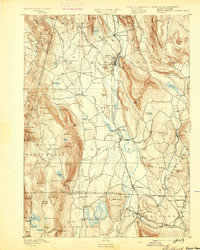 1893 Sheffield1893 Print · USGSThe Housatonic River valley flourished at the end of the century as a hub for rail and water-powered industry. Researchers can trace the path of the Housatonic Railroad through Great Barrington and locate landmarks like Union Church and Bashbish Falls.
 - 1897 Map of Sheffield
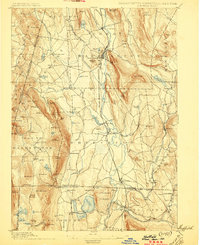 1897 Sheffield1897 Print · USGSThe Housatonic valley and the Berkshire foothills are captured here in the late 1800s, showing a landscape defined by river-driven industry and early rail lines. Trace family roots and old homesteads in Great Barrington, South Egremont, and the high mountain village of Mt Washington.10 unique versions available
 - 1899 Map of Housatonic
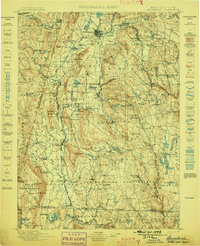 1899 Housatonic1899 Print · USGSThe Berkshire hills at the close of the nineteenth century reveal a landscape of industrial hamlets and Shaker settlements. Trace the rail-and-river economy through Lenox Furnace, locate the historic Shaker Village, and find landmarks like Laura Tower.
 - 1899 Map of Millbrook, 1956 Print
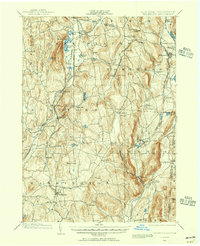 1899 Millbrook1956 Print · USGSDutchess County enters a period of high rail connectivity in the late nineteenth century, as iron and agriculture drive local growth. Genealogists and historians can trace the paths of four railroads through hamlets like Millerton, Bangall, and Amenia Union.
 - 1900 Map of Housatonic
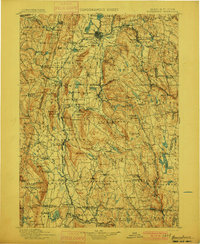 1900 Housatonic1900 Print · USGSThe Berkshires and the Housatonic Valley are captured here at a moment of industrial and social transition during the late Victorian era. Genealogists and historians can trace the early rail networks of the Boston and Albany R.R. through old settlements like Shaker Village and Lenox Furnace.5 unique versions available
 - 1902 Map of Millbrook
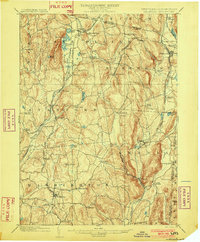 1902 Millbrook1902 Print · USGSEastern Dutchess County at the turn of the century was a bustling corridor of intersecting railroads and valley settlements. Genealogists and rail historians can trace the paths of the Central New England R. R. and find local landmarks like Lithgow, Shekomeko, and Hammertown.10 unique versions available
 - 1902 Map of Copake, 1954 Print
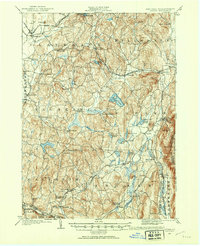 1902 Copake1954 Print · USGSColumbia County at the turn of the century shows a landscape defined by industry and iron, before modern highways bypassed these hillside hamlets. Trace the rail-and-mine economy through Copake Ironworks, the Weed Mines, and the busy junction at Boston Corners.
 - 1904 Map of Copake
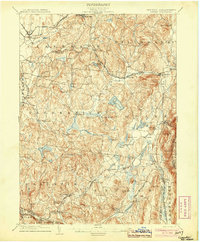 1904 Copake1904 Print · USGSColumbia County at the turn of the century shows a landscape defined by deep-rooted industry and an extensive rail network. Researchers can trace the legacy of mining and milling at Ancram Leadmines, Weed Mines, and the Spaulding Furnace along the Roeliff Jansen Kill.7 unique versions available
 - 1943 Map of Housatonic
 1943 Housatonic1943 Print · USGSThe Berkshires and the Housatonic Valley are captured during the war years, showing a landscape of traditional Shaker settlements and growing industrial centers. Trace the routes of the NY NH & H RR and explore sites like Shaker Village, Richmond Furnace, and Rockdale Mills.
 - 1947 Map of Hartford, 1955 Print
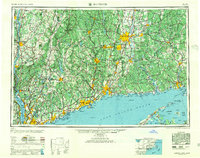 1947 Hartford1955 Print · USGSSouthern New England and the Hudson Valley are shown in detail during the post-war expansion era. Genealogists and researchers can trace local landmarks from the State Capitol and Yale University to the Stratford Lighthouse and Woodlawn Cem.2 unique versions available
 - 1948 Map of Ancram
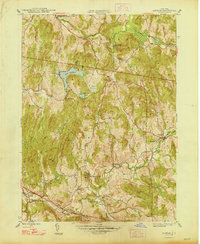 1948 Ancram1948 Print · USGSColumbia County in the late 1940s remained a landscape of dispersed hamlets and rural school districts. Researchers can trace historic industry at Spaulding Furnace and locate family landmarks like Vedder Ch, Silvernails, and New Forge.2 unique versions available
 - 1948 Map of Hartford
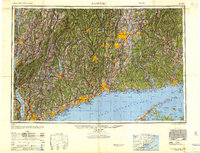 1948 Hartford1948 Print · USGSSouthern New England is captured here in the late 1940s, showcasing a landscape of thriving industrial cities and developing parkways. Genealogists and historians can trace the rail networks of the New York New Haven and Hartford RR or locate coastal defense sites like Fort Terry and Camp Shanks.2 unique versions available
 - 1948 Map of Pine Plains
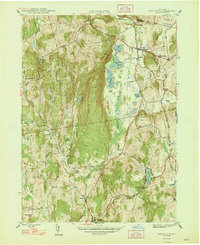 1948 Pine Plains1948 Print · USGSMid-century Dutchess County is captured here in a moment of quiet transition, showing the rural landscape before modern development. Genealogists can locate family-named landmarks like Pachin Mills, Old Attlebury, and rural schoolhouses such as Bear Market Sch.
 - 1948 Map of Bashbish Falls
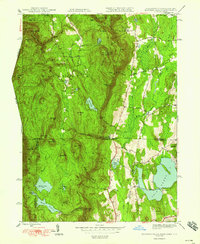 1948 Bashbish Falls1948 Print · USGSThe Berkshires and Taconic Mountains meet in the late 1940s at this rare intersection of three state borders. Follow the original route of the Appalachian Trail past Bashbish Falls, Mt Everett, and Twin Lakes.
 - 1948 Map of Albany, 1951 Print
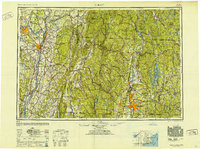 1948 Albany1951 Print · USGSThe Hudson and Connecticut River valleys are captured here in the late 1940s, showing the vital rail and water corridors of the Northeast. You can trace the Boston and Maine tracks past Mt Greylock or locate early settlements like Great Barrington and Bennington.
 - 1949 Map of Bashbish Falls
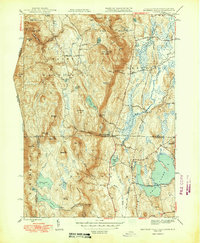 1949 Bashbish Falls1949 Print · USGSThe Berkshires and the Litchfield Hills meet in the late 1940s at this rare tri-state intersection of Massachusetts, Connecticut, and New York. Local historians can trace the Appalachian Trail across Mt Everett or locate the Churchill Cem and Berkshire Sch near the town of Salisbury.2 unique versions available
 - 1953 Map of Copake, 1955 Print
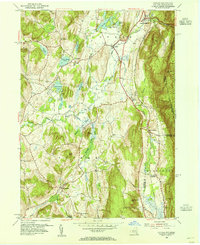 1953 Copake1955 Print · USGSColumbia County at the dawn of the fifties shows a landscape of rail-connected hamlets and highland parks. Researchers can trace the old rail lines through Boston Corner and Whitehouse Crossing or locate family roots near West Copake Ch.4 unique versions available
 - 1955 Map of Millerton, 1957 Print
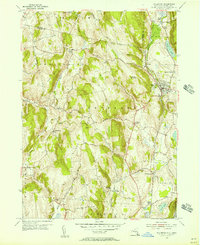 1955 Millerton1957 Print · USGSThe borderlands of New York and Connecticut appear here in the mid-1950s, showing a landscape defined by dairy farms and railroad junctions. Genealogists and local historians can trace the New York Central line through stops like Coleman Station and Sharon Station, or locate family sites at Irondale Cem and Bryan Cem.4 unique versions available
 - 1956 Map of Albany, 1968 Print
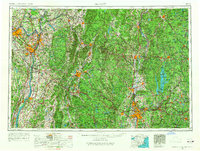 1956 Albany1968 Print · USGSThe industrial heart of the Northeast is revealed in the mid-1950s, from the Hudson Valley to the Connecticut River. Researchers can trace the legacy of the Quabbin Reservoir, locate Westover Air Force Base, or follow the Rutland RR through the Green Mountains.2 unique versions available
 - 1957 Map of Albany
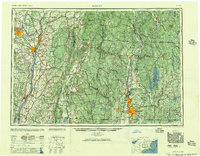 1957 Albany1957 Print · USGSThe Tri-State region and Connecticut River Valley are captured here during a period of significant postwar growth and infrastructure expansion. Genealogists and historians can trace the rail-and-river economy through landmarks like the Boston and Maine railroad, Quabbin Reservoir, and Westover Air Force Base.
 - 1958 Map of Bashbish Falls, 1959 Print
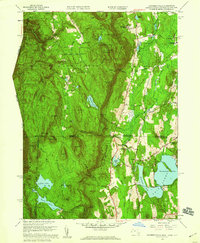 1958 Bashbish Falls1959 Print · USGSThe tri-state border of the Taconics is captured here during the late 1950s, showing the intersection of wilderness and mountain settlement. Genealogists and hikers can trace the Appalachian Trail past Churchill Cem and the small village of Joyceville.8 unique versions available
 - 1959 Map of Albany
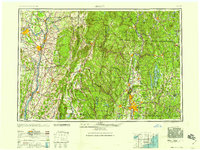 1959 Albany1959 Print · USGSThe Hudson and Connecticut River valleys are captured here during the late fifties, showing the region's dense rail networks and massive water projects. Researchers can trace the New York State Thruway or locate local landmarks like Mt Greylock and the Quabbin Reservoir.
Showing maps 1-25 of 62
Top cities near Ancram
- Pleasant Valley historical maps
- Great Barrington historical maps
- Claverack historical maps
- Hudson historical maps
- Ghent historical maps
- Washington historical maps
See more
Top neighborhoods of Ancram
Frequently asked questions
- What are the different types of historical maps available for Ancram?
- What is the oldest map of Ancram?
- Where can I purchase historical maps of Ancram for my home or office?
- Where can I download high-res historical maps of Ancram?
- Are there historical topographic maps available for Ancram?
- Is there historical aerial imagery available for Ancram?
- Where are historical maps of Ancram sourced from?