1900s (20th Century) Maps of Colden, New York
Explore 11 historic maps of Colden from the 1900s (20th Century). These maps offer a rare glimpse into what life looked like during the 1900s — showing old roads, neighborhoods, homes, and landmarks that have changed or disappeared over time.
Whether you're researching your family's past, planning a metal detecting trip, or studying how Colden's landscape evolved across the 1900s, these high-resolution maps are a powerful tool for exploring the history of this region.
- Focus on a specific era: All maps on this page are from the 1900s, giving you a focused view of this time period.
- See what’s changed: Compare century-old streets, trails, and buildings to today's modern landscape using overlays and satellite layers.
- Research with precision: Use these maps for genealogy, historical research, land use analysis, or educational projects.
- View, download, or print: Maps are fully viewable online in high resolution, and can be downloaded or printed for your own records.
Start exploring Colden's history through authentic maps from the 1900s. This is your window into the past.
Colden, NY maps
(11)- 1925 Map of Springville
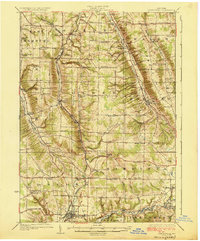 1925 Springville1925 Print · USGSSouthern Erie County in the mid-twenties shows a landscape of deep valleys and rail-connected villages before the expansion of modern highways. Genealogists can trace family footprints through dozens of district schools like Wheeler Hollow School and rural centers such as Sardinia and Griffins Mills.5 unique versions available
 - 1954 Map of Springville, 1955 Print
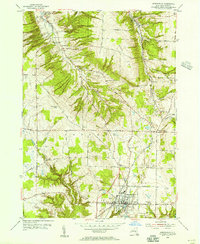 1954 Springville1955 Print · USGSSouthern Erie County in the mid-fifties is defined by the thriving village of Springville and the winding course of the Baltimore and Ohio railroad. Local historians can trace early schools and healthcare sites like Griffith Institute and Chaffee Hosp, or locate family plots at Maplewood Cem and Sibley Cem.2 unique versions available
 - 1955 Map of Holland, 1957 Print
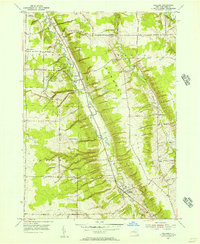 1955 Holland1957 Print · USGSErie County's southern valleys and highlands are caught mid-century, before modern development bypassed these rural hamlets. Genealogists can trace family names at Humphrey Cem and Hunter Creek Ch, or locate the old Gow Sch near South Wales.2 unique versions available
 - 1955 Map of Colden, 1957 Print
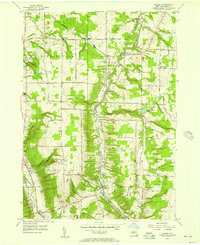 1955 Colden1957 Print · USGSErie County in the mid-fifties shows a landscape of deep creek valleys and rising ridges connected by the Baltimore and Ohio RR. Trace the footprints of West Falls, Colden, and Patchin, or locate family sites near Maple Wood Cem and St Martins Ch.4 unique versions available
 - 1957 Map of Sardinia, 1958 Print
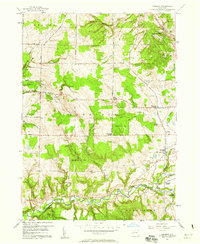 1957 Sardinia1958 Print · USGSSoutheastern Erie County in the late fifties was a landscape of high ridges and rural family crossroads. Genealogists and researchers can trace the old rail lines of the Pennsylvania Railroad and locate vanished landmarks like Tru-Blue Ch and Sillimans Corners.3 unique versions available
 - 1960 Map of Buffalo
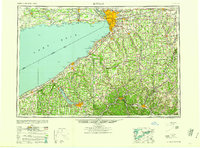 1960 Buffalo1960 Print · USGSWestern New York and the Niagara Peninsula thrive during the mid-twentieth century industrial peak. Genealogists and historians can trace family-named points and early settlements from Dunkirk Light to the Allegany Indian Reservation.
 - 1962 Map of Buffalo, 1980 Print
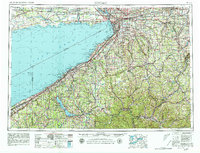 1962 Buffalo1980 Print · USGSThe Niagara Frontier and Western New York are captured here in the early sixties, showing the vital industrial and maritime nexus between the U.S. and Canada. Researchers can trace the path of the Welland Canal, locate the Allegany Indian Reservation, or find family sites near Chautauqua Lake.2 unique versions available
 - 1967 Map of Buffalo
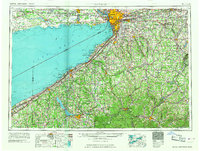 1967 Buffalo1967 Print · USGSWestern New York and the Lake Erie shoreline are shown here during the mid-1960s industrial peak. Researchers can trace the massive rail networks of the Erie Railroad, locate the Cattaraugus Indian Reservation, or find historic sites like Fort Erie.
 - 1973 Map of Buffalo
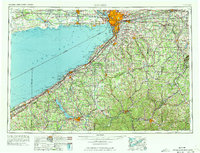 1973 Buffalo1973 Print · USGSWestern New York and Ontario's Golden Horseshoe meet in the early seventies, spanning from the industrial waterfronts of Buffalo to the hills of Allegany State Park. Trace the paths of the Welland Canal and Erie Lackawanna railroad through the lakefront towns of Dunkirk and Port Colborne.
 - 1979 Map of Holland
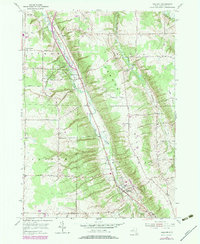 1979 Holland1979 Print · USGSErie County's rural character is on full display in the late 1970s as agricultural valleys and wooded ridges meet along the East Branch Cazenovia Creek. Family historians can trace numerous burial sites like Humphrey Cem and local landmarks such as the Gow Sch and Emery Park.
 - 1984 Map of Buffalo, 1985 Print
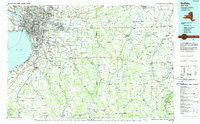 1984 Buffalo1985 Print · USGSWestern New York's industrial and transport hubs are in full view during the mid-eighties, from the Lake Erie waterfront to the Genesee Valley. Researchers can trace the legacy of the Erie Canal, find ancestral sites like Mount Calvary Cem, or locate the Attica Correctional Facility.2 unique versions available
End of results
Showing maps 1-11 of 11
Top cities near Colden
- Buffalo historical maps
- Cheektowaga historical maps
- Hamburg historical maps
- West Seneca historical maps
- Lancaster historical maps
- Orchard Park historical maps
See more
Top neighborhoods of Colden
Frequently asked questions
- What are the different types of historical maps available for Colden?
- What is the oldest map of Colden?
- Where can I purchase historical maps of Colden for my home or office?
- Where can I download high-res historical maps of Colden?
- Are there historical topographic maps available for Colden?
- Is there historical aerial imagery available for Colden?
- Where are historical maps of Colden sourced from?