Old Maps of Cork, Johnstown
Explore 16 old maps of Cork, spanning from 1903 to today. These high-resolution historic maps reveal how streets, neighborhoods, landmarks, and natural features evolved over time — perfect for genealogy, metal detecting, research, and local history exploration.
What you can do with these maps:
- See how Cork changed over time: Compare historical maps to modern-day views to trace roads, homesites, rail lines & more.
- View detailed metadata: Each map includes creators, publishers, year, scale, and archive source.
- Overlay maps with satellite & LiDAR: Visualize the past alongside modern tools to explore terrain & human change.
- Trusted historical sources: Maps sourced from the USGS, Library of Congress, and other archives.
- Access maps your way: View online, download high-res files, or order prints for personal or research use.
Start exploring old maps of Cork to uncover forgotten places, hidden landmarks, and the deep history beneath your feet.
Cork, Johnstown maps
(16)- 1903 Map of Gloversville
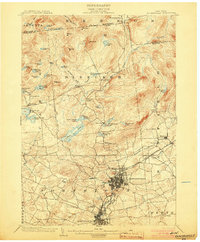 1903 Gloversville1903 Print · USGSGloversville and Johnstown anchor this turn-of-the-century survey as the region's industrial heart, surrounded by the growing Adirondack resort and timber lands. Genealogists and historians can trace the Electric R.R. or locate historic markers like the Battle Monument and old hamlets like Bleecker Center.8 unique versions available
 - 1943 Map of Gloversville
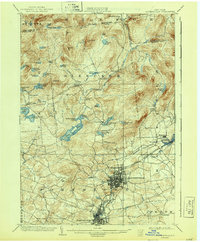 1943 Gloversville1943 Print · USGSGloversville and Johnstown serve as the industrial anchors of this Adirondack foothills region during the early twentieth century. Genealogists and historians can trace the paths of the Electric R. R. and locate family landmarks like Kingsboro, Bleecker, and the Battle Monument.
 - 1946 Map of Peck Lake
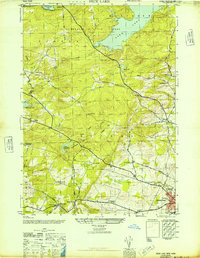 1946 Peck Lake1946 Print · USGSFulton County settlements and the southern Adirondacks are captured here in the years following the war. Researchers can trace the rural networks around Peck Lake, locating family burial sites like Boshart Cem and early schools including Clip Hill Sch.
 - 1950 Map of Utica, 1951 Print
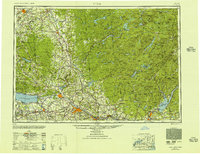 1950 Utica1951 Print · USGSCentral New York in the post-war era showcases the industrial Mohawk Valley and the pristine Adirondack interior. Researchers can trace transportation networks like the New York Central Railroad and find early Cold War sites such as Griffiss Air Force Base.
 - 1957 Map of Utica
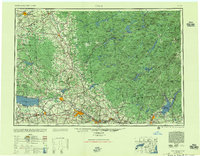 1957 Utica1957 Print · USGSCentral New York and the Adirondack foothills are captured here in the mid-fifties, showing a landscape defined by the Mohawk River corridor and the growing highway system. Genealogists and researchers can trace the rail lines of the New York Central and locate communities from Lowville to Gloversville.
 - 1962 Map of Peck Lake
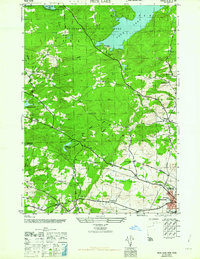 1962 Peck Lake1962 Print · USGSFulton County’s southern Adirondack foothills were well-established rural communities by the mid-1940s. Genealogists and local historians can trace family sites like Kecks Center Cem or follow the old Turnpike Road to the Wemple Sch.
 - 1962 Map of Utica
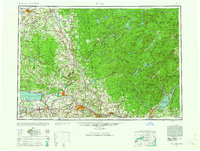 1962 Utica1962 Print · USGSCentral New York and the Adirondack wilderness are captured here during the mid-century era of highway and industrial expansion. Genealogists and historians can trace the development of the New York State Thruway and local rail lines connecting Utica, Rome, and Gloversville.3 unique versions available
 - 1964 Map of Utica
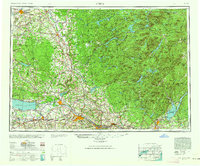 1964 Utica1964 Print · USGSCentral New York and the high wilderness of the Adirondacks are captured here during the post-war era of infrastructure expansion. Researchers can trace the development of the New York State Thruway alongside historic corridors like the Oneida Lake (Barge Canal Route) and the N. Y. Central railroad.
 - 1967 Map of Utica
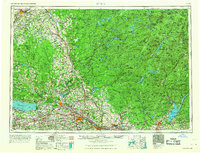 1967 Utica1967 Print · USGSCentral New York's industrial Mohawk Valley meets the Adirondack wilderness in the 1960s, showing the region's transition from manufacturing hubs to state-managed parklands. Trace historic settlements and sites like Griffiss Air Force Base, Colgate University, and the Lyons Falls Paper Mill.
 - 1970 Map of Peck Lake, 1972 Print
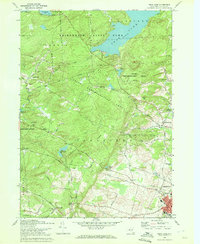 1970 Peck Lake1972 Print · USGSThe Fulton County countryside in the 1970s shows the meeting of the Adirondack wilderness and the growing outskirts of Gloversville. Locate family landmarks like Eppie Corners, the Boshart Cem, and North Bush.
 - 1985 Map of Gloversville, 1986 Print
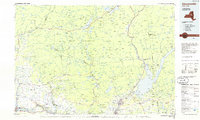 1985 Gloversville1986 Print · USGSThe southern Adirondacks meet the Mohawk Valley industrial corridor during the mid-eighties, showcasing a landscape of high-country lakes and riverside manufacturing towns. Trace the historical alignment of the Erie Canal and Conrail lines or locate landmarks like the Herkimer Home State Historic Site.2 unique versions available
 - 2010 Map of Peck Lake, 2010 Print
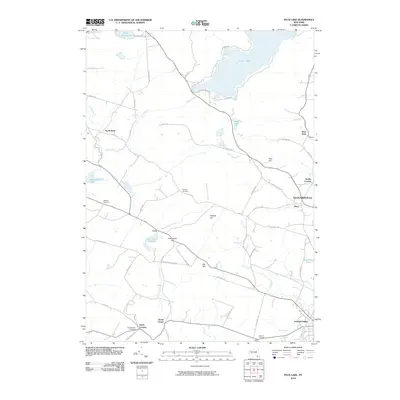 2010 Peck Lake2010 Print · USGSFulton County settlements and the expansive shoreline of Peck Lake are documented in this early twenty-first-century survey. Researchers can trace ancestral roots through family sites like McBeth Cemetery or explore the rural layout of North Bush and Meco.
 - 2013 Map of Peck Lake, 2013 Print
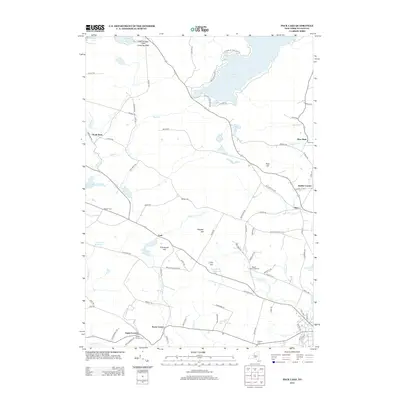 2013 Peck Lake2013 Print · USGSThe Adirondack foothills of Fulton County appear in the early 21st century as a landscape of highland reservoirs and quiet hamlets. Researchers can trace rural lineages through sites like Rhodes Cemetery or the family heritage at Rogers Family Orchards.
 - 2016 Map of Peck Lake, 2016 Print
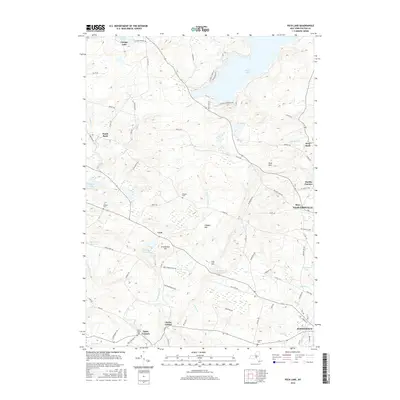 2016 Peck Lake2016 Print · USGSThe foothills of the Adirondacks south of Peck Lake remained a landscape of scattered hamlets and essential reservoirs into the twenty-first century. Genealogists and local historians can locate early burial sites at Rhodes Cem and Keeks Center Cem, or trace the rural crossroads at Smiths Corners and Eppie Corners.
 - 2019 Map of Peck Lake, 2019 Print
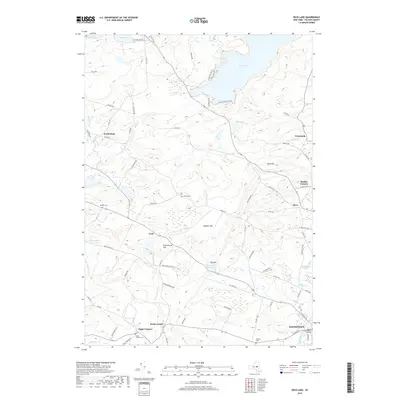 2019 Peck Lake2019 Print · USGSThe northern edge of Johnstown and the surrounding hills of Fulton County are shown here in modern detail. Trace local family roots through sites like Kecks Center Cem or explore rural settlements such as North Bush and Meco near the shores of Peck Lake.
 - 2023 Map of Peck Lake, 2023 Print
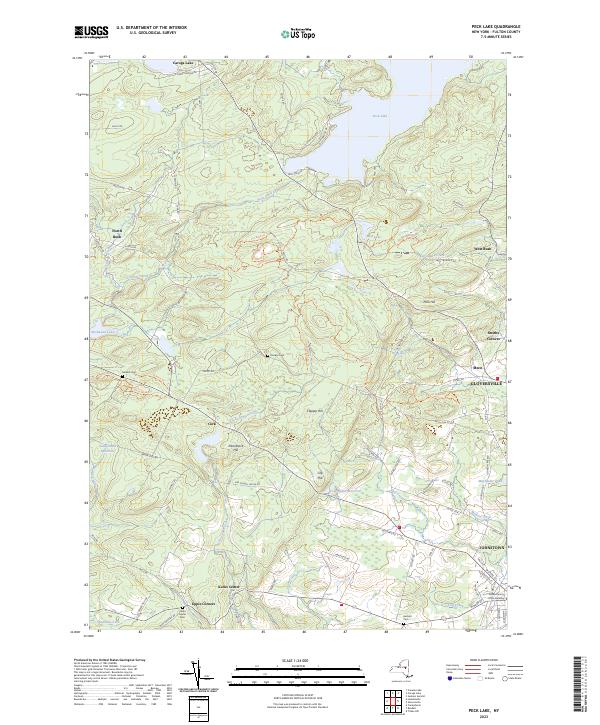 2023 Peck Lake2023 Print · USGSThe Adirondack foothills of Fulton County appear here in detail, showing the rural uplands and vital reservoirs of the modern era. Genealogists and historians can locate old family burial sites like Rhodes Cem and Boshart Cem or trace the small hamlets of Kecks Center and Cork.
End of results
Showing maps 1-16 of 16
Top cities near Cork
- Gloversville historical maps
- Johnstown historical maps
- Johnstown historical maps
- Mayfield historical maps
- Duanesburg historical maps
- Amsterdam historical maps
See more
Frequently asked questions
- What are the different types of historical maps available for Cork?
- What is the oldest map of Cork?
- Where can I purchase historical maps of Cork for my home or office?
- Where can I download high-res historical maps of Cork?
- Are there historical topographic maps available for Cork?
- Is there historical aerial imagery available for Cork?
- Where are historical maps of Cork sourced from?