Old Maps of Number Four, Watson for Academic Research
Study the evolution of Number Four with 15 high-resolution historic maps. Whether you're teaching, researching, or modeling changes in land use, these maps provide essential visual documentation of urban, environmental, and geographic change.
- Analyze long-term change: Track patterns in development, transportation, and natural features.
- Ideal for environmental or urban studies: Support academic projects with primary historical map data.
- Use in the classroom or lab: Educators and researchers rely on these maps to bring historical context to life.
These maps are a powerful tool for teaching, research, and visualizing how Number Four has changed over the decades.
Number Four, Watson maps
(15)- 1912 Map of Number Four
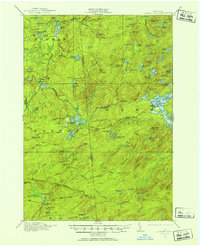 1912 Number Four1912 Print · USGSThe Adirondack wilderness of Herkimer and Lewis counties is captured here in the early twentieth century before modern development. Trace the remote waterways from the Oswegatchie River down to Soft Maple Dam or locate family landmarks near Balsam Flats and Stillwater Mtn.
 - 1915 Map of Number Four
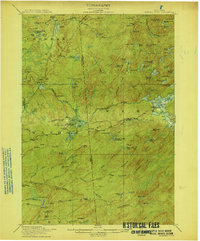 1915 Number Four1915 Print · USGSThe wilderness of the North Country comes into focus in this pre-war survey of the Lewis and Herkimer county line. Researchers can trace the remote settlement of Number Four and locate early landmarks like Silver Mine Dam and Stillwater Mtn.5 unique versions available
 - 1950 Map of Utica, 1951 Print
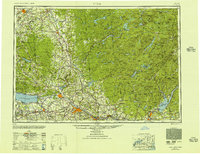 1950 Utica1951 Print · USGSCentral New York in the post-war era showcases the industrial Mohawk Valley and the pristine Adirondack interior. Researchers can trace transportation networks like the New York Central Railroad and find early Cold War sites such as Griffiss Air Force Base.
 - 1957 Map of Utica
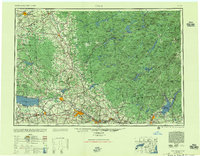 1957 Utica1957 Print · USGSCentral New York and the Adirondack foothills are captured here in the mid-fifties, showing a landscape defined by the Mohawk River corridor and the growing highway system. Genealogists and researchers can trace the rail lines of the New York Central and locate communities from Lowville to Gloversville.
 - 1957 Map of Number Four, 1964 Print
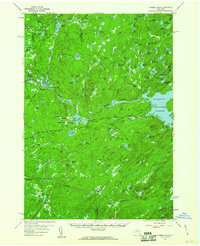 1957 Number Four1964 Print · USGSThe western Adirondacks during the mid-1950s reveal a landscape of managed wilderness and remote settlements. Researchers can trace historic access routes like Prentice Road or locate the Lookout Tower near Number Four and Stillwater.4 unique versions available
 - 1962 Map of Utica
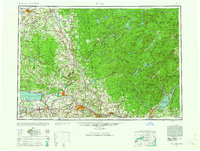 1962 Utica1962 Print · USGSCentral New York and the Adirondack wilderness are captured here during the mid-century era of highway and industrial expansion. Genealogists and historians can trace the development of the New York State Thruway and local rail lines connecting Utica, Rome, and Gloversville.3 unique versions available
 - 1964 Map of Utica
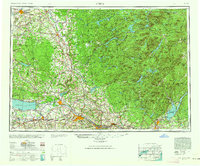 1964 Utica1964 Print · USGSCentral New York and the high wilderness of the Adirondacks are captured here during the post-war era of infrastructure expansion. Researchers can trace the development of the New York State Thruway alongside historic corridors like the Oneida Lake (Barge Canal Route) and the N. Y. Central railroad.
 - 1967 Map of Utica
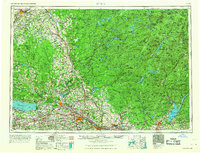 1967 Utica1967 Print · USGSCentral New York's industrial Mohawk Valley meets the Adirondack wilderness in the 1960s, showing the region's transition from manufacturing hubs to state-managed parklands. Trace historic settlements and sites like Griffiss Air Force Base, Colgate University, and the Lyons Falls Paper Mill.
 - 1985 Map of Watertown, 1986 Print
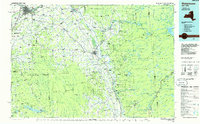 1985 Watertown1986 Print · USGSThe Black River Valley and the western Adirondacks are captured here in the mid-1980s, from the urban streets of Watertown to the remote Stillwater Reservoir. Researchers can trace the Conrail lines through Carthage or locate family landmarks in Lowville, Boonville, and Old Forge.2 unique versions available
 - 1989 Map of Number Four
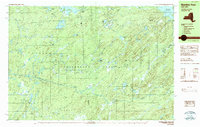 1989 Number Four1989 Print · USGSThe western Adirondacks in the late eighties are defined by the winding Independence River and the isolated settlement of Number Four. Trace the rugged backcountry from Stillwater Mountain to the shores of Stillwater Reservoir and Francis Lake.2 unique versions available
 - 2010 Map of Number Four, 2010 Print
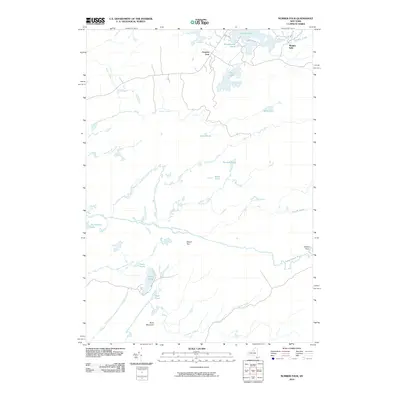 2010 Number Four2010 Print · USGSThe Lewis County backcountry comes into focus in this modern era survey of the Number Four settlement and its surrounding waterways. Genealogists and historians can trace the paths of the Independence River and find landmarks like Moshier Falls and Stony Lake.
 - 2013 Map of Number Four, 2013 Print
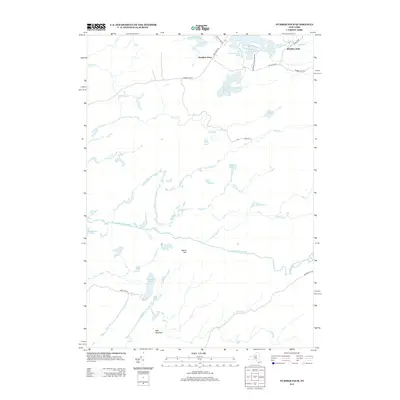 2013 Number Four2013 Print · USGSNumber Four and the surrounding Adirondack wilderness are captured here in the early twenty-first century. Researchers can trace the drainage of the Independence River and locate remote landmarks like Moshier Falls, Stony Lake, and the peaks of Mount Tom.
 - 2016 Map of Number Four, 2016 Print
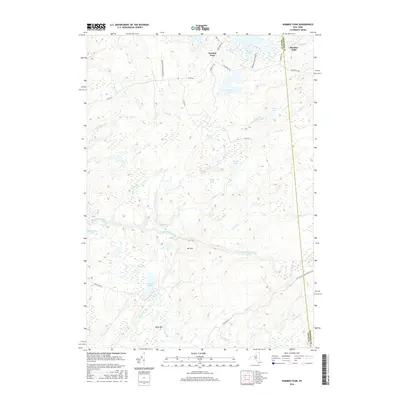 2016 Number Four2016 Print · USGSThe northern Adirondacks are captured here in the mid-2010s, showcasing the high-country landscape around the historic Number Four settlement. Researchers and hikers can trace the remote waterways of the Independence River and locate family landmarks like Moshier Falls or Stony Lake.
 - 2019 Map of Number Four, 2019 Print
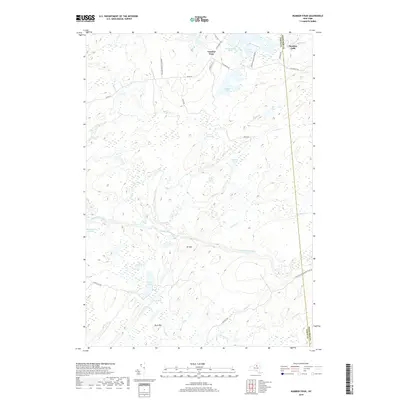 2019 Number Four2019 Print · USGSThe wilderness of Lewis and Herkimer Counties is captured here in the late twenty-tens as it remains a sanctuary of lakes and rivers. Genealogists and outdoor historians can trace the remote settlement of Number Four or locate landmarks like Moshier Falls and Huckleberry Lake.
 - 2023 Map of Number Four, 2023 Print
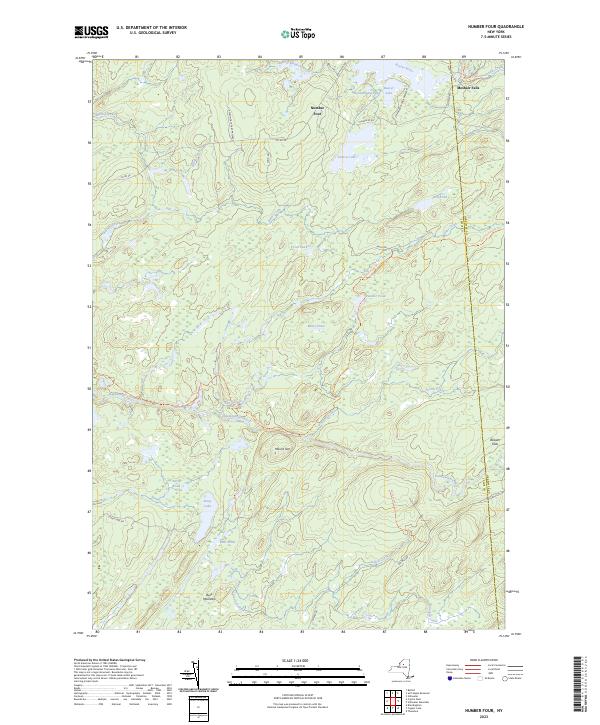 2023 Number Four2023 Print · USGSThe hamlet of Number Four serves as a remote trailhead for the Adirondacks in the 2020s. Researchers can trace forest tracks like Beach Mill Trl and identify water features including Moshier Falls and Beaver Lake.
End of results
Showing maps 1-15 of 15
Top cities near Number Four
- Croghan historical maps
- New Bremen historical maps
- Watson historical maps
- Webb historical maps
- West Turin historical maps
- Diana historical maps
See more
Frequently asked questions
- What are the different types of historical maps available for Number Four?
- What is the oldest map of Number Four?
- Where can I purchase historical maps of Number Four for my home or office?
- Where can I download high-res historical maps of Number Four?
- Are there historical topographic maps available for Number Four?
- Is there historical aerial imagery available for Number Four?
- Where are historical maps of Number Four sourced from?