1940s Maps of Saint Johnsville, New York
Explore 13 historic maps of Saint Johnsville from the 1940s. These maps offer a rare glimpse into what life looked like during the 1940s — showing old roads, neighborhoods, homes, and landmarks that have changed or disappeared over time.
Whether you're researching your family's past, planning a metal detecting trip, or studying how Saint Johnsville's landscape evolved across the 1940s, these high-resolution maps are a powerful tool for exploring the history of this region.
- Focus on a specific era: All maps on this page are from the 1940s, giving you a focused view of this time period.
- See what’s changed: Compare century-old streets, trails, and buildings to today's modern landscape using overlays and satellite layers.
- Research with precision: Use these maps for genealogy, historical research, land use analysis, or educational projects.
- View, download, or print: Maps are fully viewable online in high resolution, and can be downloaded or printed for your own records.
Start exploring Saint Johnsville's history through authentic maps from the 1940s. This is your window into the past.
Saint Johnsville, NY maps
(13)- 1943 Map of Little Falls, 1960 Print
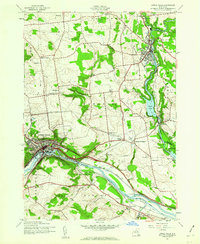 1943 Little Falls1960 Print · USGSThe Mohawk Valley at the height of the Second World War shows a landscape defined by the Barge Canal and industrial hubs like Little Falls. Trace family roots at the Fink-Van Valkenburg Cem or locate rural landmarks like Yellow Ch.2 unique versions available
 - 1944 Map of Canajoharie, 1953 Print
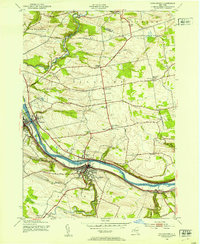 1944 Canajoharie1953 Print · USGSThe Mohawk Valley corridor thrives during the mid-forties as a vital transport artery for the New York Central railroad and the Barge Canal. Genealogists can locate family plots like Dillenback Cem and rural centers such as Stone Arabia and Nelliston.2 unique versions available
 - 1944 Map of Fort Plain, 1960 Print
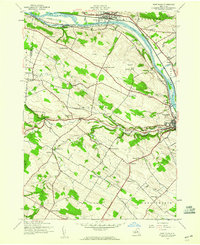 1944 Fort Plain1960 Print · USGSThe Mohawk Valley during the war years shows a landscape defined by the New York State Barge Canal and the New York Central Railroad. Genealogists can locate family landmarks like the Nellis Cem, Klock Sch, and the riverside settlement of Mindenville.2 unique versions available
 - 1945 Map of Lassellsville, 1964 Print
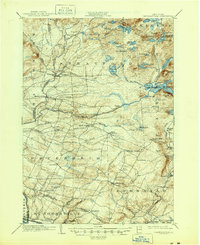 1945 Lassellsville1964 Print · USGSFulton County and the southern Adirondack fringe are captured here just after the turn of the century, showing a landscape of small mill towns and isolated highland settlements. Researchers can trace family-named crossroads like Fical Corners and vanished industrial sites at Glasgow Mills or Newkirk Mills.
 - 1945 Map of Lassellsville, 1964 Print
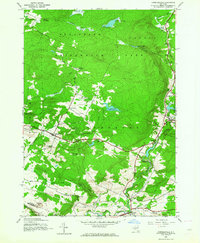 1945 Lassellsville1964 Print · USGSFulton and Montgomery Counties appear at the close of the Second World War as a landscape of rural hamlets and creek-side industry. Genealogists can trace family footprints at Dempster Corners, Miles School, and the Christman Cem.3 unique versions available
 - 1945 Map of Oppenheim, 1966 Print
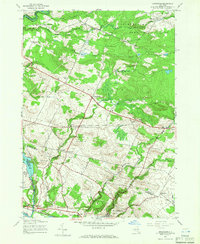 1945 Oppenheim1966 Print · USGSThe Mohawk Valley and the Adirondack foothills meet in this mid-century survey of Fulton and Montgomery Counties. You can trace early schoolhouse locations like School No 9 and explore rural hamlets including Lotville and Kringsbush.2 unique versions available
 - 1946 Map of Canajoharie
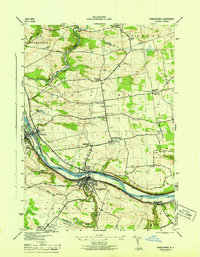 1946 Canajoharie1946 Print · USGSThe Mohawk Valley corridor is captured here just after the war, showing the industrial and transit hubs of Canajoharie and Fort Plain. Genealogists can trace family locations near Dillenback Cem or rural landmarks like Stone Arabia and School No 6.
 - 1946 Map of Fort Plain
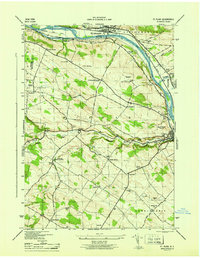 1946 Fort Plain1946 Print · USGSThe Mohawk Valley in the mid-1940s shows a landscape of busy river commerce and quiet upland farming. Researchers can trace family sites at Mount Hope Cem or follow the early 20th-century progress of the Erie Barge Canal and Fort Plain Airport.
 - 1946 Map of Little Falls
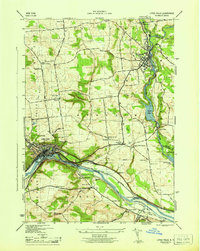 1946 Little Falls1946 Print · USGSHerkimer County at mid-century reveals a landscape defined by the Mohawk River and the busy Barge Canal. Researchers can trace the heritage of local hamlets like Ingham Mills and Dolgeville or locate ancestral sites at Yellow Ch and St Marys Cem.
 - 1946 Map of Lassellsville
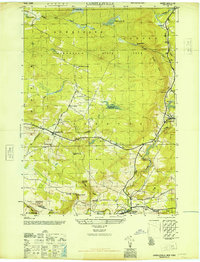 1946 Lassellsville1946 Print · USGSFulton County at the close of the war reveals a landscape of small hamlets and family-named landmarks tied to the Adirondack foothills. Researchers can trace ancestral locations at Fical Cem, the vanished Miles School, or the old industrial site at Glasgow Mills.
 - 1948 Map of Binghamton, 1980 Print
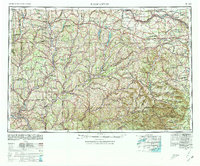 1948 Binghamton1980 Print · USGSCentral New York and the Southern Tier thrive in the late 1940s as a hub of rail traffic and mountain industry. Researchers can trace historic transit lines like the Erie Railroad through Binghamton or find old valley settlements near Oneonta and Delhi.
 - 1949 Map of Little Falls
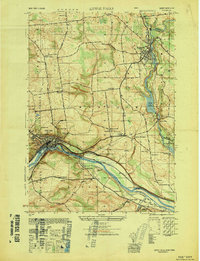 1949 Little Falls1949 Print · USGSThe Mohawk River valley during the late 1940s reveals a bustling landscape of rail and water transport. Trace family roots at St Marys Cem or locate old rural landmarks like Ingham Mills, Indian Castle Ch, and Five Mile Dam.
 - 1949 Map of Little Falls
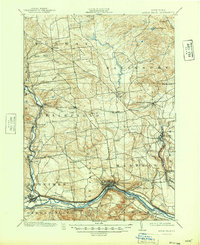 1949 Little Falls1949 Print · USGSHerkimer County's industrial heartland is captured here at mid-century, showcasing the vital Mohawk Valley transit corridor. Researchers can trace the path of the Erie Canal, the Barge Canal, and early rail stops like Ingham Mills Sta. and Dolgeville.
End of results
Showing maps 1-13 of 13
Top cities near Saint Johnsville
- German Flatts historical maps
- Johnstown historical maps
- Little Falls historical maps
- Minden historical maps
- Canajoharie historical maps
- Otsego historical maps
See more
Top neighborhoods of Saint Johnsville
Frequently asked questions
- What are the different types of historical maps available for Saint Johnsville?
- What is the oldest map of Saint Johnsville?
- Where can I purchase historical maps of Saint Johnsville for my home or office?
- Where can I download high-res historical maps of Saint Johnsville?
- Are there historical topographic maps available for Saint Johnsville?
- Is there historical aerial imagery available for Saint Johnsville?
- Where are historical maps of Saint Johnsville sourced from?