Old Maps of Lockport, New York
Explore 53 old maps of Lockport, spanning from 1897 to today. These high-resolution historic maps reveal how streets, neighborhoods, landmarks, and natural features evolved over time — perfect for genealogy, metal detecting, research, and local history exploration.
What you can do with these maps:
- See how Lockport changed over time: Compare historical maps to modern-day views to trace roads, homesites, rail lines & more.
- View detailed metadata: Each map includes creators, publishers, year, scale, and archive source.
- Overlay maps with satellite & LiDAR: Visualize the past alongside modern tools to explore terrain & human change.
- Trusted historical sources: Maps sourced from the USGS, Library of Congress, and other archives.
- Access maps your way: View online, download high-res files, or order prints for personal or research use.
Start exploring old maps of Lockport to uncover forgotten places, hidden landmarks, and the deep history beneath your feet.
Lockport, NY maps
(53)- 1897 Map of Tonawanda
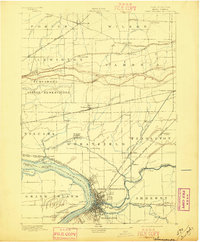 1897 Tonawanda1897 Print · USGSNiagara and Erie counties thrived at the close of the nineteenth century as vital corridors of commerce. Genealogists and historians can trace the early rail networks through Pekin or locate riverside landmarks like Sour Spring Grove and the Erie Canal.
 - 1897 Map of Lockport
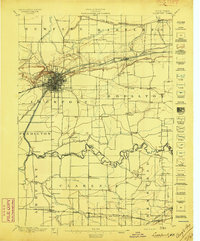 1897 Lockport1897 Print · USGSNiagara County was a powerhouse of canal and rail commerce during the 1890s, centered on the engineering marvels at Lockport. Genealogists and historians can trace the early foundations of Clarence Center, locate Swifts Mills, or follow the original path of the Erie Canal past Raynales Basin.
 - 1899 Map of Niagara
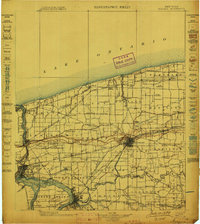 1899 Niagara1899 Print · USGSThe Niagara Frontier is mapped here in the late nineteenth century as a bustling corridor of trade and transport. Researchers can trace the path of the Erie Canal through Lockport or locate early rural settlements like Ransomville and the Tuscarora Indian Reservation.6 unique versions available
 - 1900 Map of Tonawanda
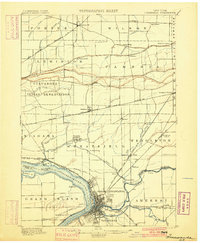 1900 Tonawanda1900 Print · USGSNiagara County and northern Erie County are shown at the turn of the century as the Erie Canal and heavy rail lines drove the growth of the North Tonawanda lumber and shipping hub. Genealogists can trace family footprints in outlying hamlets like Bergholtz, Ransomville, and Martinsville.
 - 1901 Map of Tonawanda
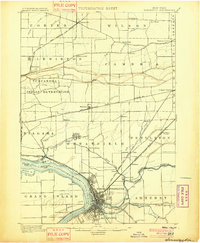 1901 Tonawanda1901 Print · USGSAt the turn of the century, the Niagara Frontier was a powerhouse of canal and rail transit. Genealogists can trace family footprints in settlements like Sanborn, Martinsville, and Bergholtz, or follow the original path of the ERIE CANAL through Tonawanda.7 unique versions available
 - 1902 Map of Lockport
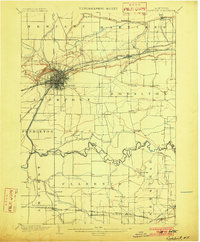 1902 Lockport1902 Print · USGSNiagara and Erie Counties thrived at the turn of the century as the Erie Canal and heavy rail transformed the region. Researchers can trace ancestral property near Lockport or locate vanished stops along the Batavia and Tonawanda Shore Line and near Reynales Basin.6 unique versions available
 - 1905 Map of Lockport, 1906 Print
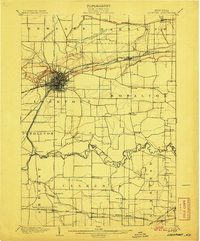 1905 Lockport1906 Print · USGSNiagara and Erie counties at the height of the canal and rail era show a landscape defined by the Erie Canal. Trace family roots in Lockport or explore early transit networks through Transit Sta., Akron, and the Electric R. R.
 - 1948 Map of Tonawanda, 1953 Print
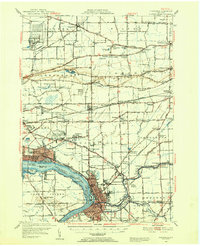 1948 Tonawanda1953 Print · USGSNiagara and Erie counties are shown here just after the war, where the Niagara River meets the historic Erie Canal. Genealogists and local historians can trace the early layout of North Tonawanda or locate family sites at Molyneaux Corners and Colonial Village.3 unique versions available
 - 1948 Map of Lockport, 1953 Print
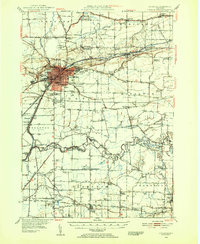 1948 Lockport1953 Print · USGSNiagara and Erie Counties are shown here during the late forties, when the canal and rail lines still anchored the regional economy. Researchers can locate numerous numbered rural schoolhouses and vanished stops like Hodgeville Sta or Akron Junction.3 unique versions available
 - 1949 Map of Cambria
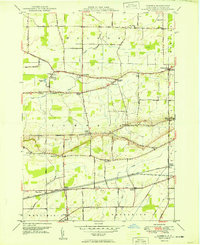 1949 Cambria1949 Print · USGSNiagara County's rural landscape is captured here in the late 1940s, highlighting the dramatic transition of the escarpment and the rail-fed agriculture of the era. Genealogists and historians can trace several named crossroads and early district schools, from Molyneaux Corners to School No 9 and the historic St Andrews Sch.
 - 1950 Map of Wolcottsville
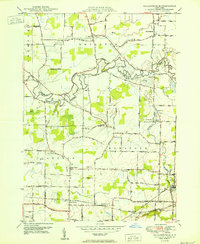 1950 Wolcottsville1950 Print · USGSNiagara and Erie Counties are captured here at the start of the 1950s, showing a transition from rural farming to structured township growth. Researchers can trace family history through numerous district schools and landmarks like Swifts Mills, Akron Junction, and the Clarence Center Church.
 - 1950 Map of Lockport
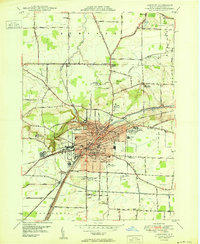 1950 Lockport1950 Print · USGSLockport and its surrounding townships thrive along the Erie Canal in the post-war era. Genealogists and local historians can trace legacy sites like Cold Spring Cem, the Chapel of the Good Shepherd, and the International Railway corridor.
 - 1950 Map of Clarence Center
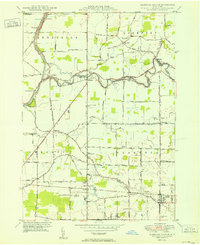 1950 Clarence Center1950 Print · USGSMidcentury Western New York is captured here as rural townships began to evolve around the Erie Canal and Tonawanda Creek. Genealogists and local historians can locate early district schools, the Sulphur Springs Guard Lock, and hamlets like Swormville and Hodgeville Sta.2 unique versions available
 - 1950 Map of Gasport
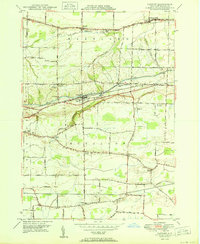 1950 Gasport1950 Print · USGSNiagara County's canal and rail corridor is captured here at mid-century, following the Erie Canal through Gasport. Genealogists and local historians can trace the foundations of several hamlets including Reynales Basin, Terrys Corner, and Orangeport Settlement.
 - 1952 Map of Toronto, 1954 Print
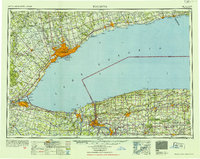 1952 Toronto1954 Print · USGSLake Ontario and the international border define this mid-century landscape of rapid industrial and suburban growth. Researchers can trace the vital shipping and rail corridors of the era, from the Welland Canal to the New York Central Railroad.
 - 1962 Map of Toronto, 1982 Print
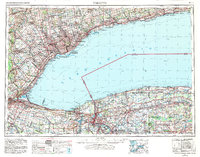 1962 Toronto1982 Print · USGSThe Golden Horseshoe and the Niagara Frontier meet in this early 1960s study of a growing international border region. Trace the path of the Welland Canal and locate land marks like the Scarborough Bluffs and Tuscarora Indian Reservation.
 - 1965 Map of Toronto
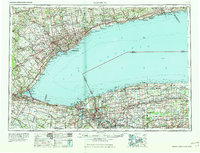 1965 Toronto1965 Print · USGSThe Golden Horseshoe and Niagara Frontier are shown in detail during the early sixties, highlighting the international shipping and transit networks. Trace the path of the Erie Canal, the Welland Canal, and rail lines connecting Toronto and Niagara Falls.2 unique versions available
 - 1965 Map of Gasport, 1967 Print
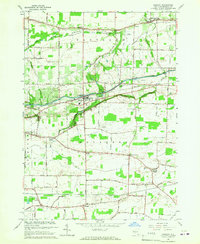 1965 Gasport1967 Print · USGSNiagara County's agricultural and canal-side life is captured here in the mid-sixties, from the banks of the Erie Canal to the hamlets of Hartland and Royalton Center. Genealogists and historians can locate family landmarks like the Orangeport Ch, Chestnut Ridge Cem, and the old Quarries.
 - 1965 Map of Clarence Center, 1967 Print
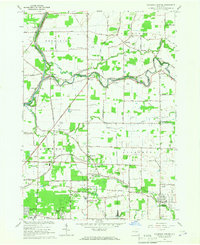 1965 Clarence Center1967 Print · USGSThe Niagara and Erie county line comes alive in the mid-1960s, showing the early suburban growth of townships like Amherst and Clarence. Genealogists and local historians can trace family roots through St Marys Cem or locate the historic Sulphur Springs Guard Lock along the Erie Canal.
 - 1965 Map of Wolcottsville, 1967 Print
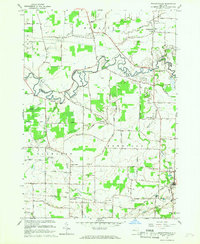 1965 Wolcottsville1967 Print · USGSThe rural borderlands between Erie and Niagara Counties are captured here in the mid-1960s as a network of small hamlets and agricultural crossroads. Researchers can trace family ties through St Michaels Ch, locate the Elridge Cem, or follow the old New York Central Railroad through Akron Junction.
 - 1965 Map of Cambria, 1968 Print
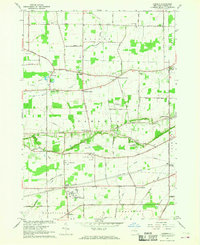 1965 Cambria1968 Print · USGSNiagara County farmland and crossroads settlements are captured here during the mid-1960s. Genealogists and researchers can trace family landmarks like Budd Cem and the extensive operations at the Lockport Air Force Station.
 - 1965 Map of Lockport, 1968 Print
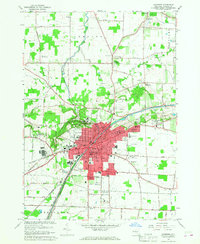 1965 Lockport1968 Print · USGSNiagara County's industrial and civic heart is captured here during the mid-sixties, centered on the historic Erie Canal. Researchers can trace old family names at Stahler Cem, locate the IOOF Home, or study the rail corridors of the Erie-Lackawanna.
 - 1979 Map of Gasport
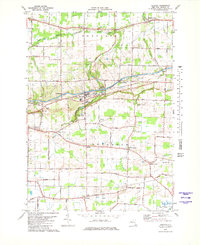 1979 Gasport1979 Print · USGSNiagara County's agricultural and canal-side character is on display here during the late seventies, showing the evolution of townships like Hartland and Royalton. Researchers can locate family sites near the Hartland Central Cem, the old Drive-in Theater, and the Conrail line through Gasport.2 unique versions available
 - 1980 Map of Cambria
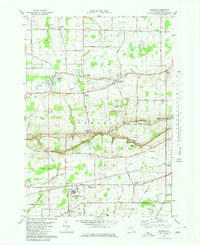 1980 Cambria1980 Print · USGSNiagara County in the early eighties shows a mix of Cold War military presence and educational growth. Researchers can trace the layout of the Lockport Air Force Station, find St Peters Ch, or explore the CONRAIL rail corridor.
 - 1980 Map of Clarence Center
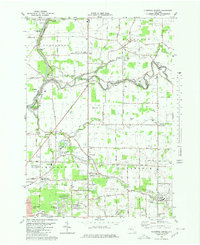 1980 Clarence Center1980 Print · USGSSuburban development meets rural Erie County during the early eighties as new residential tracts rise near established crossroads. Researchers can trace the Erie Canal near the Sulphur Springs Guard Lock or locate family roots at St Marys Cem and Clarence Center.
Showing maps 1-25 of 53
Top cities near Lockport
- Buffalo historical maps
- Amherst historical maps
- Cheektowaga historical maps
- Tonawanda historical maps
- Lancaster historical maps
- Clarence historical maps
See more
Top neighborhoods of Lockport
- Carlisle Gardens historical maps
- Nottingham Estates historical maps
- Raymond historical maps
- Ridgelea Heights historical maps
- Hickory Corners historical maps
- Highland Park historical maps
See more
Frequently asked questions
- What are the different types of historical maps available for Lockport?
- What is the oldest map of Lockport?
- Where can I purchase historical maps of Lockport for my home or office?
- Where can I download high-res historical maps of Lockport?
- Are there historical topographic maps available for Lockport?
- Is there historical aerial imagery available for Lockport?
- Where are historical maps of Lockport sourced from?