1900s (20th Century) Maps of Oswego, New York
Explore 12 historic maps of Oswego from the 1900s (20th Century). These maps offer a rare glimpse into what life looked like during the 1900s — showing old roads, neighborhoods, homes, and landmarks that have changed or disappeared over time.
Whether you're researching your family's past, planning a metal detecting trip, or studying how Oswego's landscape evolved across the 1900s, these high-resolution maps are a powerful tool for exploring the history of this region.
- Focus on a specific era: All maps on this page are from the 1900s, giving you a focused view of this time period.
- See what’s changed: Compare century-old streets, trails, and buildings to today's modern landscape using overlays and satellite layers.
- Research with precision: Use these maps for genealogy, historical research, land use analysis, or educational projects.
- View, download, or print: Maps are fully viewable online in high resolution, and can be downloaded or printed for your own records.
Start exploring Oswego's history through authentic maps from the 1900s. This is your window into the past.
Oswego, NY maps
(12)- 1900 Map of Oswego
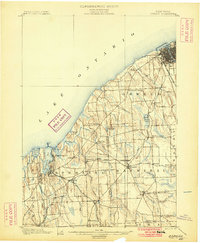 1900 Oswego1900 Print · USGSThe Lake Ontario shoreline in Oswego and Cayuga Counties at the turn of the century is a hub of maritime and rail commerce. Genealogists and historians can trace the paths of four major railroads serving lakefront communities like North Fairhaven and the historic grounds of Fort Ontario.8 unique versions available
 - 1900 Map of Fulton
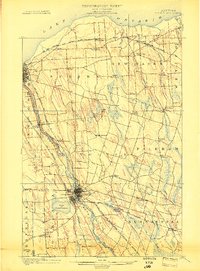 1900 Fulton1900 Print · USGSOswego County at the turn of the century shows a bustling corridor of industry and agriculture along the Oswego River. Researchers can trace the legacy of vanished depots and hamlets like Bundy Crossing, Gilbert Mills, and Seneca Hill during the height of the steam-rail era.7 unique versions available
 - 1943 Map of Oswego East
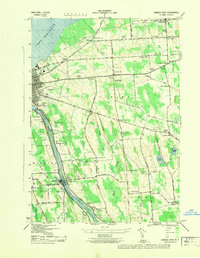 1943 Oswego East1943 Print · USGSCoastal Oswego County was a landscape of small hamlets and family farmsteads during the Second World War. Genealogists can trace rural schoolhouse locations and several community burial grounds, including Kingdom Cem, Seneca Hill, and Bundy Crossing.
 - 1943 Map of Oswego West
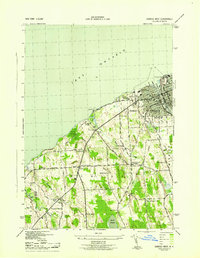 1943 Oswego West1943 Print · USGSOswego and its harbor front on Lake Ontario during the early years of the war, showing a landscape defined by schools, chapels, and the historic Fort Ontario. Genealogists can trace early homesteads and communities near Fruit Valley, Irish Settlement Cem, and School No 10.
 - 1954 Map of Oswego West, 1955 Print
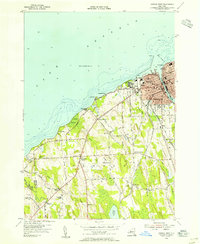 1954 Oswego West1955 Print · USGSThe Lake Ontario shoreline near Oswego is captured here during the mid-fifties, showing the city's growth alongside its deep military and educational roots. Genealogists can locate family landmarks like the Irish Settlement, Rice Cemetery, and Saint Marys Chapel.4 unique versions available
 - 1954 Map of Oswego East, 1956 Print
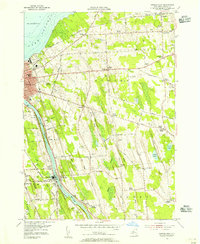 1954 Oswego East1956 Print · USGSOswego and its rural surroundings are documented here in the mid-fifties, from the industrial Oswego River to the Lake Ontario shore. Researchers can trace numerous numbered schoolhouses and family burying grounds like Hillside Cem and Kingdom Cem.3 unique versions available
 - 1956 Map of Fulton, 1961 Print
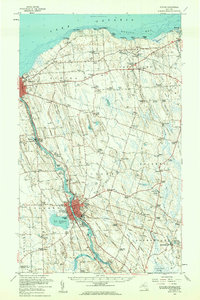 1956 Fulton1961 Print · USGSOswego County's industrial river corridor and lakeside hamlets are captured here during the mid-fifties. Researchers can trace the dual lines of the Erie Lackawanna Railroad and the New York Central Railroad past Lake Neatahwanta and through Fulton.2 unique versions available
 - 1960 Map of Rochester
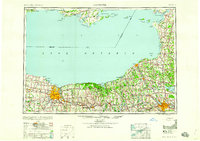 1960 Rochester1960 Print · USGSThe Lake Ontario shoreline in the late fifties was a bustling corridor of rail and water commerce. Genealogists and historians can trace the path of the New York Central through canal towns like Newark or explore the coastal landmarks around Sackets Harbor.2 unique versions available
 - 1960 Map of Oswego, 1961 Print
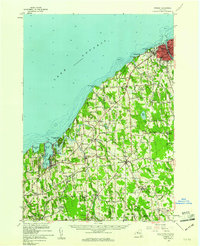 1960 Oswego1961 Print · USGSLake Ontario's southern shore and the busy port of Oswego are shown here during the early sixties. Researchers can trace the waterfront legacy of Fort Ontario, the New York Central tracks, and rural landmarks like St Joseph Chapel or School No 9.2 unique versions available
 - 1961 Map of Rochester, 1973 Print
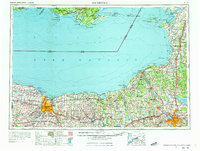 1961 Rochester1973 Print · USGSThe Lake Ontario shoreline and Finger Lakes frontier are shown here at the height of the mid-century infrastructure boom. Genealogists and historians can trace the rail-and-road evolution from Sackets Harbor down to the New York State Thruway, passing through centers like Pulaski and Adams Center.3 unique versions available
 - 1965 Map of Rochester
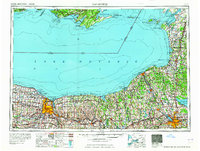 1965 Rochester1965 Print · USGSUpstate New York's industrial heartland is captured here during a period of significant growth between the Great Lakes and the Finger Lakes. Genealogists and historians can trace the evolution of canal towns and rail hubs from Rochester to Syracuse, noting features like the Erie Canal and the New York State Thruway.
 - 1985 Map of Syracuse
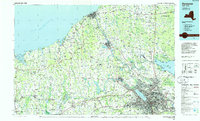 1985 Syracuse1985 Print · USGSCentral New York in the mid-eighties shows a landscape of established canal towns and growing metropolitan suburbs linked by rail and water. Researchers can trace the path of the Erie Canal, find the boundaries of Montezuma Marsh, and locate regional landmarks like Oneida Lake and Chimney Bluffs.3 unique versions available
End of results
Showing maps 1-12 of 12
Top cities near Oswego
- Clay historical maps
- Fulton historical maps
- Schroeppel historical maps
- Oswego historical maps
- Scriba historical maps
- Granby historical maps
See more
Frequently asked questions
- What are the different types of historical maps available for Oswego?
- What is the oldest map of Oswego?
- Where can I purchase historical maps of Oswego for my home or office?
- Where can I download high-res historical maps of Oswego?
- Are there historical topographic maps available for Oswego?
- Is there historical aerial imagery available for Oswego?
- Where are historical maps of Oswego sourced from?