Old Maps of Moreau, New York for Genealogy
Trace your family roots with 52 historic maps of Moreau. These high-res maps reveal old neighborhoods, homesites, landmarks, and streets — helping you uncover where your ancestors lived and how the area evolved over time.
- Explore historic neighborhoods: Identify where your relatives may have lived in the 1800s or 1900s.
- Compare maps over time: Trace the changes in streets, buildings, and landmarks for multi-generational research.
- Perfect for genealogy & ancestry research: Used by family historians and researchers to map out lineage and migration.
These maps are an incredible resource for exploring your personal connection to Moreau's past.
Moreau, NY maps
(52)- 1895 Map of Glens Falls, 1955 Print
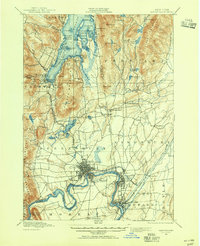 1895 Glens Falls1955 Print · USGSThe Hudson River corridor and the southern tip of Lake George are seen here in the late nineteenth century. Researchers can trace military history at the Fort William Henry Ruins or find old industry at Griswolds Mills and Feeder Dam.
 - 1897 Map of Glens Falls
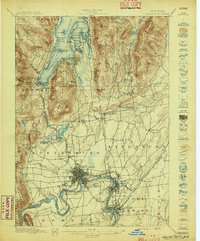 1897 Glens Falls1897 Print · USGSThe upper Hudson River valley and the southern shores of Lake George are captured here during the late Victorian industrial era. Genealogists and historians can trace old homesteads and landmarks like the Fort Wm. Henry Ruins, Griswolds Mills, and the Delaware and Hudson RR corridor.9 unique versions available
 - 1900 Map of Schuylerville
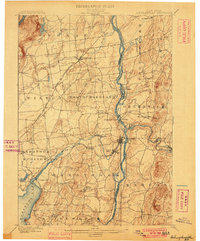 1900 Schuylerville1900 Print · USGSUpper Hudson Valley life at the close of the nineteenth century centers on the busy canal and river corridor. Researchers can trace the Champlain Canal through Schuylerville and Fort Miller, or locate family sites near the Saratoga Battle Field and Gansevoort.7 unique versions available
 - 1902 Map of Saratoga
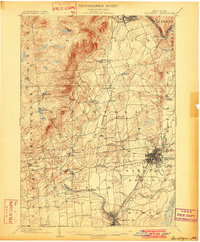 1902 Saratoga1902 Print · USGSSaratoga County at the turn of the century reveals a landscape defined by famous spa towns and a dense web of steam and electric railways. Trace early property locations and transport routes in Saratoga Springs, Ballston Spa, and Rock City Falls.9 unique versions available
 - 1935 Map of Gansevoort
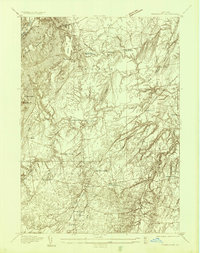 1935 Gansevoort1935 Print · USGSSaratoga County in the mid-1930s reveals a landscape of rural crossroads and specialized institutions between the mountains and the river. Genealogists and local historians can trace family-named hubs like Travers Corners, the Mt McGregor Sanatorium, and several rural schools.
 - 1935 Map of Fort Miller
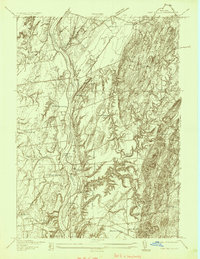 1935 Fort Miller1935 Print · USGSThe Hudson River and its engineering works dominate this mid-1930s landscape along the border of Washington and Saratoga counties. Genealogists can locate family landmarks like Ellis Farm or trace ancestors through Fort Miller Cem and the numerous rural schoolhouses such as Argyle Sch.
 - 1935 Map of Corinth
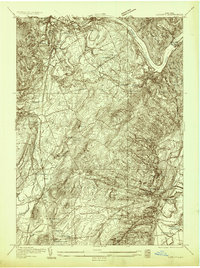 1935 Corinth1935 Print · USGSIn the mid-1930s, the upper Hudson River powered a landscape of industry and small farming communities in Saratoga County. Researchers can trace early rural life through detailed labels for Rural Cem, the Spier Falls Hydro Sta, and the Old Thief Hollow Ch.
 - 1938 Map of Glens Falls
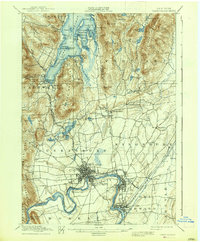 1938 Glens Falls1938 Print · USGSUpper Hudson Valley and Lake George history comes alive in this survey of a developing industrial and resort corridor. Researchers can locate colonial military sites like Fort George Ruins, early industry at Griswolds Mills, and the path of the Cable RR.
 - 1940 Map of Schuylerville
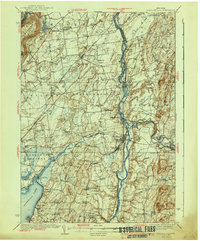 1940 Schuylerville1940 Print · USGSSaratoga and Washington Counties are shown here just before the mid-century, defined by the industrial river towns and the grounds of the Saratoga Battlefield. Genealogists can trace family names at Clarks Corners or Quaker Springs and locate early 20th-century landmarks like the Saratoga Battle Monument.3 unique versions available
 - 1942 Map of Saratoga
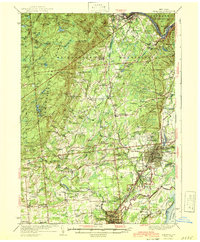 1942 Saratoga1942 Print · USGSSaratoga and the foothills of the Adirondacks are captured in the late 1930s, documenting a landscape of grand estates and growing paper-mill towns. Genealogists can trace family names through rural landmarks like Daketown Sch, Malta Ridge Cem, and Rock City Falls.2 unique versions available
 - 1947 Map of Glens Falls
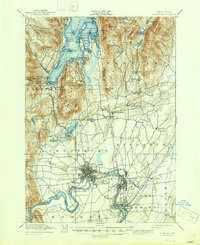 1947 Glens Falls1947 Print · USGSThe upper Hudson Valley and the southern gateway to the Adirondacks are captured here during a period of robust industrial and rail growth. Researchers can trace historic fortifications like Fort George Ruins and identify old milling sites such as Pattens Mills and Griswolds Mills.
 - 1947 Map of Saratoga, 1955 Print
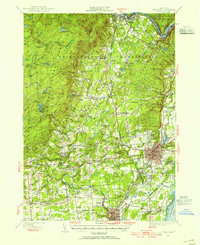 1947 Saratoga1955 Print · USGSSaratoga County was a hub of sport and industry in the late 1940s, from the famous racing grounds to the paper mill villages. Researchers can trace the mid-century footprints of SKIDMORE COLLEGE, the SARATOGA RACEWAY, and local landmarks like the COUNTY HOME.3 unique versions available
 - 1947 Map of Schuylerville, 1958 Print
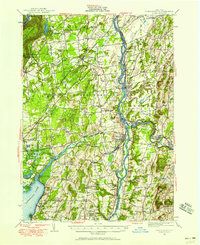 1947 Schuylerville1958 Print · USGSUpper Hudson Valley life and Revolutionary War heritage meet in the late 1940s. Trace the path of the Champlain Canal and find local landmarks like the Saratoga Battle Monument and the Fernwood Trout Hatchery.3 unique versions available
 - 1949 Map of Schuylerville
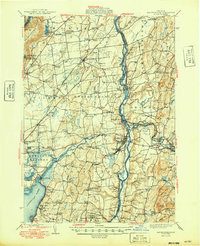 1949 Schuylerville1949 Print · USGSUpper Hudson Valley life in the late nineteen-forties centers on the river and its canal, shortly after the national park was established. Genealogists and historians can trace family locations near Victory Mills, old rural burial grounds like Griswold Cem, and the Fernwood Trout Hatchery.
 - 1949 Map of Saratoga
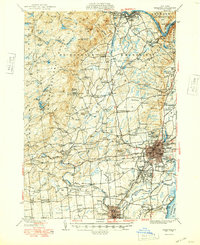 1949 Saratoga1949 Print · USGSSaratoga Springs and the surrounding Adirondack foothills are shown here in the mid-century, capturing a world of historic horse racing and rural industry. Researchers can trace family roots through numerous local landmarks like Ballou Cem, Middle Grove, and the Boyhaven Boy Scout Camp.
 - 1950 Map of Glens Falls
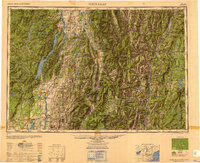 1950 Glens Falls1950 Print · USGSThe Adirondacks and the Green Mountains meet in this mid-century survey of the New York and Vermont borderlands. Researchers can trace the industrial rail corridors of the Rutland RR and Delaware & Hudson RR connecting Glens Falls, Rutland, and the shores of Lake George.
 - 1955 Map of Glens Falls, 1958 Print
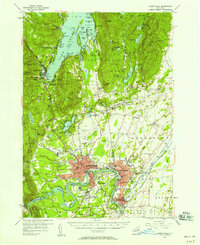 1955 Glens Falls1958 Print · USGSThe Hudson River valley and the southern gateway to the Adirondacks are captured here in the mid-fifties. Genealogists and local historians can trace family plots at Union Cem, locate the Mud Street Sch, and explore the grounds of Fort William Henry.4 unique versions available
 - 1956 Map of Glens Falls, 1968 Print
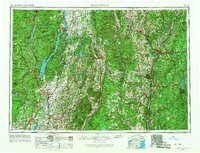 1956 Glens Falls1968 Print · USGSUpper New York and the Vermont mountains are captured here in the mid-fifties, showing the rugged rail-and-river network of the Northeast. Researchers can trace the paths of the Delaware and Hudson RR and Rutland RR as they wind through valley towns like Poultney and Whitehall.3 unique versions available
 - 1959 Map of Glens Falls
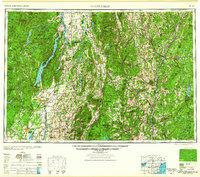 1959 Glens Falls1959 Print · USGSUpper New York and Vermont are captured here during the late 1950s, a period of transition for these mountain communities. Researchers can trace the legacy of the region's river-and-rail economy through landmarks like Lake George, Saratoga Springs, and Killington Peak.2 unique versions available
 - 1964 Map of Glens Falls
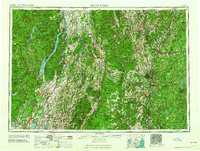 1964 Glens Falls1964 Print · USGSThe tri-state borderlands of New York, Vermont, and New Hampshire appear here in the mid-1960s. Researchers can trace the rail routes of the Rutland RR and find historic sites like Ticonderoga and Saratoga National Historical Park.
 - 1966 Map of Glens Falls, 1968 Print
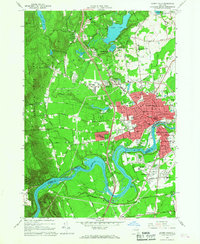 1966 Glens Falls1968 Print · USGSGlens Falls and its neighboring Hudson River riverfronts are captured in the mid-sixties as the Adirondack Northway reshaped the region's geography. Genealogists can locate family sites at the Friends Cem and St Marys Cem or trace the early development of West Glens Falls.
 - 1966 Map of Hudson Falls, 1968 Print
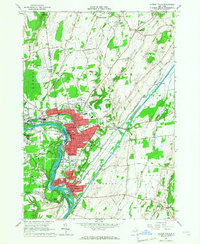 1966 Hudson Falls1968 Print · USGSThe industrial riverfronts of Washington County are seen here in the mid-sixties as they grew around the historic locks and falls. Researchers can trace the path of the Champlain Canal, locate family plots in Union Cemetery, and see the early footprint of Adirondack Community College.3 unique versions available
 - 1967 Map of Ft Miller, 1970 Print
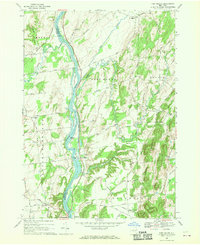 1967 Ft Miller1970 Print · USGSThe Hudson River valley north of Schuylerville comes into focus in the late 1960s, showing a landscape shaped by river transport and upland farming. Researchers can trace the path of the Champlain Canal or locate family homesteads along Gavettes Road and Hunter Road.2 unique versions available
 - 1968 Map of Gansevoort
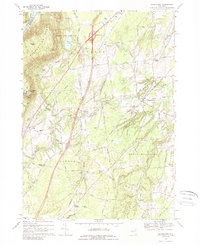 1968 Gansevoort1968 Print · USGSSaratoga County was undergoing significant change in the late sixties as the interstate era reshaped the rural landscape near the Hudson River. Genealogists and local historians can trace family-named crossroads like Dimmick Corners and Clarks Corner alongside the Mount McGregor State Hospital.3 unique versions available
 - 1968 Map of Corinth, 1970 Print
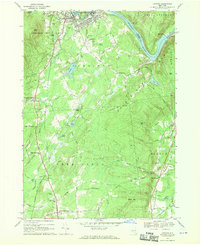 1968 Corinth1970 Print · USGSSaratoga County in the late sixties reveals a landscape shaped by the Hudson and the Adirondack foothills. Genealogists and hikers can trace old homesteads and landmarks like Maplewood Cem, Kings Station, and the shores of Lake Bonita.
Showing maps 1-25 of 52
Top cities near Moreau
- Queensbury historical maps
- Saratoga Springs historical maps
- Milton historical maps
- Wilton historical maps
- Malta historical maps
- Glens Falls historical maps
See more
Top neighborhoods of Moreau
- Fernwood historical maps
- Fortsville historical maps
- Reynolds Corners historical maps
- Clarks Corner historical maps
- Fenimore historical maps
- South Glens Falls historical maps
Frequently asked questions
- What are the different types of historical maps available for Moreau?
- What is the oldest map of Moreau?
- Where can I purchase historical maps of Moreau for my home or office?
- Where can I download high-res historical maps of Moreau?
- Are there historical topographic maps available for Moreau?
- Is there historical aerial imagery available for Moreau?
- Where are historical maps of Moreau sourced from?