Old Maps of Providence, New York for Hiking & Exploration
Hike through history with 47 historic maps of Providence. Explore old trails, ghost towns, and forgotten backroads — perfect for outdoor adventurers and local explorers.
- Rediscover forgotten places: Map out old mining camps, roads, and footpaths that no longer exist on modern maps.
- Layer with modern tools: Combine with LiDAR or satellite views to plan hikes through historical terrain.
- Made for exploration: Popular among hikers, overlanders, and local history lovers.
Use these maps to find adventure and explore the hidden past of Providence.
Providence, NY maps
(47)- 1899 Map of Broadalbin, 1954 Print
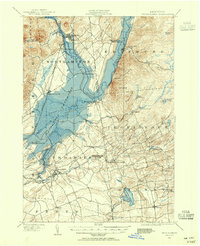 1899 Broadalbin1954 Print · USGSFulton and Saratoga counties are shown here just before the turn of the century as the local economy balanced rail transport and river-powered industry. Genealogists can trace family roots through numerous mill hamlets and settlements like Northampton, Vail Mills, and Osborn Bridge.
 - 1902 Map of Broadalbin
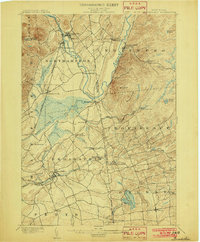 1902 Broadalbin1902 Print · USGSThe Sacandaga River valley is shown here at the turn of the century, prior to the major hydroelectric projects that reshaped this Fulton County landscape. Genealogists can trace early homesteads and milling sites near Vail Mills, Hagedorns Mills, and the Sacandaga Park rail terminus.9 unique versions available
 - 1902 Map of Saratoga
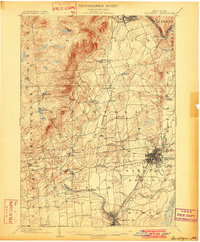 1902 Saratoga1902 Print · USGSSaratoga County at the turn of the century reveals a landscape defined by famous spa towns and a dense web of steam and electric railways. Trace early property locations and transport routes in Saratoga Springs, Ballston Spa, and Rock City Falls.9 unique versions available
 - 1935 Map of Middle Grove
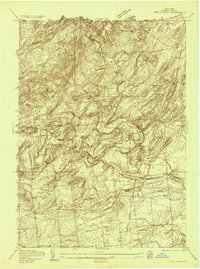 1935 Middle Grove1935 Print · USGSSaratoga County's rural townships are captured here in the mid-1930s, showing a landscape of scattered crossroads and small school districts. Genealogists can locate family landmarks like Clark Cem or trace old routes past Pine Hill Sch and Pages Corner.
 - 1942 Map of Saratoga
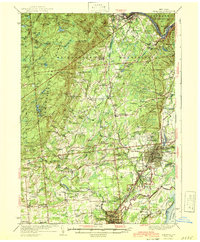 1942 Saratoga1942 Print · USGSSaratoga and the foothills of the Adirondacks are captured in the late 1930s, documenting a landscape of grand estates and growing paper-mill towns. Genealogists can trace family names through rural landmarks like Daketown Sch, Malta Ridge Cem, and Rock City Falls.2 unique versions available
 - 1945 Map of Edinburg, 1962 Print
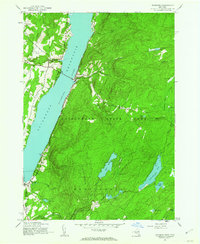 1945 Edinburg1962 Print · USGSSaratoga County's southern Adirondack foothills were transitioning toward a reservoir-centered economy in the mid-1940s. Genealogists and hikers can trace old family burial sites like Partridge Cem or locate the small settlement of Glenwild and the Plateau Airport.
 - 1945 Map of Galway, 1962 Print
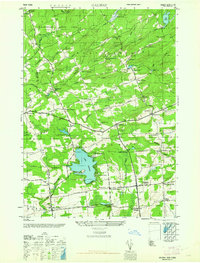 1945 Galway1962 Print · USGSSaratoga County's rural crossroads and milling hamlets are frozen in time just after the war. Local historians can trace family-named landmarks like Bunn Corners, locate the County Sanatorium, and explore settlements near Lake Galway.
 - 1946 Map of Edinburg
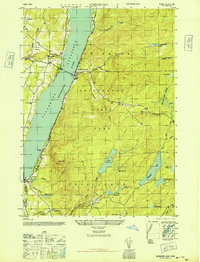 1946 Edinburg1946 Print · USGSSaratoga County in the mid-forties reveals a landscape transformed by the flooding of the Sacandaga Reservoir. Genealogists and local historians can trace family plots at Partridge Cem or explore the hills near Batchellerville and Glenwild.
 - 1947 Map of Saratoga, 1955 Print
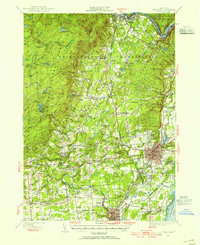 1947 Saratoga1955 Print · USGSSaratoga County was a hub of sport and industry in the late 1940s, from the famous racing grounds to the paper mill villages. Researchers can trace the mid-century footprints of SKIDMORE COLLEGE, the SARATOGA RACEWAY, and local landmarks like the COUNTY HOME.3 unique versions available
 - 1949 Map of Saratoga
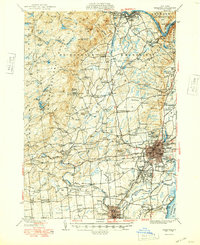 1949 Saratoga1949 Print · USGSSaratoga Springs and the surrounding Adirondack foothills are shown here in the mid-century, capturing a world of historic horse racing and rural industry. Researchers can trace family roots through numerous local landmarks like Ballou Cem, Middle Grove, and the Boyhaven Boy Scout Camp.
 - 1950 Map of Glens Falls
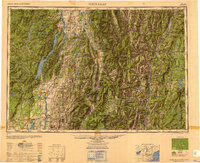 1950 Glens Falls1950 Print · USGSThe Adirondacks and the Green Mountains meet in this mid-century survey of the New York and Vermont borderlands. Researchers can trace the industrial rail corridors of the Rutland RR and Delaware & Hudson RR connecting Glens Falls, Rutland, and the shores of Lake George.
 - 1950 Map of Utica, 1951 Print
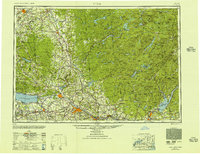 1950 Utica1951 Print · USGSCentral New York in the post-war era showcases the industrial Mohawk Valley and the pristine Adirondack interior. Researchers can trace transportation networks like the New York Central Railroad and find early Cold War sites such as Griffiss Air Force Base.
 - 1956 Map of Glens Falls, 1968 Print
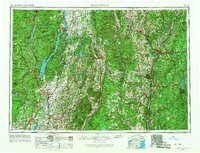 1956 Glens Falls1968 Print · USGSUpper New York and the Vermont mountains are captured here in the mid-fifties, showing the rugged rail-and-river network of the Northeast. Researchers can trace the paths of the Delaware and Hudson RR and Rutland RR as they wind through valley towns like Poultney and Whitehall.3 unique versions available
 - 1957 Map of Utica
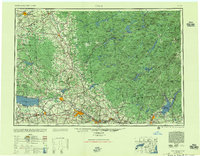 1957 Utica1957 Print · USGSCentral New York and the Adirondack foothills are captured here in the mid-fifties, showing a landscape defined by the Mohawk River corridor and the growing highway system. Genealogists and researchers can trace the rail lines of the New York Central and locate communities from Lowville to Gloversville.
 - 1959 Map of Glens Falls
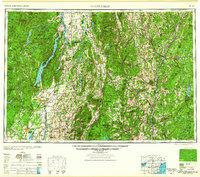 1959 Glens Falls1959 Print · USGSUpper New York and Vermont are captured here during the late 1950s, a period of transition for these mountain communities. Researchers can trace the legacy of the region's river-and-rail economy through landmarks like Lake George, Saratoga Springs, and Killington Peak.2 unique versions available
 - 1962 Map of Utica
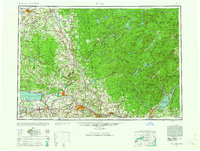 1962 Utica1962 Print · USGSCentral New York and the Adirondack wilderness are captured here during the mid-century era of highway and industrial expansion. Genealogists and historians can trace the development of the New York State Thruway and local rail lines connecting Utica, Rome, and Gloversville.3 unique versions available
 - 1964 Map of Glens Falls
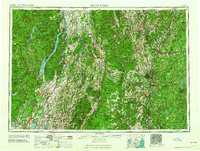 1964 Glens Falls1964 Print · USGSThe tri-state borderlands of New York, Vermont, and New Hampshire appear here in the mid-1960s. Researchers can trace the rail routes of the Rutland RR and find historic sites like Ticonderoga and Saratoga National Historical Park.
 - 1964 Map of Utica
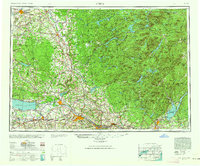 1964 Utica1964 Print · USGSCentral New York and the high wilderness of the Adirondacks are captured here during the post-war era of infrastructure expansion. Researchers can trace the development of the New York State Thruway alongside historic corridors like the Oneida Lake (Barge Canal Route) and the N. Y. Central railroad.
 - 1967 Map of Utica
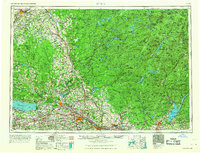 1967 Utica1967 Print · USGSCentral New York's industrial Mohawk Valley meets the Adirondack wilderness in the 1960s, showing the region's transition from manufacturing hubs to state-managed parklands. Trace historic settlements and sites like Griffiss Air Force Base, Colgate University, and the Lyons Falls Paper Mill.
 - 1967 Map of Middle Grove, 1971 Print
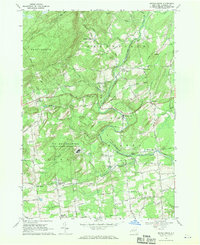 1967 Middle Grove1971 Print · USGSSaratoga County in the late sixties reveals a landscape of rural crossroads and high-tech defense installations. Genealogists and historians can trace family-named corners like Chatfield Corner or the specialized grounds of the Knolls Atomic Energy Plant.2 unique versions available
 - 1968 Map of Porter Corners, 1969 Print
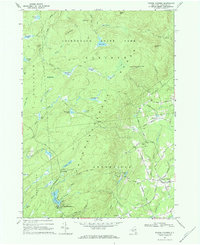 1968 Porter Corners1969 Print · USGSSaratoga County's wooded hills and wetlands are shown in detail during the late sixties, highlighting the rural transition into the mountains. Genealogists and hikers can locate family landmarks like Wells Cem and the prominent Lookout Tower on Spruce Mtn.2 unique versions available
 - 1970 Map of Edinburg, 1972 Print
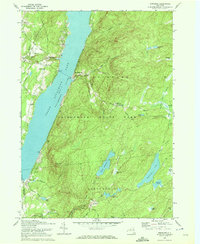 1970 Edinburg1972 Print · USGSSaratoga County life in the early seventies centers on the shores of Great Sacandaga Lake and the southern Adirondacks. Researchers can locate old family landmarks like Partridge Cem, Consolidated School No 1, and the Plateau Landing Field.2 unique versions available
 - 1970 Map of Galway, 1972 Print
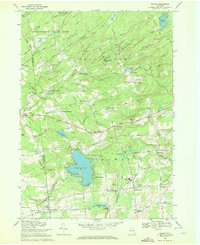 1970 Galway1972 Print · USGSSaratoga County's southern Adirondack foothills were a landscape of established hamlets and family crossroads during the early seventies. Trace local lineages and old property lines through namesake locations like Whiteside Corners, Hooseville, and the Zion Hill Cemetery.
 - 1985 Map of Gloversville, 1986 Print
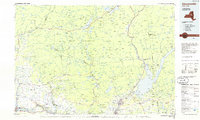 1985 Gloversville1986 Print · USGSThe southern Adirondacks meet the Mohawk Valley industrial corridor during the mid-eighties, showcasing a landscape of high-country lakes and riverside manufacturing towns. Trace the historical alignment of the Erie Canal and Conrail lines or locate landmarks like the Herkimer Home State Historic Site.2 unique versions available
 - 1986 Map of Glens Falls
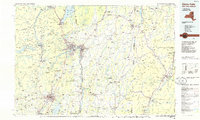 1986 Glens Falls1986 Print · USGSThe Upper Hudson Valley and Vermont borderlands come together in this mid-eighties survey of industrial river towns and mountain retreats. Genealogists and historians can trace the rail lines of the Delaware and Hudson Railway or locate landmarks like the Mount McGregor Correctional Facility and Saratoga Spa State Park.2 unique versions available
Showing maps 1-25 of 47
Top cities near Providence
- Clifton Park historical maps
- Rotterdam historical maps
- Glenville historical maps
- West Glenville historical maps
- Saratoga Springs historical maps
- Milton historical maps
See more
Top neighborhoods of Providence
- Fayville historical maps
- Glenwild historical maps
- Green Corners historical maps
- Shaw Corners historical maps
- Barkersville historical maps
- Hagedorns Mills historical maps
Frequently asked questions
- What are the different types of historical maps available for Providence?
- What is the oldest map of Providence?
- Where can I purchase historical maps of Providence for my home or office?
- Where can I download high-res historical maps of Providence?
- Are there historical topographic maps available for Providence?
- Is there historical aerial imagery available for Providence?
- Where are historical maps of Providence sourced from?