1940s Maps of East Hampton, New York
Explore 14 historic maps of East Hampton from the 1940s. These maps offer a rare glimpse into what life looked like during the 1940s — showing old roads, neighborhoods, homes, and landmarks that have changed or disappeared over time.
Whether you're researching your family's past, planning a metal detecting trip, or studying how East Hampton's landscape evolved across the 1940s, these high-resolution maps are a powerful tool for exploring the history of this region.
- Focus on a specific era: All maps on this page are from the 1940s, giving you a focused view of this time period.
- See what’s changed: Compare century-old streets, trails, and buildings to today's modern landscape using overlays and satellite layers.
- Research with precision: Use these maps for genealogy, historical research, land use analysis, or educational projects.
- View, download, or print: Maps are fully viewable online in high resolution, and can be downloaded or printed for your own records.
Start exploring East Hampton's history through authentic maps from the 1940s. This is your window into the past.
East Hampton, NY maps
(14)- 1942 Map of Montauk Point
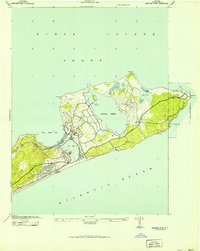 1942 Montauk Point1942 Print · USGSThe tip of Long Island comes into focus during the early 1940s as a vital coastal and maritime hub. Researchers can trace the Long Island railroad line to its terminus and locate specific landmarks like the Lighthouse and Ditch Plain LSS.
 - 1942 Map of Block Island, 1943 Print
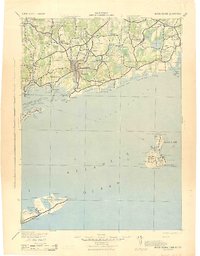 1942 Block Island1943 Print · USGSThe coastal borderlands of Rhode Island and Connecticut are captured here during the wartime years, documenting a landscape defined by rail and sea. Researchers can trace the NY NH & H RR through historic mill villages or locate landmarks like the Silex Mine and Indian Burying Hill.2 unique versions available
 - 1943 Map of Gardiners Island East, 1947 Print
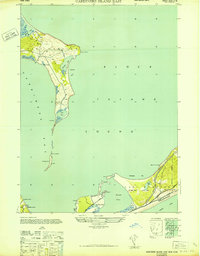 1943 Gardiners Island East1947 Print · USGSGardiners Island and the East Hampton shoreline are captured here during the 1940s. Researchers can trace the Long Island Railroad corridor and explore old coastal landmarks like Quince Tree Landing, Cartwright Island, and Great Pond.
 - 1944 Map of Gardiners Island West, 1947 Print
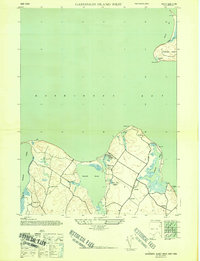 1944 Gardiners Island West1947 Print · USGSThe East Hampton shoreline during the 1940s reveals a quiet landscape of coastal hamlets and protected inlets. Genealogists and researchers can trace local routes through Springs and Eastside, or locate family landmarks like Powder Hill and Fireplace.2 unique versions available
 - 1946 Map of Sag Harbor
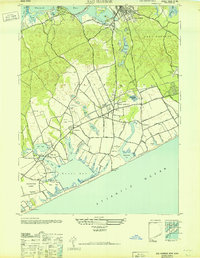 1946 Sag Harbor1946 Print · USGSThe South Fork of Long Island at the end of the war years shows a landscape of coastal hamlets and large estates. Trace family names on rural lanes near Bridgehampton or locate early aviation landmarks like Hampton Airport and Easthampton Airport.
 - 1947 Map of Plum Island
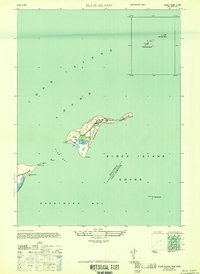 1947 Plum Island1947 Print · USGSCoastal Suffolk County is captured here just after the war, detailing the military footprint on the islands between the sounds. Researchers can trace the layout of Fort Terry and locate maritime landmarks like the Lighthouse and the Ferry Landing.2 unique versions available
 - 1947 Map of Greenport
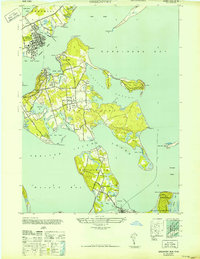 1947 Greenport1947 Print · USGSThe maritime communities of eastern Long Island are captured here in the late 1940s, highlighting the intricate coastal geography of the Peconic Bays. Historians can trace the streets of Greenport or locate specific waterfront landmarks near Sag Harbor and Shelter Island Heights.
 - 1947 Map of Napeague Beach
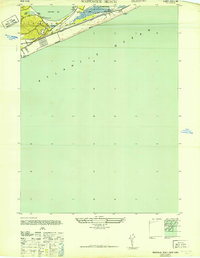 1947 Napeague Beach1947 Print · USGSLong Island's eastern shoreline is documented here in the late 1940s, showing the intersection of coastal defense and rail travel. Historians can trace the Montauk Division railroad and find the Napeague CG Sta near Promised Land.
 - 1947 Map of East Hampton
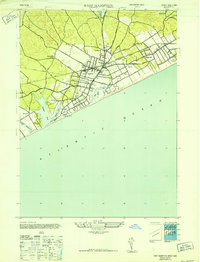 1947 East Hampton1947 Print · USGSThe South Fork of Long Island comes into focus just after the war as the coastal hamlets began their modern expansion. Trace the rail lines of the Long Island (Montauk Division) and find old landmarks like Hardscrabble, Pantigo, and Georgica Pond.
 - 1947 Map of Providence, 1948 Print
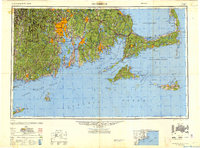 1947 Providence1948 Print · USGSSouthern New England is captured in the mid-1940s, showing a landscape defined by busy industrial ports and expanding military installations. Researchers can trace the rail lines of the N.Y. N.H. & H. RR or locate coastal defenses like Fort Adams and Quonset Point.5 unique versions available
 - 1947 Map of Hartford, 1955 Print
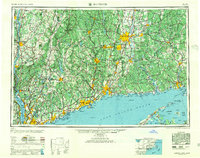 1947 Hartford1955 Print · USGSSouthern New England and the Hudson Valley are shown in detail during the post-war expansion era. Genealogists and researchers can trace local landmarks from the State Capitol and Yale University to the Stratford Lighthouse and Woodlawn Cem.2 unique versions available
 - 1948 Map of Hartford
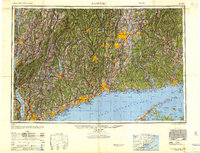 1948 Hartford1948 Print · USGSSouthern New England is captured here in the late 1940s, showcasing a landscape of thriving industrial cities and developing parkways. Genealogists and historians can trace the rail networks of the New York New Haven and Hartford RR or locate coastal defense sites like Fort Terry and Camp Shanks.2 unique versions available
 - 1948 Map of Providence, 1951 Print
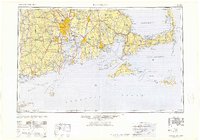 1948 Providence1951 Print · USGSSouthern New England’s coastal reaches are captured here in the late 1940s, from the industrial heart of Providence to the tip of Provincetown. Genealogists and historians can trace rail lines like the Central Vermont Railway and locate active military sites such as Otis Air Force Base and Fort Rodman.
 - 1949 Map of New York, 1951 Print
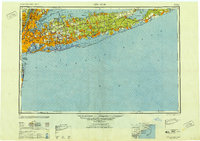 1949 New York1951 Print · USGSLong Island and its surrounding waters are documented here in the late 1940s, just as the postwar suburban boom began to transform the region. Genealogists and historians can trace the early layouts of Idlewild Airport, Mitchell Field, and the established routes of the Long Island RR.
End of results
Showing maps 1-14 of 14
Top cities near East Hampton
- Southampton historical maps
- Groton historical maps
- New London historical maps
- Southold historical maps
- Waterford historical maps
- East Lyme historical maps
See more
Top neighborhoods of East Hampton
- Gardiners Island historical maps
- Springs historical maps
- East Hampton North historical maps
- Northwest Harbor historical maps
- Montauk historical maps
- Amagansett historical maps
See more
Frequently asked questions
- What are the different types of historical maps available for East Hampton?
- What is the oldest map of East Hampton?
- Where can I purchase historical maps of East Hampton for my home or office?
- Where can I download high-res historical maps of East Hampton?
- Are there historical topographic maps available for East Hampton?
- Is there historical aerial imagery available for East Hampton?
- Where are historical maps of East Hampton sourced from?