Old Maps of Napeague, East Hampton for Academic Research
Study the evolution of Napeague with 32 high-resolution historic maps. Whether you're teaching, researching, or modeling changes in land use, these maps provide essential visual documentation of urban, environmental, and geographic change.
- Analyze long-term change: Track patterns in development, transportation, and natural features.
- Ideal for environmental or urban studies: Support academic projects with primary historical map data.
- Use in the classroom or lab: Educators and researchers rely on these maps to bring historical context to life.
These maps are a powerful tool for teaching, research, and visualizing how Napeague has changed over the decades.
Napeague, East Hampton maps
(32)- 1903 Map of Gardiners Island, 1962 Print
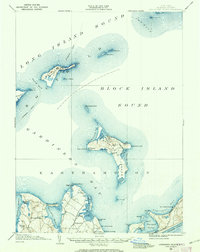 1903 Gardiners Island1962 Print · USGSThe eastern reaches of Long Island and its surrounding sounds appear here at the opening of the twentieth century. Researchers can trace historic shorelines and maritime infrastructure, including Fort Terry on Plum Island and old settlements like Kingstown and Fireplace.
 - 1904 Map of Easthampton
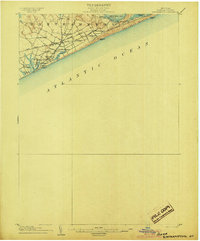 1904 Easthampton1904 Print · USGSThe eastern reaches of Long Island at the turn of the century show a maritime landscape of small hamlets and life-saving stations. Genealogists and historians can trace the early rail corridor of the Long Island R. R. and locate family-named settlements like Freetown, Jericho, and Pantigo.6 unique versions available
 - 1904 Map of Gardiners Island
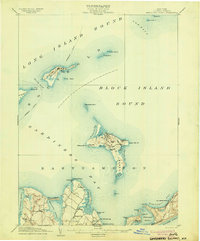 1904 Gardiners Island1904 Print · USGSEasthampton and its outlying islands are captured here in the early twentieth century, showing a maritime landscape defined by coastal forts and small harbor landings. Genealogists and local historians can trace family-named sites like Barnes Landing, Springs, and the military outpost at Fort Terry.6 unique versions available
 - 1921 Map of Gardiners Island
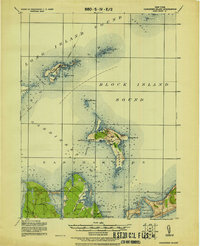 1921 Gardiners Island1921 Print · USGSThe maritime landscape of eastern Long Island is detailed here in the years following the Great War. Researchers can trace historic shorelines and landings like Quincetree Landing, locate the military grounds of Fort Terry, or find family-named sites such as Barnes Landing and Hicks.
 - 1921 Map of Easthampton
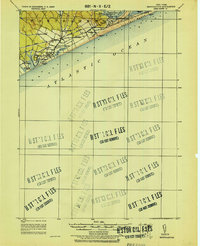 1921 Easthampton1921 Print · USGSThe eastern tip of Long Island comes alive in the early twentieth century, showing a maritime landscape defined by rail and sea. Genealogy and history buffs can trace the Long Island R. R. through Easthampton or locate the coastal Georgica L.S.S. and the settlement at Promised Land.
 - 1943 Map of Gardiners Island East, 1947 Print
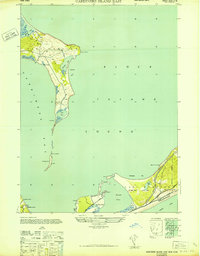 1943 Gardiners Island East1947 Print · USGSGardiners Island and the East Hampton shoreline are captured here during the 1940s. Researchers can trace the Long Island Railroad corridor and explore old coastal landmarks like Quince Tree Landing, Cartwright Island, and Great Pond.
 - 1947 Map of Napeague Beach
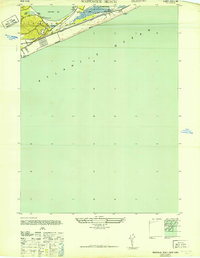 1947 Napeague Beach1947 Print · USGSLong Island's eastern shoreline is documented here in the late 1940s, showing the intersection of coastal defense and rail travel. Historians can trace the Montauk Division railroad and find the Napeague CG Sta near Promised Land.
 - 1947 Map of Hartford, 1955 Print
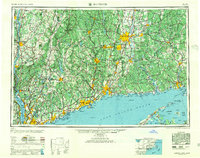 1947 Hartford1955 Print · USGSSouthern New England and the Hudson Valley are shown in detail during the post-war expansion era. Genealogists and researchers can trace local landmarks from the State Capitol and Yale University to the Stratford Lighthouse and Woodlawn Cem.2 unique versions available
 - 1948 Map of Hartford
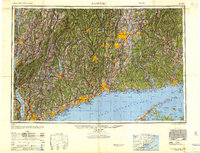 1948 Hartford1948 Print · USGSSouthern New England is captured here in the late 1940s, showcasing a landscape of thriving industrial cities and developing parkways. Genealogists and historians can trace the rail networks of the New York New Haven and Hartford RR or locate coastal defense sites like Fort Terry and Camp Shanks.2 unique versions available
 - 1949 Map of New York, 1951 Print
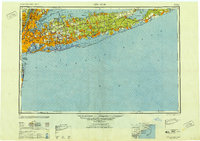 1949 New York1951 Print · USGSLong Island and its surrounding waters are documented here in the late 1940s, just as the postwar suburban boom began to transform the region. Genealogists and historians can trace the early layouts of Idlewild Airport, Mitchell Field, and the established routes of the Long Island RR.
 - 1954 Map of New York
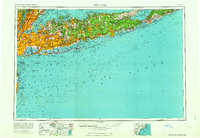 1954 New York1954 Print · USGSLong Island and the New York metropolitan area are shown during the height of post-war suburbanization. Genealogists and historians can trace the growth of Levittown, the infrastructure of the Long Island Rail Road, and landmarks like Mitchel Afb.2 unique versions available
 - 1956 Map of Napeague Beach
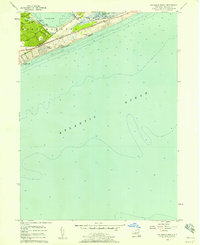 1956 Napeague Beach1956 Print · USGSThe South Fork of Long Island comes alive in the mid-fifties, showing the thin strip of land between the harbor and the Atlantic. Researchers can trace the path of the Long Island Railroad past Promised Land, Devon, and the U S Naval Res (Radio Sta).3 unique versions available
 - 1956 Map of Gardiners Island East, 1957 Print
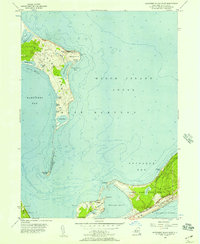 1956 Gardiners Island East1957 Print · USGSCoastal Suffolk County in the mid-fifties reveals a landscape of isolated islands and growing rail corridors. Genealogists and historians can trace the foundations of Hither Hills State Park and locate small settlements like Promised Land and Napeague.2 unique versions available
 - 1957 Map of New York, 1975 Print
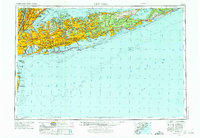 1957 New York1975 Print · USGSLong Island and the New York metropolitan area are shown in this mid-century survey during a period of massive suburban growth and industrial expansion. Researchers can trace the Long Island RR network and locate landmarks like Fort Tilden or the Brookhaven National Laboratory.
 - 1958 Map of New York
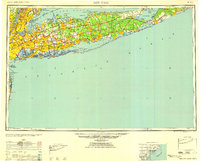 1958 New York1958 Print · USGSLong Island at the height of its postwar expansion reveals a landscape of rapidly growing suburbs and critical military installations. Genealogists and historians can trace the early footprints of Levittown, the terminals of Idlewild Airport, and the grounds of Brookhaven National Laboratory.3 unique versions available
 - 1960 Map of New York, 1979 Print
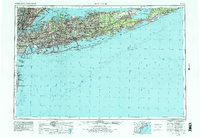 1960 New York1979 Print · USGSLong Island and the five boroughs are shown at a transformative moment mid-century as suburban expansion reshaped the landscape. Researchers can trace family roots through evolving neighborhoods from Rockville Centre to Sayville, or locate historic maritime landmarks like Eatons Neck and Montauk Point.2 unique versions available
 - 1961 Map of Hartford
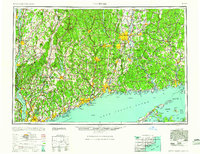 1961 Hartford1961 Print · USGSSouthern New England and the Hudson Valley are shown here in the mid-fifties, capturing a landscape of booming coastal cities and interior hill towns. Researchers can trace the legacy of the New York New Haven and Hartford rail corridor and find strategic sites like Camp Shanks and Fort Michie.
 - 1962 Map of Hartford, 1971 Print
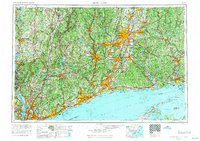 1962 Hartford1971 Print · USGSSouthern New England and the Hudson Valley are shown in the early sixties, as suburban growth reached into the foothills. Trace the path of the New York New Haven & Hartford RR and find landmarks like Camp Nathan Hale and Gillette Castle State Park.3 unique versions available
 - 1965 Map of Hartford
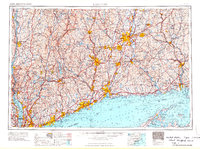 1965 Hartford1965 Print · USGSSouthern New England and the Hudson Valley are shown here during the mid-sixties expansion of the Interstate era. Trace the path of the New York New Haven & Hartford RR or locate historic landmarks like West Point Military Reservation and the Merritt Parkway.2 unique versions available
 - 1969 Map of New York
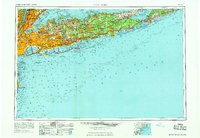 1969 New York1969 Print · USGSLong Island and the New York harbor area are shown here during a peak era of suburban expansion and Cold War defense. Trace the growth of Levittown, the infrastructure of Idlewild NY International Airport, and the reach of the Long Island RR.
 - 1983 Map of New Haven, 1985 Print
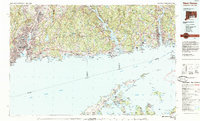 1983 New Haven1985 Print · USGSThe Connecticut shoreline and eastern Long Island are documented here in the early eighties, from the streets of New Haven to the piers of New London. Genealogists and historians can trace the geography of maritime heritage and academia at Yale University and the U.S. Coast Guard Academy.2 unique versions available
 - 1984 Map of Long Island East, 1985 Print
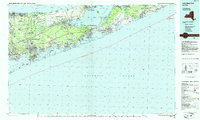 1984 Long Island East1985 Print · USGSEastern Long Island in the 1980s reveals a landscape of suburban growth and coastal preservation. Trace the mid-century development of Hampton Bays alongside Calverton National Cemetery and the Long Island Rail Road.3 unique versions available
 - 2010 Map of Gardiners Island East, 2010 Print
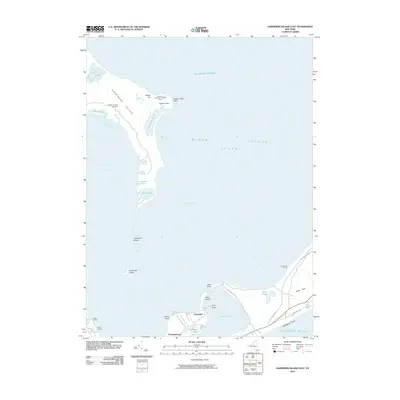 2010 Gardiners Island East2010 Print · USGSCoastal East Hampton and the private reaches of Gardiners Island are captured here in the early twenty-first century. Researchers can trace landforms and landmarks like the Gardiner's Island Cemetery, the Gardiners Island Two Lookout Tower, and the uniquely named Promised Land.
 - 2010 Map of Napeague Beach, 2010 Print
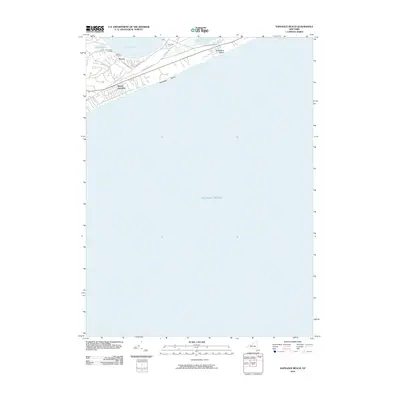 2010 Napeague Beach2010 Print · USGSThis eastern Long Island shoreline at the turn of the millennium shows the delicate balance between coastal hamlets and the sea. Trace the roads and landings of Beach Hampton and Devon, or explore the unique names of Promised Land and Cranberry Hole Rd.
 - 2013 Map of Gardiners Island East, 2013 Print
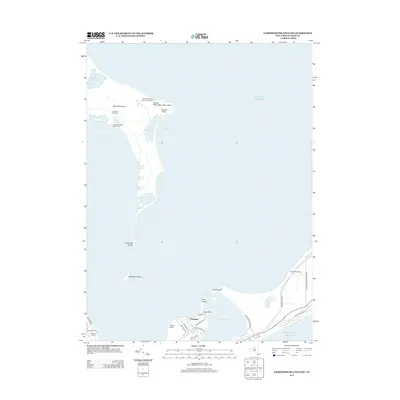 2013 Gardiners Island East2013 Print · USGSCoastal Suffolk County is captured here in the early twenty-first century, showcasing the private domain of Gardiners Island and the Napeague strip. Researchers can trace land features from Gardiners Island Windmill to the remote sands of Cartwright Island and the shores of Lazy Point.
Showing maps 1-25 of 32
Top cities near Napeague
- Southampton historical maps
- East Hampton historical maps
- Southold historical maps
- Springs historical maps
- East Hampton North historical maps
- Northwest Harbor historical maps
See more
Frequently asked questions
- What are the different types of historical maps available for Napeague?
- What is the oldest map of Napeague?
- Where can I purchase historical maps of Napeague for my home or office?
- Where can I download high-res historical maps of Napeague?
- Are there historical topographic maps available for Napeague?
- Is there historical aerial imagery available for Napeague?
- Where are historical maps of Napeague sourced from?