Old Maps of Denning, New York for Academic Research
Study the evolution of Denning with 74 high-resolution historic maps. Whether you're teaching, researching, or modeling changes in land use, these maps provide essential visual documentation of urban, environmental, and geographic change.
- Analyze long-term change: Track patterns in development, transportation, and natural features.
- Ideal for environmental or urban studies: Support academic projects with primary historical map data.
- Use in the classroom or lab: Educators and researchers rely on these maps to bring historical context to life.
These maps are a powerful tool for teaching, research, and visualizing how Denning has changed over the decades.
Denning, NY maps
(74)- 1900 Map of Phoenicia, 1963 Print
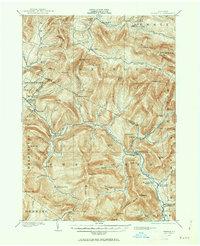 1900 Phoenicia1963 Print · USGSThe high Catskills at the turn of the century are captured here in a moment of emerging tourism and mountain settlement. Genealogists and hikers can trace the original locations of the Grand Hotel, the remote Winnisook Lodge, and the rail stops at Mt Pleasant Station.
 - 1901 Map of Margaretville, 1961 Print
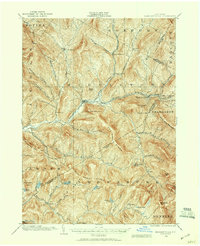 1901 Margaretville1961 Print · USGSThe Catskills at the turn of the century are defined here by river-valley settlements and the Ulster and Delaware railroad line. Genealogists and historians can trace family-named hollows and vanished settlements like Grant Mills, Arena, and Griffin Corners.
 - 1903 Map of Phoenicia
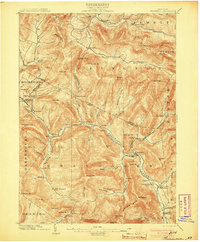 1903 Phoenicia1903 Print · USGSThe Catskills come alive at the turn of the century, showing the mountain rail corridor and early grand resorts. Researchers can trace the Ulster and Delaware line through Phoenicia to the Highmount Grand Hotel and Winnisook Lodge.9 unique versions available
 - 1903 Map of Slide Mountain, 1961 Print
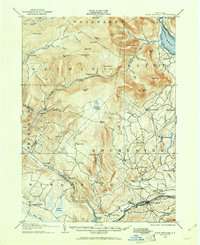 1903 Slide Mountain1961 Print · USGSThe high peaks and deep hollows of Ulster County are captured here at the dawn of the reservoir era. Genealogists and hikers can trace old homesteads and roads near Sundown, Lackawack, and the isolated Peekamoose Lodge.
 - 1904 Map of Margaretville
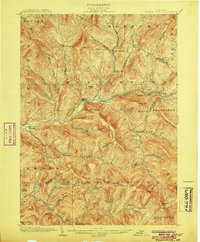 1904 Margaretville1904 Print · USGSThe Catskills' high-valley communities thrive along the Ulster and Delaware RR at the turn of the century. Trace old family farmsteads and rural mountain hamlets like Arena, New Kingston, and Griffin Corners as they appeared in 1904.7 unique versions available
 - 1905 Map of Slide Mountain
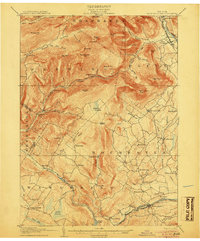 1905 Slide Mountain1905 Print · USGSThe Catskill high peaks meet the industrializing Rondout valley in the early twentieth century. Researchers can trace old mountain outposts like Peekamoose Lodge and Sundown, or follow the New York Ontario and Western RR through Kerhonkson.8 unique versions available
 - 1910 Map of Neversink
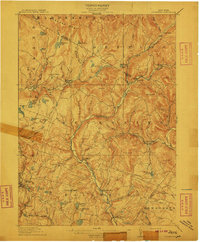 1910 Neversink1910 Print · USGSSullivan and Ulster counties appear here in the early twentieth century, showing a region of mountain hamlets and sprawling ponds before major reservoir construction. Genealogists can trace family footprints in Grahamsville, Eureka, and Loch Sheldrake, or follow the Ontario and Western RR through Liberty.6 unique versions available
 - 1942 Map of West Shokan, 1958 Print
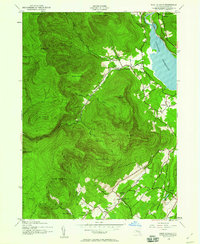 1942 West Shokan1958 Print · USGSThe Catskill mountain foothills in the early 1940s reveal a landscape of secluded hollows and high peaks bordering the Ashokan Reservoir. Genealogists and historians can trace old community hubs like Samsonville, Krumville, and several rural schoolhouses such as West Shokan Sch.2 unique versions available
 - 1942 Map of Neversink, 1958 Print
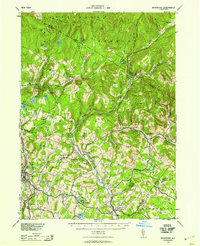 1942 Neversink1958 Print · USGSThe Catskills come alive in this wartime survey, showing the deep river valleys and high peaks of Sullivan and Ulster counties. Trace old rail lines like the NYO AND W RR or find family landmarks in hamlets such as Claryville, Loch Sheldrake, and Grahamsville.2 unique versions available
 - 1942 Map of Lackawack, 1959 Print
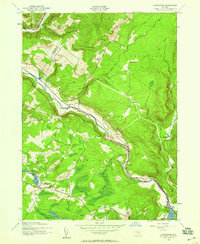 1942 Lackawack1959 Print · USGSUlster County's Rondout Valley is captured here during the 1940s, just as reservoir construction began to transform the local landscape forever. Genealogists and historians can trace the final years of valley communities like Montela and Lackawack, alongside family-named landmarks such as Furman Cem and Yagerville Sch.
 - 1943 Map of Peekamoose Mountain
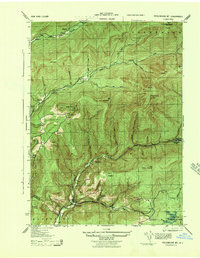 1943 Peekamoose Mountain1943 Print · USGSIn the heart of the Catskill Mountains during the mid-forties, this area remains a landscape of high summits and isolated valley settlements. Researchers can trace remote family homesteads and local institutions like the Greenville School, Richmond Camp, and the Slide Mountain Fire Tower.3 unique versions available
 - 1943 Map of Lackawack
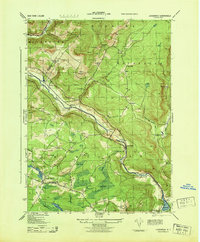 1943 Lackawack1943 Print · USGSThe Ulster County uplands are captured here during a period of massive hydraulic engineering. Genealogists and local historians can trace family farmsteads and rural schools like Stangle Hill School near the massive footprint of the Merriman Dam.
 - 1943 Map of West Shokan
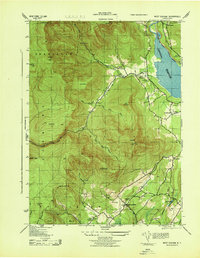 1943 West Shokan1943 Print · USGSWar-era Ulster County is defined here by the rise of the Ashokan Reservoir against the high Catskill peaks. Local historians can trace old family names and small schoolhouses like Brodhead School or visit landmarks like the Father Divine Lodge.
 - 1943 Map of Monticello, 1964 Print
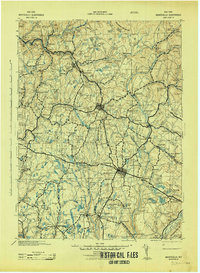 1943 Monticello1964 Print · USGSSullivan County in the early 1940s is shown at a peak of its rural development before mid-century modernization changed the landscape. Genealogists and researchers can trace local roots through numerous district schools like the Bushville School and family landmarks such as the Stewart Cem or the industrial Dye Works.
 - 1944 Map of Neversink
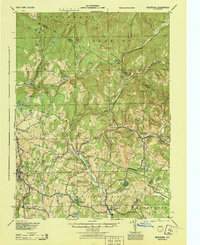 1944 Neversink1944 Print · USGSThe Catskills of the mid-1940s come alive in this survey of the river valleys before later reservoir development. Genealogists and historians can trace old homesteads near Willowemoc, follow the NYO AND W RR through Ferndale, and locate Union Ch and Divine Corners.
 - 1945 Map of Seager
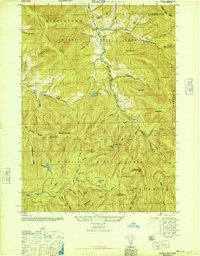 1945 Seager1945 Print · USGSThe high peaks and deep valleys of the Catskills appear here at the end of World War II, showing a landscape defined by forest and stream. Genealogists and hikers can trace old landmarks like School No 4, the Baker Cem, and the Balsam Lookout Tower.5 unique versions available
 - 1946 Map of Seager
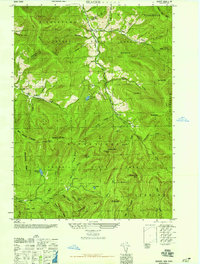 1946 Seager1946 Print · USGSThe high Catskills of the mid-1940s are meticulously detailed in this survey of the hollows and peaks along the Ulster and Delaware county line. Genealogists and researchers can locate remote landmarks like Lake Hill Cem, School No 4, and the Balsam Lookout Tower.
 - 1946 Map of Shandaken
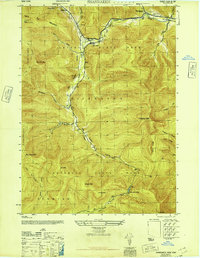 1946 Shandaken1946 Print · USGSThe central Catskills in the mid-1940s were defined by a rail-and-river economy tightly constrained by some of the region's highest peaks. Genealogists and historians can trace the early infrastructure of Big Indian and Oliverea or locate rural landmarks like School No 4 and the Belleayr Lookout Tower.2 unique versions available
 - 1948 Map of Binghamton, 1980 Print
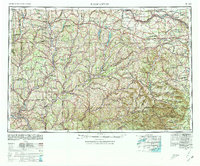 1948 Binghamton1980 Print · USGSCentral New York and the Southern Tier thrive in the late 1940s as a hub of rail traffic and mountain industry. Researchers can trace historic transit lines like the Erie Railroad through Binghamton or find old valley settlements near Oneonta and Delhi.
 - 1950 Map of Binghamton
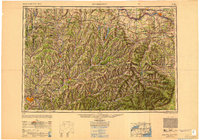 1950 Binghamton1950 Print · USGSBinghamton and the surrounding Southern Tier are shown in the mid-century era, highlighting the intricate rail and river networks that drove local industry. Researchers can trace the path of the Erie Railroad and locate landmarks from Otsego Lake to Sidney Mountain.2 unique versions available
 - 1950 Map of Scranton, 1952 Print
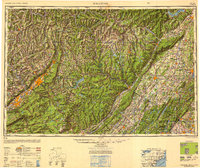 1950 Scranton1952 Print · USGSMid-century Northeast Pennsylvania and the Hudson Valley come alive in this survey of the tri-state region. Genealogists and historians can trace the dense rail networks of the Erie RR and DL&W RR between industrial hubs like Scranton and Wilkes-Barre.
 - 1953 Map of Scranton
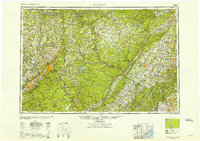 1953 Scranton1953 Print · USGSNortheastern Pennsylvania and the Catskills are shown in great detail during the early fifties, a time when rail lines and river valleys dictated the region's growth. Genealogists and historians can trace the industrial hearts of Scranton and Wilkes-Barre or locate remote landmarks like High Point and Lake Wallenpaupack.
 - 1958 Map of Binghamton
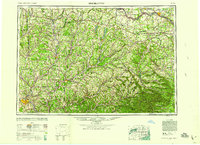 1958 Binghamton1958 Print · USGSCentral New York in the late fifties was a network of manufacturing cities and river valleys connected by vital rail lines. Genealogists and historians can trace family roots in Oneonta, Norwich, and Cooperstown or locate long-standing farms along Schoharie Creek.
 - 1959 Map of Scranton
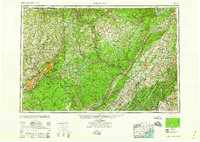 1959 Scranton1959 Print · USGSThe northern coalfields and the Hudson Valley meet in this mid-century survey of the Pennsylvania and New York borderlands. Genealogists and historians can trace the intricate rail networks of the Erie Railroad and the vast waters of Lake Wallenpaupack.2 unique versions available
 - 1960 Map of Shandaken, 1961 Print
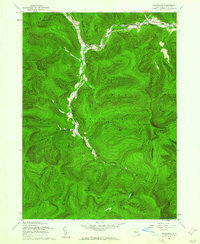 1960 Shandaken1961 Print · USGSThe northern Catskills appear in great detail during the early sixties, showing the rail-and-river corridor through Big Indian and Shandaken. Trace the high-altitude Winnisook Club near Slide Mtn or follow the New York Central line as it snakes along Esopus Creek.4 unique versions available
Showing maps 1-25 of 74
Top cities near Denning
- Thompson historical maps
- Fallsburg historical maps
- Wawarsing historical maps
- Liberty historical maps
- Rochester historical maps
- Gardiner historical maps
See more
Top neighborhoods of Denning
- Branch historical maps
- Sundown historical maps
- Peekamoose historical maps
- Frost Valley historical maps
- Bull Run historical maps
- Greenville historical maps
See more
Frequently asked questions
- What are the different types of historical maps available for Denning?
- What is the oldest map of Denning?
- Where can I purchase historical maps of Denning for my home or office?
- Where can I download high-res historical maps of Denning?
- Are there historical topographic maps available for Denning?
- Is there historical aerial imagery available for Denning?
- Where are historical maps of Denning sourced from?