1940s Maps of Ulster, New York
Explore 11 historic maps of Ulster from the 1940s. These maps offer a rare glimpse into what life looked like during the 1940s — showing old roads, neighborhoods, homes, and landmarks that have changed or disappeared over time.
Whether you're researching your family's past, planning a metal detecting trip, or studying how Ulster's landscape evolved across the 1940s, these high-resolution maps are a powerful tool for exploring the history of this region.
- Focus on a specific era: All maps on this page are from the 1940s, giving you a focused view of this time period.
- See what’s changed: Compare century-old streets, trails, and buildings to today's modern landscape using overlays and satellite layers.
- Research with precision: Use these maps for genealogy, historical research, land use analysis, or educational projects.
- View, download, or print: Maps are fully viewable online in high resolution, and can be downloaded or printed for your own records.
Start exploring Ulster's history through authentic maps from the 1940s. This is your window into the past.
Ulster, NY maps
(11)- 1941 Map of Catskill, 1945 Print
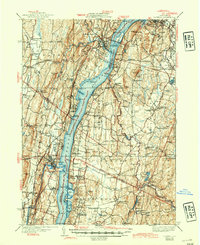 1941 Catskill1945 Print · USGSThe Hudson River valley at the start of the Second World War shows a landscape defined by historic estates and new river crossings. Genealogists and historians can trace the foundations of Bard College, locate the Birthplace of Robert Livingston, and explore early hamlets like Katsbaan and Cheviot.
 - 1942 Map of Kingston West, 1950 Print
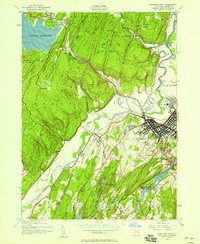 1942 Kingston West1950 Print · USGSThe area around Kingston during the early 1940s reveals a landscape shaped by the rail lines of the New York Central and the waters of the Ashokan Reservoir. Genealogists and historians can locate specific community centers like St Johns Ch, West Hurley RR Station, and the Lower Sawkill School.
 - 1942 Map of Rosendale, 1957 Print
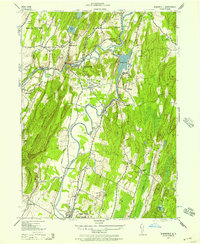 1942 Rosendale1957 Print · USGSUlster County's industrial and agricultural corridors are mapped here during the early 1940s, highlighting the transition between the old canal era and modern development. Genealogists and historians can trace family properties like Bergemanns Farm or find local landmarks such as Century Cement Co and All Saints Church.2 unique versions available
 - 1943 Map of Rosendale
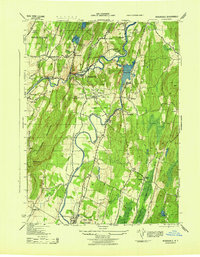 1943 Rosendale1943 Print · USGSCentral Ulster County is seen here during the mid-forties, capturing the industrial corridor between the Shawangunk Mountains and the Hudson. Researchers can trace the Delaware and Hudson Canal or locate family sites like the Mollenhauer Farm and Century Cement Co.
 - 1943 Map of Kingston West
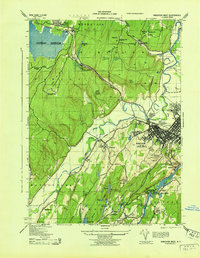 1943 Kingston West1943 Print · USGSMid-century Ulster County comes into focus as the Ashokan Reservoir and the New York Central railroad shape the valley corridor. Genealogists can trace family names at the Boice Brothers Dairy or locate old schoolhouses like the Stony Hollow School and Sawkill School.
 - 1945 Map of Woodstock, 1963 Print
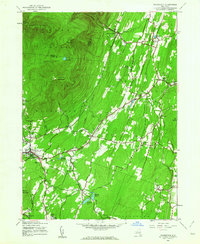 1945 Woodstock1963 Print · USGSUlster County's mountainous borderlands come into focus at the end of the Second World War as the region's rural character remains largely intact. Genealogists and hikers can trace old property lines and landmarks from West Saugerties to Overlook Mountain, including several legacy schoolhouses like School No 15.4 unique versions available
 - 1946 Map of Plattekill
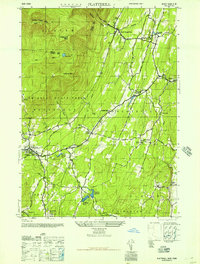 1946 Plattekill1946 Print · USGSMid-century Ulster County unfolds from the high peaks of the Catskills down to the reservoir systems of the lower valleys. Genealogists and researchers can trace local school districts like School No 14 and long-standing cemeteries such as Chestnut Hill Rural Cem.
 - 1947 Map of Hartford, 1955 Print
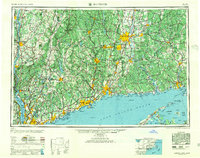 1947 Hartford1955 Print · USGSSouthern New England and the Hudson Valley are shown in detail during the post-war expansion era. Genealogists and researchers can trace local landmarks from the State Capitol and Yale University to the Stratford Lighthouse and Woodlawn Cem.2 unique versions available
 - 1948 Map of Hartford
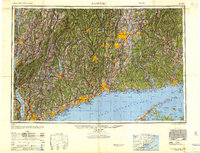 1948 Hartford1948 Print · USGSSouthern New England is captured here in the late 1940s, showcasing a landscape of thriving industrial cities and developing parkways. Genealogists and historians can trace the rail networks of the New York New Haven and Hartford RR or locate coastal defense sites like Fort Terry and Camp Shanks.2 unique versions available
 - 1948 Map of Albany, 1951 Print
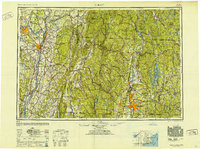 1948 Albany1951 Print · USGSThe Hudson and Connecticut River valleys are captured here in the late 1940s, showing the vital rail and water corridors of the Northeast. You can trace the Boston and Maine tracks past Mt Greylock or locate early settlements like Great Barrington and Bennington.
 - 1948 Map of Binghamton, 1980 Print
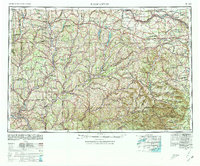 1948 Binghamton1980 Print · USGSCentral New York and the Southern Tier thrive in the late 1940s as a hub of rail traffic and mountain industry. Researchers can trace historic transit lines like the Erie Railroad through Binghamton or find old valley settlements near Oneonta and Delhi.
End of results
Showing maps 1-11 of 11
Top cities near Ulster
- Poughkeepsie historical maps
- Kingston historical maps
- Hyde Park historical maps
- Saugerties historical maps
- La Grange historical maps
- New Paltz historical maps
See more
Top neighborhoods of Ulster
- Ulster Landing historical maps
- Glenerie Lake Park historical maps
- Eddyville historical maps
- Lincoln Park historical maps
- Lake Katrine historical maps
- Ruby historical maps
See more
Frequently asked questions
- What are the different types of historical maps available for Ulster?
- What is the oldest map of Ulster?
- Where can I purchase historical maps of Ulster for my home or office?
- Where can I download high-res historical maps of Ulster?
- Are there historical topographic maps available for Ulster?
- Is there historical aerial imagery available for Ulster?
- Where are historical maps of Ulster sourced from?