1900s (20th Century) Maps of East Hartford, Hartford
Explore 12 historic maps of East Hartford from the 1900s (20th Century). These maps offer a rare glimpse into what life looked like during the 1900s — showing old roads, neighborhoods, homes, and landmarks that have changed or disappeared over time.
Whether you're researching your family's past, planning a metal detecting trip, or studying how East Hartford's landscape evolved across the 1900s, these high-resolution maps are a powerful tool for exploring the history of this region.
- Focus on a specific era: All maps on this page are from the 1900s, giving you a focused view of this time period.
- See what’s changed: Compare century-old streets, trails, and buildings to today's modern landscape using overlays and satellite layers.
- Research with precision: Use these maps for genealogy, historical research, land use analysis, or educational projects.
- View, download, or print: Maps are fully viewable online in high resolution, and can be downloaded or printed for your own records.
Start exploring East Hartford's history through authentic maps from the 1900s. This is your window into the past.
East Hartford, Hartford maps
(12)- 1901 Map of Fort Ann
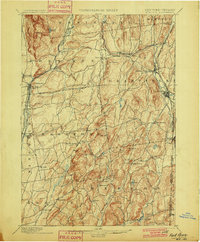 1901 Fort Ann1901 Print · USGSWashington County at the close of the nineteenth century was a vital corridor of New York commerce, defined by its historic canal and rail lines. You can trace the early industrial landscape through Smith Basin, find family homesteads near Slyboro, and follow the Mettawee River as it crosses the Vermont border.
 - 1903 Map of Mettawee
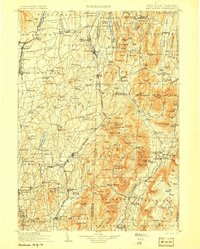 1903 Mettawee1903 Print · USGSThe New York and Vermont borderlands come alive in this turn-of-the-century survey of the Mettawee Valley. Genealogists can trace family footprints from Middletown Springs down to the Saratoga and Champlain Canal at Fort Ann.2 unique versions available
 - 1904 Map of Fort Ann
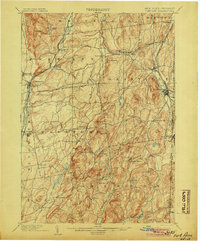 1904 Fort Ann1904 Print · USGSWashington County at the turn of the century shows a landscape defined by the slate industry and early rail lines along the Vermont border. Genealogists can locate family lands near Chamberlain Mills, Smith Basin, and the crossroads of North Hebron or Slyboro.6 unique versions available
 - 1944 Map of Hartford, 1946 Print
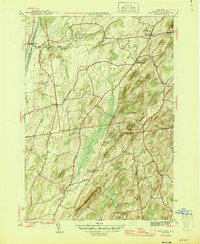 1944 Hartford1946 Print · USGSWashington County during the mid-1940s reveals a landscape defined by the Barge Canal and a network of tight-knit farming hamlets. Genealogists can locate specific landmarks like the Adamsville Cem, Salem Sch, and the riverside community of Smiths Basin.4 unique versions available
 - 1946 Map of Hartford
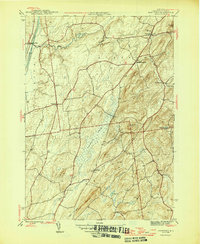 1946 Hartford1946 Print · USGSWashington County during the post-war era shows a landscape of upland farms and canal-side settlements. Genealogists and historians can trace family locations near Adamsville Cem, the Salem Sch, and the villages of Belcher and South Hartford.
 - 1947 Map of Hartford
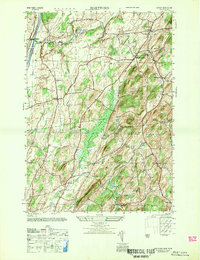 1947 Hartford1947 Print · USGSPost-war Washington County comes into focus here, showing the rural communities of Hartford and Adamsville as they appeared in the late forties. Researchers can trace local history through sites like the Adamsville Cem, Salem Sch, and the industrial corridor of the BARGE CANAL.
 - 1950 Map of Glens Falls
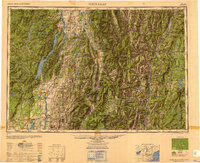 1950 Glens Falls1950 Print · USGSThe Adirondacks and the Green Mountains meet in this mid-century survey of the New York and Vermont borderlands. Researchers can trace the industrial rail corridors of the Rutland RR and Delaware & Hudson RR connecting Glens Falls, Rutland, and the shores of Lake George.
 - 1956 Map of Glens Falls, 1968 Print
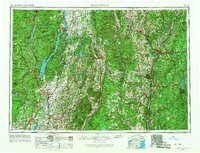 1956 Glens Falls1968 Print · USGSUpper New York and the Vermont mountains are captured here in the mid-fifties, showing the rugged rail-and-river network of the Northeast. Researchers can trace the paths of the Delaware and Hudson RR and Rutland RR as they wind through valley towns like Poultney and Whitehall.3 unique versions available
 - 1959 Map of Glens Falls
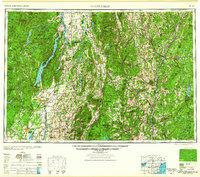 1959 Glens Falls1959 Print · USGSUpper New York and Vermont are captured here during the late 1950s, a period of transition for these mountain communities. Researchers can trace the legacy of the region's river-and-rail economy through landmarks like Lake George, Saratoga Springs, and Killington Peak.2 unique versions available
 - 1964 Map of Glens Falls
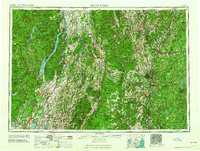 1964 Glens Falls1964 Print · USGSThe tri-state borderlands of New York, Vermont, and New Hampshire appear here in the mid-1960s. Researchers can trace the rail routes of the Rutland RR and find historic sites like Ticonderoga and Saratoga National Historical Park.
 - 1986 Map of Glens Falls
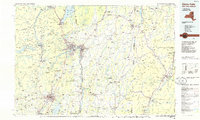 1986 Glens Falls1986 Print · USGSThe Upper Hudson Valley and Vermont borderlands come together in this mid-eighties survey of industrial river towns and mountain retreats. Genealogists and historians can trace the rail lines of the Delaware and Hudson Railway or locate landmarks like the Mount McGregor Correctional Facility and Saratoga Spa State Park.2 unique versions available
 - 1989 Map of Glens Falls
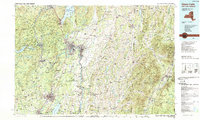 1989 Glens Falls1989 Print · USGSThe Upper Hudson Valley and the Vermont borderlands are captured here during the late eighties, showing a landscape of river-town industry and mountain recreation. Researchers can trace the Champlain Canal, the Delaware and Hudson RR, and historic sites like Saratoga National Historical Park.
End of results
Showing maps 1-12 of 12
Top cities near East Hartford
- Queensbury historical maps
- Moreau historical maps
- Kingsbury historical maps
- Hudson Falls historical maps
- Granville historical maps
- Fort Edward historical maps
See more
Frequently asked questions
- What are the different types of historical maps available for East Hartford?
- What is the oldest map of East Hartford?
- Where can I purchase historical maps of East Hartford for my home or office?
- Where can I download high-res historical maps of East Hartford?
- Are there historical topographic maps available for East Hartford?
- Is there historical aerial imagery available for East Hartford?
- Where are historical maps of East Hartford sourced from?