Old Maps of Woodfin, North Carolina for Academic Research
Study the evolution of Woodfin with 35 high-resolution historic maps. Whether you're teaching, researching, or modeling changes in land use, these maps provide essential visual documentation of urban, environmental, and geographic change.
- Analyze long-term change: Track patterns in development, transportation, and natural features.
- Ideal for environmental or urban studies: Support academic projects with primary historical map data.
- Use in the classroom or lab: Educators and researchers rely on these maps to bring historical context to life.
These maps are a powerful tool for teaching, research, and visualizing how Woodfin has changed over the decades.
Woodfin, NC maps
(35)- 1894 Map of Asheville
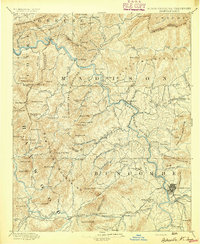 1894 Asheville1894 Print · USGSAsheville and the French Broad River valley are shown here in the 1890s, when rail travel was transforming the Southern Appalachians. Genealogists can locate family landmarks like Gudgers Mill, Pendletons Mill, and the early development of Biltmore.2 unique versions available
 - 1901 Map of Asheville
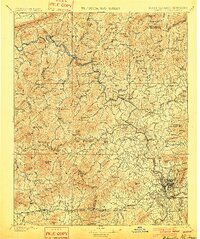 1901 Asheville1901 Print · USGSWestern North Carolina at the turn of the century shows a mountain landscape adapting to the arrival of major railroads. Genealogists and historians can trace family-named peaks and early communities like Mars Hill, Hot Springs, and the estates at Biltmore.9 unique versions available
 - 1936 Map of Weaverville
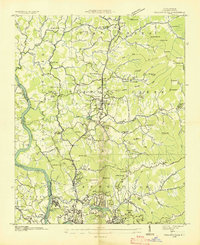 1936 Weaverville1936 Print · USGSBuncombe County in the mid-1930s shows a landscape of mountain settlements and river industry between Weaverville and Asheville. Genealogists and researchers can locate family landmarks like Garrison Cemetery and historic rural hubs such as Britten Cove School and Clarks Chapel.
 - 1936 Map of Leicester
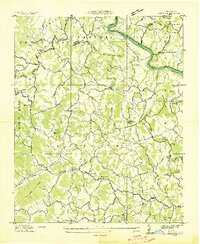 1936 Leicester1936 Print · USGSLeicester and the surrounding Buncombe County townships appear here during the mid-1930s, showing a landscape of mountain farming and river-bound industry. Genealogists can locate family landmarks like Gudger Chapel, Sluder Cem, and the Alexander School.
 - 1936 Map of Asheville
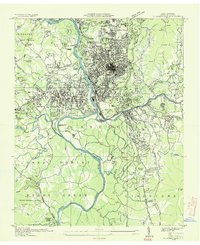 1936 Asheville1936 Print · USGSAsheville and its surrounding mountain townships are captured in detail during the mid-1930s as the city expanded along the river valleys. Researchers can trace historic family burial sites at Violet Hill Cem, locate the early grounds of Eliada Orphans Home, or explore the rail-dependent corridor of Murphy Junction.
 - 1942 Map of Weaverville, 1954 Print
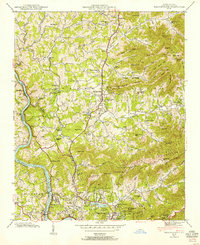 1942 Weaverville1954 Print · USGSBuncombe County's highland terrain in the early 1940s reveals a landscape of mountain settlements and river-valley rail lines. Family historians can locate specific landmarks including Clarks Chapel, the Brittain Cove Sch, and the winding French Broad River.
 - 1942 Map of Leicester, 1958 Print
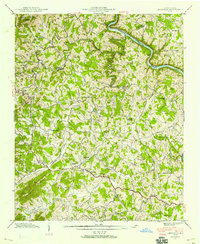 1942 Leicester1958 Print · USGSNorthwestern Buncombe County during the early 1940s is a landscape of tight-knit mountain hollows and riverside rail stops. Genealogists can trace family footprints across Sluder Cem, numerous country churches like Brick Ch, and the many schools serving Leicester and Worley.4 unique versions available
 - 1943 Map of Asheville
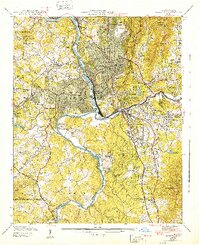 1943 Asheville1943 Print · USGSAsheville during the early 1940s shows a mountain city defined by its river valleys and new infrastructure like the Blue Ridge Parkway. Genealogists and local historians can trace family locations near Violet Hill Cem, Inanda Ch, or the Eliada Orphans Home.2 unique versions available
 - 1943 Map of Leicester
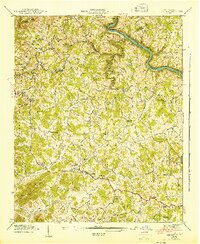 1943 Leicester1943 Print · USGSWestern North Carolina's rural highlands are captured here during the mid-1940s, showing a landscape of tight-knit valley communities and mountain gaps. Researchers can locate vanished landmarks and family sites like Sluder Cem, Teague Chapel, and the Leicester Sch.
 - 1943 Map of Weaverville
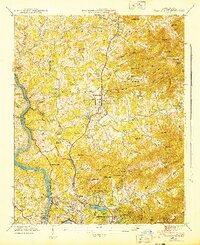 1943 Weaverville1943 Print · USGSThe Buncombe County foothills north of Asheville appear here in the early 1940s, showing a landscape of upland coves and developing mountain communities. Genealogists and local historians can locate family-named landmarks and old meeting houses like Clarks Chapel, Garrison Cem, and the Brittain Cove Sch.2 unique versions available
 - 1955 Map of Knoxville
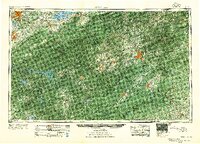 1955 Knoxville1955 Print · USGSThe Southern Appalachians and the Smoky Mountains are shown here at a peak of mid-century development and conservation. Genealogists and historians can trace the early road networks connecting Gatlinburg, Waynesville, and the Cherokee Indian Reservation across the high ridges.
 - 1957 Map of Knoxville, 1966 Print
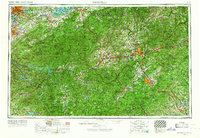 1957 Knoxville1966 Print · USGSThe Southern Appalachians of Tennessee and North Carolina are mapped here during the mid-twentieth century as new highways reached the high country. Genealogists and historians can trace the topography between Knoxville and Asheville, locating family landmarks near Fontana Lake or along the Blue Ridge Parkway.4 unique versions available
 - 1960 Map of Knoxville
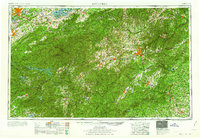 1960 Knoxville1960 Print · USGSThe Southern Appalachians come alive in the 1950s, showing the intersection of new national park tourism and deep-rooted mountain industry. Trace old rail lines like the Clinchfield RR and find high-altitude landmarks from Mt Le Conte to the Cherokee Indian Reservation.2 unique versions available
 - 1961 Map of Asheville, 1965 Print
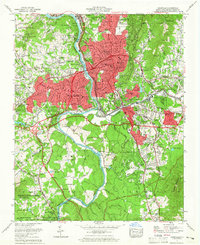 1961 Asheville1965 Print · USGSAsheville and the French Broad River valley are captured here in the early sixties, showing a landscape balanced between mountain forest and urban expansion. Trace local history through Biltmore Forest, Sayles Village, and the Blue Ridge Parkway.3 unique versions available
 - 1962 Map of Weaverville, 1965 Print
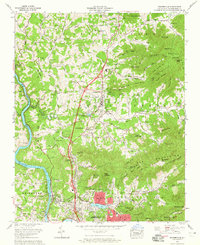 1962 Weaverville1965 Print · USGSBuncombe County underwent significant development in the early sixties as the suburbs of Asheville pushed north toward Weaverville. Local researchers can trace family roots through sites like Coles Cem, find the Asheville-Weaverville Speedway, and locate the historic Craggy Prison near the river.3 unique versions available
 - 1964 Map of Knoxville
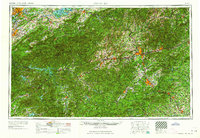 1964 Knoxville1964 Print · USGSThe Southern Appalachians and Great Smokies are captured here during the mid-sixties, showing the rugged borderlands of Tennessee and North Carolina. Researchers can trace historic mountain routes like U S 441, the expanse of Pisgah National Forest, and the growing footprints of Asheville and Knoxville.
 - 1976 Map of Asheville, 1979 Print
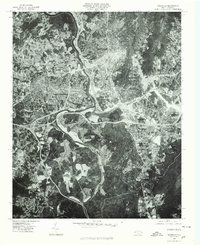 1976 Asheville1979 Print · USGSAsheville in the late seventies is shown in photographic detail as the city expanded across its mountain river valleys. Trace the growth of neighborhoods like West Asheville and Biltmore or the natural course of the French Broad River.
 - 1976 Map of Weaverville, 1979 Print
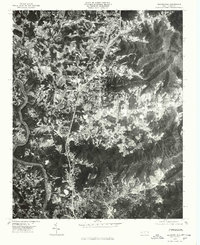 1976 Weaverville1979 Print · USGSThe northern corridor of the French Broad valley comes to life in this mid-seventies aerial survey. Researchers can trace land use and development patterns between Weaverville and Stocksville, or locate family sites near Reynolds Mountain.
 - 1985 Map of Asheville
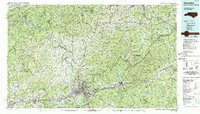 1985 Asheville1985 Print · USGSWestern North Carolina during the mid-eighties shows a region of deep mountain heritage and expanding highway networks. Genealogists and historians can trace the foundations of Asheville alongside older rail corridors like the Clinchfield Railroad and the high elevations of Mount Mitchell.2 unique versions available
 - 1997 Map of Weaverville, 2001 Print
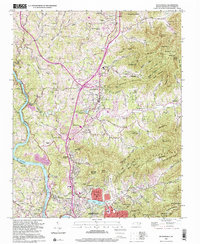 1997 Weaverville2001 Print · USGSBuncombe County's transition from rural mountain coves to suburban corridors is captured here during the late nineties. Genealogists and local historians can trace family-named sites like Whitted Knob and Garrison Cem, or locate landmarks such as the Asheville Weaverville Speedway and Craggy Prison.
 - 2010 Map of Leicester, 2010 Print
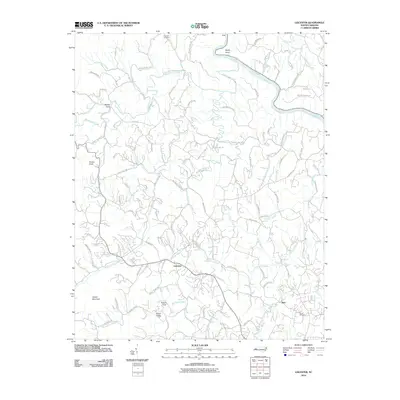 2010 Leicester2010 Print · USGSBuncombe County's rural character is on full display here in the early twenty-first century, showing a landscape defined by mountain coves and creek valleys. Researchers can trace family history through local landmarks like Patton Cove, Sluder Cemetery, and the old settlement at Leicester.
 - 2010 Map of Weaverville, 2010 Print
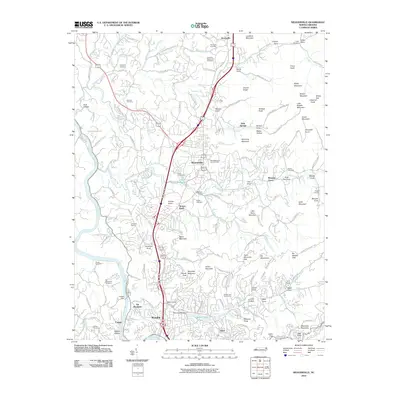 2010 Weaverville2010 Print · USGSNorth of Asheville in the early twenty-first century, this landscape shows the growing connections between Weaverville and Woodfin along the interstate corridor. Researchers can trace ancestral roots through sites like the Vance Homestead and numerous local burial grounds such as Garrison Cemetery and West Memorial Park Cemetery.
 - 2011 Map of Asheville, 2011 Print
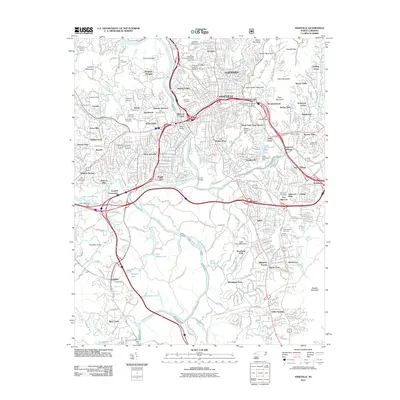 2011 Asheville2011 Print · USGSAsheville and its surrounding mountain gaps are captured in this detailed early 2000s survey of the French Broad valley. Researchers can trace family roots through Riverside Cemetery, locate old neighborhoods like Sayles Village, and follow the historic Blue Ridge Pkwy.
 - 2013 Map of Leicester, 2013 Print
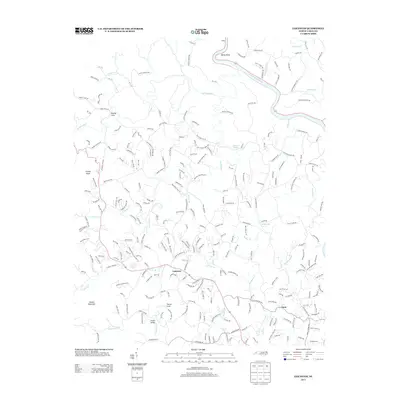 2013 Leicester2013 Print · USGSLeicester and its surrounding mountain coves are documented here in the early twenty-first century as the landscape evolved into a modern residential network. Trace family-named landmarks and valley settlements from Patton Cove to Juno and the waters of Sandymush Cr.
 - 2013 Map of Asheville, 2013 Print
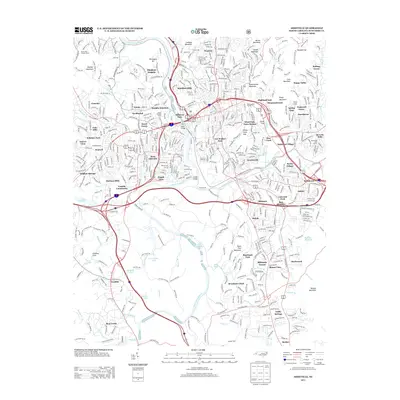 2013 Asheville2013 Print · USGSAsheville in the early twenty-first century reveals a dense network of neighborhoods and mountain topography. Local historians can trace the evolution of Biltmore Forest, the rail corridors at Murphy Junction, and the winding path of the Blue Ridge Pkwy.
Showing maps 1-25 of 35
Top cities near Woodfin
- Asheville historical maps
- Black Mountain historical maps
- Fletcher historical maps
- Mills River historical maps
- Swannanoa historical maps
- Royal Pines historical maps
See more
Top neighborhoods of Woodfin
Frequently asked questions
- What are the different types of historical maps available for Woodfin?
- What is the oldest map of Woodfin?
- Where can I purchase historical maps of Woodfin for my home or office?
- Where can I download high-res historical maps of Woodfin?
- Are there historical topographic maps available for Woodfin?
- Is there historical aerial imagery available for Woodfin?
- Where are historical maps of Woodfin sourced from?