Old Maps of Piedmont Park Subdivision, North Carolina
Explore 15 old maps of Piedmont Park Subdivision, spanning from 1905 to today. These high-resolution historic maps reveal how streets, neighborhoods, landmarks, and natural features evolved over time — perfect for genealogy, metal detecting, research, and local history exploration.
What you can do with these maps:
- See how Piedmont Park Subdivision changed over time: Compare historical maps to modern-day views to trace roads, homesites, rail lines & more.
- View detailed metadata: Each map includes creators, publishers, year, scale, and archive source.
- Overlay maps with satellite & LiDAR: Visualize the past alongside modern tools to explore terrain & human change.
- Trusted historical sources: Maps sourced from the USGS, Library of Congress, and other archives.
- Access maps your way: View online, download high-res files, or order prints for personal or research use.
Start exploring old maps of Piedmont Park Subdivision to uncover forgotten places, hidden landmarks, and the deep history beneath your feet.
Piedmont Park Subdivision, NC maps
(15)- 1905 Map of Morganton, 1941 Print
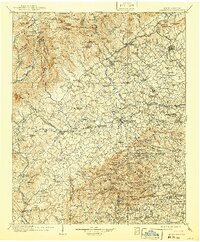 1905 Morganton1941 Print · USGSThe foothills and high peaks of the Blue Ridge come alive in the early twentieth century, centered on the growing towns of Morganton and Lenoir. Genealogists and historians can trace the early rail corridor of the Southern Railway and locate vanished landmarks like Arneys Store and Rutherford College.2 unique versions available
 - 1953 Map of Charlotte, 1968 Print
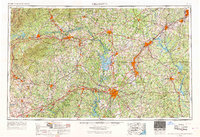 1953 Charlotte1968 Print · USGSThe North Carolina Piedmont and South Carolina borderlands are shown in detail during a period of significant growth and reservoir development. Trace the rail corridors of the Southern Railway or find family roots in towns like China Grove, Misenheimer, and Lincolnton.3 unique versions available
 - 1954 Map of Charlotte
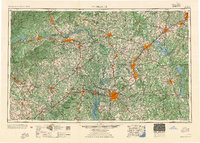 1954 Charlotte1954 Print · USGSThe North Carolina Piedmont in the mid-1950s shows a region of rapid growth and industrial expansion centered around Charlotte. Trace the era's infrastructure through the Southern railroad lines and locate significant landmarks like the Charlotte Naval Ammunition Depot and Lake Norman.2 unique versions available
 - 1956 Map of Morganton North, 1958 Print
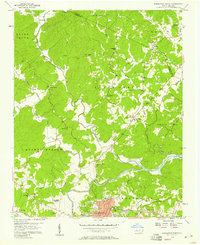 1956 Morganton North1958 Print · USGSMorganton and the river valleys of Burke County are captured in the mid-fifties, showing the rural landscapes of Quaker Meadow. Researchers can trace family sites like Arneys Store, Corpening Sch, and several mission churches along the Johns River.2 unique versions available
 - 1956 Map of Lenoir, 1963 Print
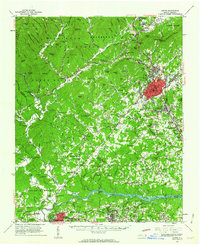 1956 Lenoir1963 Print · USGSCaldwell and Burke Counties come alive in the 1950s, showing the Foothills region as it transitioned from mountain timberlands to bustling rail towns. Trace old community hubs like Arneys Store, family-named creeks such as Elijah Bates Mill Creek, and the many churches like St Marys Mission Ch.
 - 1960 Map of Charlotte
 1960 Charlotte1960 Print · USGSMid-century North Carolina and South Carolina meet in this 1960 survey of the Piedmont's industrial and textile heartland. Trace the growth of Charlotte alongside historic landmarks like Kings Mountain National Military Park and the Charlotte Naval Ammunition Depot.2 unique versions available
 - 1962 Map of Charlotte
 1962 Charlotte1962 Print · USGSThe North Carolina Piedmont in the early sixties showcases a landscape transformed by massive reservoirs and industrial growth. Researchers can trace the development of Lake Norman, locate the Charlotte Naval Ammunition Depot, or find family landmarks like Wesley Chapel and Brown & Norcott Mills.
 - 1986 Map of Hickory
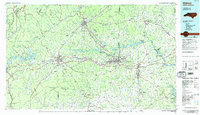 1986 Hickory1986 Print · USGSWestern North Carolina's foothills are seen here in the mid-eighties as textile and furniture towns flourished along the river. Trace the development of Hickory and Lenoir or locate local landmarks like Burke Chapel, Saw Mills, and Rhodhiss Lake.3 unique versions available
 - 1993 Map of Morganton North, 1996 Print
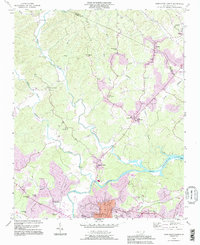 1993 Morganton North1996 Print · USGSThe Johns River and Catawba River valleys in Burke County were undergoing notable suburban expansion in the 1990s. Researchers can locate historic rural centers like Arneys Store and Hartland, along with family landmarks such as Houck Cem and Bost Cem.
 - 2002 Map of Morganton North, 2003 Print
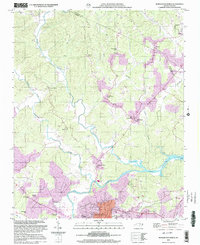 2002 Morganton North2003 Print · USGSBurke County at the turn of the millennium shows the intersection of deep-rooted rural communities and modern municipal growth near the Catawba River. Researchers can trace old family footprints at Arneys Store, Corpening Sch, and Littlejohn Ch.
 - 2010 Map of Morganton North, 2010 Print
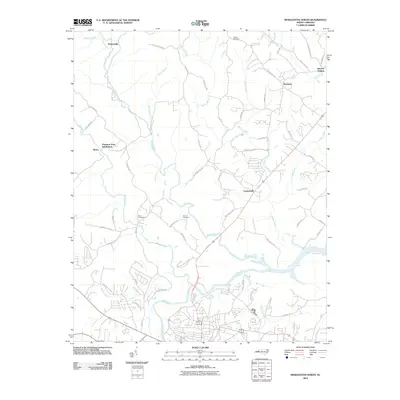 2010 Morganton North2010 Print · USGSNorth Carolina’s river country unfolds here as the new millennium began, where the Catawba River meets the winding Johns River. Genealogists and local researchers can trace family landmarks like Houck Cemetery or follow the development of communities like Chesterfield and Worry.
 - 2013 Map of Morganton North, 2013 Print
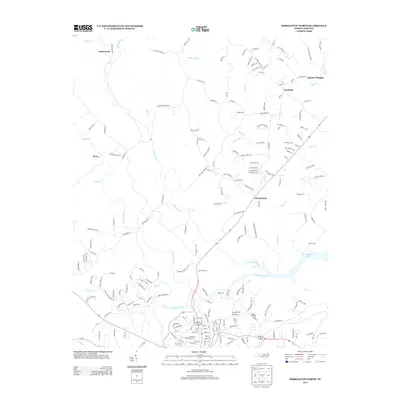 2013 Morganton North2013 Print · USGSNorth Carolina's Burke County foothills come into focus in the early twenty-first century as the Johns River joins the Catawba River. Genealogists and local historians can trace the roads connecting settlements like Chesterfield, Hartland, and the curiously named Worry.
 - 2016 Map of Morganton North, 2016 Print
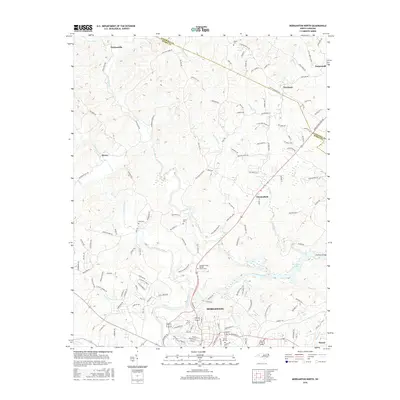 2016 Morganton North2016 Print · USGSThe Foothills of North Carolina come alive in this survey centered on the river-bend city of Morganton. Researchers can trace family sites at Forest Hill Cem and Houck Cem or locate crossings like Huffman Bridge and Perkinsville.
 - 2019 Map of Morganton North, 2019 Print
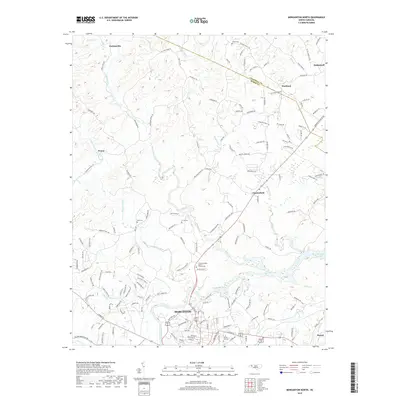 2019 Morganton North2019 Print · USGSThe northern outskirts of Morganton and the winding Catawba River are captured here in the late 2010s. Researchers can locate several historic burial sites and rural communities, including Catawba Valley Baptist Church Cem, Perkinsville, and Hartland.
 - 2022 Map of Morganton North, 2022 Print
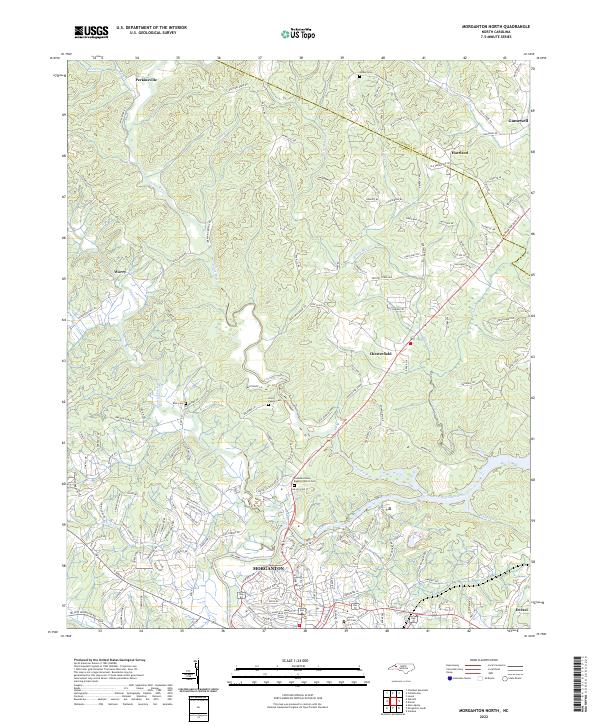 2022 Morganton North2022 Print · USGSBurke and Caldwell counties are shown here in the 2020s as the river valleys of the Foothills continue to evolve. Researchers can trace family history through sites like Catawba Valley Baptist Church Cem, Worry, and Houck Cem.
End of results
Showing maps 1-15 of 15
Top cities near Piedmont Park Subdivision
- Lenoir historical maps
- Morganton historical maps
- Marion historical maps
- Valdese historical maps
- Gamewell historical maps
- Hudson historical maps
See more
Frequently asked questions
- What are the different types of historical maps available for Piedmont Park Subdivision?
- What is the oldest map of Piedmont Park Subdivision?
- Where can I purchase historical maps of Piedmont Park Subdivision for my home or office?
- Where can I download high-res historical maps of Piedmont Park Subdivision?
- Are there historical topographic maps available for Piedmont Park Subdivision?
- Is there historical aerial imagery available for Piedmont Park Subdivision?
- Where are historical maps of Piedmont Park Subdivision sourced from?