1930s Maps of Clay County, North Carolina
Explore 20 historic maps of Clay County from the 1930s. These maps offer a rare glimpse into what life looked like during the 1930s — showing old roads, neighborhoods, homes, and landmarks that have changed or disappeared over time.
Whether you're researching your family's past, planning a metal detecting trip, or studying how Clay County's landscape evolved across the 1930s, these high-resolution maps are a powerful tool for exploring the history of this region.
- Focus on a specific era: All maps on this page are from the 1930s, giving you a focused view of this time period.
- See what’s changed: Compare century-old streets, trails, and buildings to today's modern landscape using overlays and satellite layers.
- Research with precision: Use these maps for genealogy, historical research, land use analysis, or educational projects.
- View, download, or print: Maps are fully viewable online in high resolution, and can be downloaded or printed for your own records.
Start exploring Clay County's history through authentic maps from the 1930s. This is your window into the past.
Clay County, NC maps
(20)- 1935 Map of Peachtree
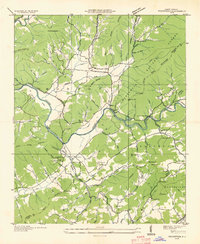 1935 Peachtree1935 Print · USGSCherokee and Clay counties appear here in the mid-1930s, showing the mountain communities along the Hiwassee River. Genealogists and historians can locate the John C Campbell Folk Sch, Sally Nebo Ch, and the site of Andrews Dam.
 - 1935 Map of Ivylog
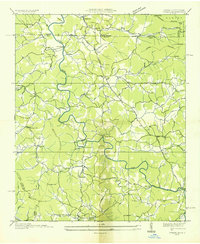 1935 Ivylog1935 Print · USGSUnion County, Georgia, and the North Carolina borderlands are captured here in the mid-1930s before major dam projects reshaped the river valleys. Genealogists and local historians can trace family roots through numerous country landmarks like Ivylog Cem, Mt Zion Sch, and Davenport Mill.
 - 1935 Map of Osborn
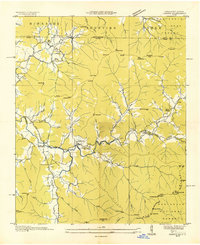 1935 Osborn1935 Print · USGSTowns County, Georgia, is documented here in the mid-1930s before the full expansion of the Tennessee Valley Authority’s projects. Local historians can trace family locations and rural community hubs like Osborn, Macedonia Ch, and Upper Bell Sch.
 - 1935 Map of Rainbow Springs
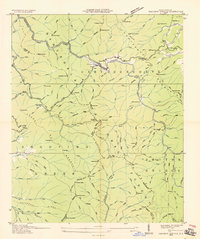 1935 Rainbow Springs1935 Print · USGSThe Macon County backcountry in the mid-1930s shows an active logging era as timber lines competed with the rising National Forest. Map collectors and genealogists can locate the CCC Camp No F 12, the logging path of the Lumber Company RR, and the Rainbow Sch.
 - 1935 Map of Prentiss
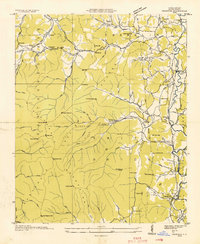 1935 Prentiss1935 Print · USGSMacon County in the mid-1930s shows a landscape of high ridges and narrow valleys where the forestry economy was taking root. Genealogists and researchers can locate numerous rural landmarks like Mulberry Sch, Coweeta Ch, and the Tallulah Falls Railroad.
 - 1935 Map of Shooting Creek
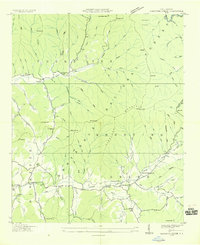 1935 Shooting Creek1935 Print · USGSClay County mountain life is recorded in this mid-1930s survey of the high ridges and deep coves. Genealogists can locate family landmarks like Tidwell Sch, Marshall Chapel, and the community at Tusquitee long before modern road improvements.
 - 1935 Map of Burningtown Bald
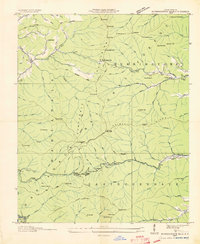 1935 Burningtown Bald1935 Print · USGSMacon County's high ridges and deep coves are captured in the mid-1930s, showing the early infrastructure of the Nantahala National Forest. Researchers can trace the original path of the Appalachian Trail past the Wayah Bald Fire Tower and locate local landmarks like Mt Sinai Ch and the Corundum No 1 mine.
 - 1935 Map of Dillard
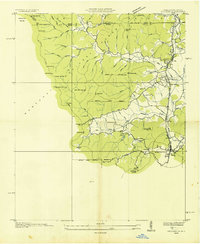 1935 Dillard1935 Print · USGSThe Georgia and North Carolina borderlands are captured here in the mid-1930s as the rail and highway networks expanded through the mountains. Researchers can locate the Rabun Gap Nacoochee Sch, trace the Tallulah Falls RR, and find local landmarks like Wolf Fork Ch.
 - 1935 Map of Topton
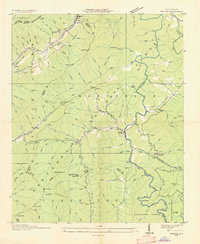 1935 Topton1935 Print · USGSWestern North Carolina’s mountain timber and rail landscape is captured here in the mid-thirties as federal relief work takes root. Trace the winding Ritter Lumber RR alongside CCC Camp No F 13 and the remote settlement of Aquone.
 - 1935 Map of Wayah Bald
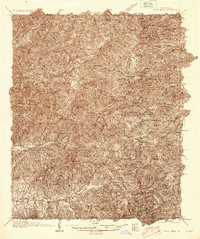 1935 Wayah Bald1935 Print · USGSHigh in the Blue Ridge Mountains during the mid-1930s, this survey reveals the isolated homesteads and forest tracts of Macon County. Genealogists can locate family landmarks like Marshall Chapel, Oakdale Sch, and the remote Kyle PO or Flats PO.
 - 1935 Map of Andrews
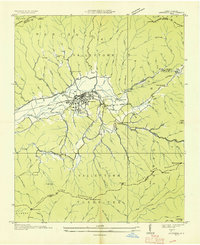 1935 Andrews1935 Print · USGSMid-1930s Cherokee County centers on the rail-driven town of Andrews as it sits between the Snowbird Mountains and Tusquitee Mountains. Genealogists and historians can trace local landmarks like Valleytown Cem, the Junaluska Sch, and the unique Valley River Tunnel.
 - 1935 Map of Hightower Bald
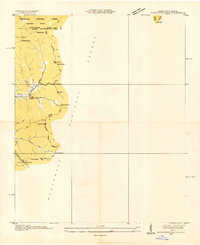 1935 Hightower Bald1935 Print · USGSThe Georgia and North Carolina high country is captured here in the mid-1930s, showing the ridge-top border and the early Appalachian Trail. Genealogists and hikers can locate the Pleasant Hill School and the settlement of Hightower along the banks of Big Creek.
 - 1935 Map of Gumlog
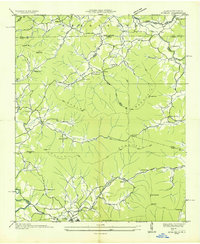 1935 Gumlog1935 Print · USGSUpper Georgia and North Carolina meet in this mid-1930s landscape, where mountain gaps and creek valleys dictate the layout of rural life. Researchers can trace the heritage of remote settlements like Gumlog and find local landmarks such as Ownby Mill and Zebulon Ch.
 - 1935 Map of Hayesville
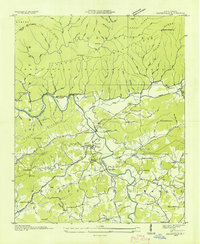 1935 Hayesville1935 Print · USGSClay County's river valleys and high ridges are captured in the mid-1930s during a period of transition for Western North Carolina. Genealogists and local historians can locate family landmarks like Meyers Chapel Cem, the Philadelphia Ch, and the old Fires Creek Sch.
 - 1935 Map of Hiawassee
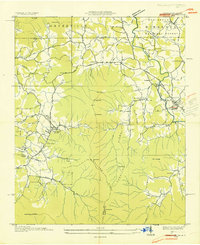 1935 Hiawassee1935 Print · USGSThe Georgia-North Carolina border country comes alive in the mid-1930s, showing the early infrastructure of the Appalachian highlands. You can trace family history through sites like Young Harris, Townsend Mill, and the Lower Bell Creek School.
 - 1937 Map of Hayesville, 1957 Print
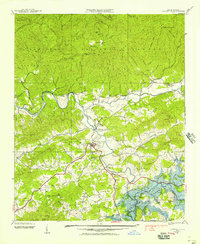 1937 Hayesville1957 Print · USGSClay County was on the verge of total transformation in the late 1930s as the Tennessee Valley Authority planned its massive reservoirs. You can trace the original valley floors of Scrougetown and Tusquitee before they were altered, alongside landmarks like Philadelphia Church and the Sanderson Bridge.2 unique versions available
 - 1937 Map of Peachtree, 1957 Print
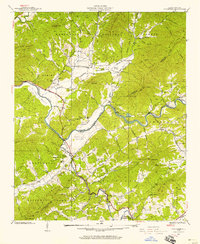 1937 Peachtree1957 Print · USGSWestern North Carolina's river valleys and mountain ridges are captured in the late 1930s as agricultural life centered around Brasstown and Peachtree. Researchers can locate historic rural sites like the Campbell Folk School, Jones Mill, and Wells Cem.4 unique versions available
 - 1938 Map of Andrews
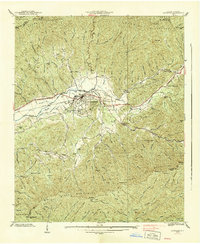 1938 Andrews1938 Print · USGSWestern North Carolina mountain life is centered on the Andrews valley in the late thirties as the Southern railroad connects these high peaks. Genealogists and hikers can trace old routes through Granny Squirrel Gap, locate the Valleytown Cem, or find the State Prison Camp.7 unique versions available
 - 1938 Map of Peachtree
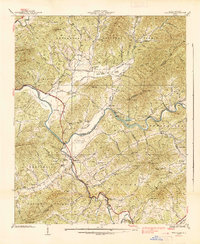 1938 Peachtree1938 Print · USGSCherokee and Clay Counties are shown here in the late thirties, a period when rural electrification projects began to intersect with traditional mountain communities. Genealogists can locate family landmarks like the Campbell Folk School, Wells Cem, and many local congregations including Mission Ch.
 - 1938 Map of Hayesville
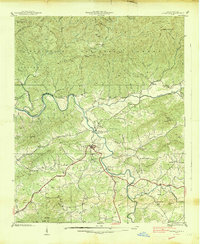 1938 Hayesville1938 Print · USGSClay County in the late 1930s is a landscape of mountain gaps and river valleys, centered on the growth of Hayesville. Genealogists and historians can trace family locations through numerous rural landmarks like Happy Top Church, Scrougetown, and the Fires Creek Ch and Sch.
End of results
Showing maps 1-20 of 20
Top cities of Clay County
Frequently asked questions
- What are the different types of historical maps available for Clay County?
- What is the oldest map of Clay County?
- Where can I purchase historical maps of Clay County for my home or office?
- Where can I download high-res historical maps of Clay County?
- Are there historical topographic maps available for Clay County?
- Is there historical aerial imagery available for Clay County?
- Where are historical maps of Clay County sourced from?