1940s Maps of Scotland County, North Carolina
Explore 15 historic maps of Scotland County from the 1940s. These maps offer a rare glimpse into what life looked like during the 1940s — showing old roads, neighborhoods, homes, and landmarks that have changed or disappeared over time.
Whether you're researching your family's past, planning a metal detecting trip, or studying how Scotland County's landscape evolved across the 1940s, these high-resolution maps are a powerful tool for exploring the history of this region.
- Focus on a specific era: All maps on this page are from the 1940s, giving you a focused view of this time period.
- See what’s changed: Compare century-old streets, trails, and buildings to today's modern landscape using overlays and satellite layers.
- Research with precision: Use these maps for genealogy, historical research, land use analysis, or educational projects.
- View, download, or print: Maps are fully viewable online in high resolution, and can be downloaded or printed for your own records.
Start exploring Scotland County's history through authentic maps from the 1940s. This is your window into the past.
Scotland County, NC maps
(15)- 1942 Map of Troy
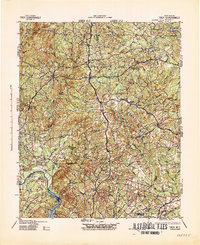 1942 Troy1942 Print · USGSMid-century central North Carolina comes alive through this 1940s survey of the rail-linked towns between the Uwharrie hills and the Sandhills. Trace the historic Norfolk Southern line through Troy, Star, and Biscoe, or locate the Morrison Training School and local springs.
 - 1942 Map of Rockingham, 1944 Print
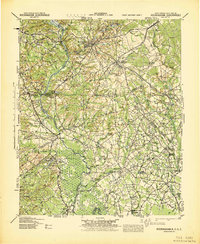 1942 Rockingham1944 Print · USGSThe North Carolina and South Carolina borderlands come alive in this wartime survey of the Pee Dee River valley. Researchers can trace historic mill sites like Burnt Factory Pond or locate family landmarks such as Roberdell and Old Sneedsboro.
 - 1948 Map of Southern Pines, 1954 Print
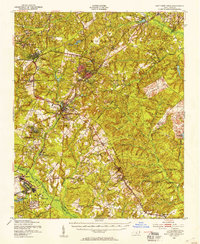 1948 Southern Pines1954 Print · USGSThe North Carolina Sandhills were a hub of transit and military expansion just after the war. This survey allows researchers to trace family landmarks like St Mathews Ch and Taylor Town or map the early footprints of Fort Bragg and Camp Mackall.
 - 1948 Map of Pinebluff, 1972 Print
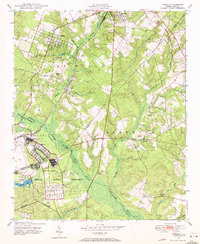 1948 Pinebluff1972 Print · USGSThe Sand Hills of Moore and Richmond counties are shown here just after the war, where military expansions met rural North Carolina life. Genealogists and researchers can trace the Seaboard Air Line through Addor, find family roots at Silver Springs Cemetery, and locate the old McFarland Sch.3 unique versions available
 - 1949 Map of Gibson, 1953 Print
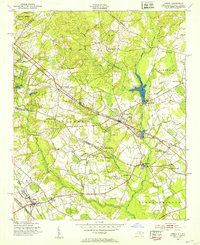 1949 Gibson1953 Print · USGSThe North Carolina and South Carolina borderlands come alive in the late 1940s, centered on the rail hub of Gibson. Trace the heritage of mill settlements and family plots like Richmond Mill, Old Hundred, and the Pate Cem.3 unique versions available
 - 1949 Map of Ghio, 1953 Print
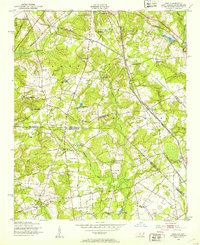 1949 Ghio1953 Print · USGSThe Carolina borderlands come to life in this mid-century survey, capturing the rural communities of Richmond and Scotland counties. Genealogists can trace family landmarks like Morrison Grave Sch, Scholl Sta, and the Seal Cem along the Seaboard Air Line tracks.2 unique versions available
 - 1949 Map of Wagram, 1953 Print
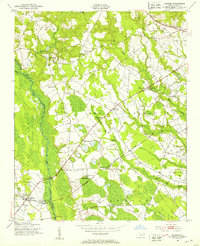 1949 Wagram1953 Print · USGSScotland and Hoke counties were defined by the confluence of the Lumber River and vital rail lines during the late nineteen-forties. Researchers can trace ancestral locations like Gaineys Place, Purcell Cem, and the historic Bowmore station.2 unique versions available
 - 1949 Map of Laurinburg, 1953 Print
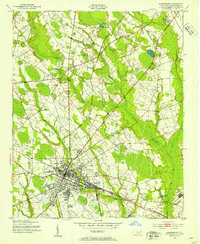 1949 Laurinburg1953 Print · USGSScotland County's rail hubs and rural townships are captured here at the peak of the post-war era. Researchers can identify family cemeteries and early local landmarks like Gibsons Mill, State Prison Camp No 610, and the Louisville Sch.
 - 1949 Map of Silver Hill, 1953 Print
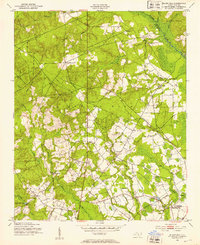 1949 Silver Hill1953 Print · USGSScotland County's agrarian and rail-centered landscape is captured here in the mid-twentieth century, centered on the Wagram community. Genealogists and local historians can locate several family cemeteries such as McNeill Cem and rural schools like the Nashville Sch.3 unique versions available
 - 1949 Map of Hoffman, 1953 Print
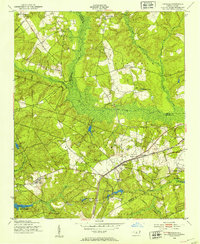 1949 Hoffman1953 Print · USGSHoffman and the surrounding Sand Hills of Richmond County are captured here just after the war, showing the expansion of military and conservation lands. Researchers can trace the Seaboard Air Line railroad through the heart of town or locate rural landmarks like McNir Chapel and Watson Cem.3 unique versions available
 - 1949 Map of Marston, 1953 Print
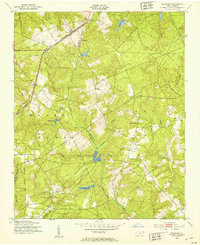 1949 Marston1953 Print · USGSNorth Carolina's Sandhills region is captured here just after the war, showing the rural crossroads of Richmond and Scotland counties. Genealogists can locate family landmarks like Watson Cem, Livingston Cem, and several country churches including Good Hope Ch.4 unique versions available
 - 1949 Map of Wakulla, 1953 Print
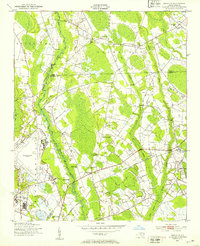 1949 Wakulla1953 Print · USGSRobeson and Scotland counties appear here just after the war, where the Lumber River meets a network of lowland swamps. Genealogists can trace family names at Floral College, McPhatter Cem, and the rural Cherokee Sch.2 unique versions available
 - 1949 Map of Hamlet, 1954 Print
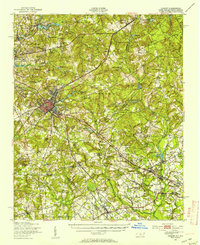 1949 Hamlet1954 Print · USGSNorth Carolina's Sandhills come alive in the late 1940s, centered on the busy rail hub of Hamlet and its sprawling network of tracks. Researchers can trace numerous local schools and cemeteries, from Sneads Grove School to the Tabernacle Cemetery.2 unique versions available
 - 1949 Map of Jackson Springs, 1954 Print
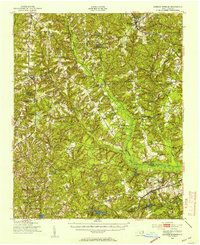 1949 Jackson Springs1954 Print · USGSThe North Carolina Sandhills were undergoing a transition in the late 1940s as military footprints expanded alongside rural farming communities. Genealogists and historians can trace the foundations of Camp Mackall and find local landmarks like the Morrison Training Sch and Jackson Springs.
 - 1949 Map of Laurinburg, 1954 Print
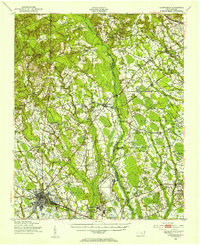 1949 Laurinburg1954 Print · USGSThe mid-century landscape of Scotland County comes alive in this survey of a growing rail hub and its rural surroundings. Researchers can trace the lines of the Seaboard Air Line, locate historic institutions like Flora College, or find family landmarks such as McNeill Cem and Gaineys Place.
End of results
Showing maps 1-15 of 15
Top cities of Scotland County
- Laurinburg historical maps
- Laurel Hill historical maps
- Wagram historical maps
- Gibson historical maps
- East Laurinburg historical maps
- Old Hundred historical maps
Frequently asked questions
- What are the different types of historical maps available for Scotland County?
- What is the oldest map of Scotland County?
- Where can I purchase historical maps of Scotland County for my home or office?
- Where can I download high-res historical maps of Scotland County?
- Are there historical topographic maps available for Scotland County?
- Is there historical aerial imagery available for Scotland County?
- Where are historical maps of Scotland County sourced from?