Old Maps of Dickey County, North Dakota
Explore 237 old maps of Dickey County, spanning from 1894 to today. These high-resolution historic maps reveal how streets, neighborhoods, landmarks, and natural features evolved over time — perfect for genealogy, metal detecting, research, and local history exploration.
What you can do with these maps:
- See how Dickey County changed over time: Compare historical maps to modern-day views to trace roads, homesites, rail lines & more.
- View detailed metadata: Each map includes creators, publishers, year, scale, and archive source.
- Overlay maps with satellite & LiDAR: Visualize the past alongside modern tools to explore terrain & human change.
- Trusted historical sources: Maps sourced from the USGS, Library of Congress, and other archives.
- Access maps your way: View online, download high-res files, or order prints for personal or research use.
Start exploring old maps of Dickey County to uncover forgotten places, hidden landmarks, and the deep history beneath your feet.
Dickey County, ND maps
(237)- 1894 Map of Monango
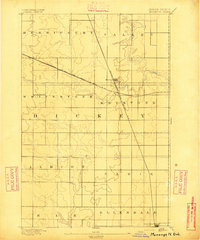 1894 Monango1894 Print · USGSSouthern North Dakota was a landscape of pioneering railroads and new township boundaries in the early 1890s. Genealogists and historians can trace the early rail junctions at Monango or locate landholdings within the districts of Whitestone and Keystone.
 - 1894 Map of La Moure
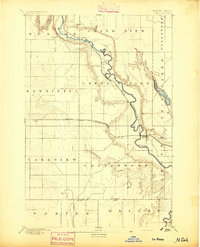 1894 La Moure1894 Print · USGSSoutheastern North Dakota's prairie landscape is captured here during the railroad boom of the late nineteenth century. Trace the early development of Lamoure and Grand Rapids along the James River and the converging tracks of the Northern Pacific Railroad.
 - 1894 Map of Ellendale
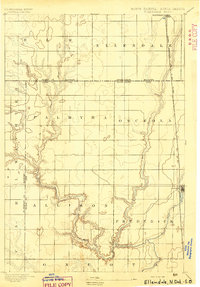 1894 Ellendale1894 Print · USGSDakota Territory transitions into new states in the late nineteenth century as the rail-and-river economy takes root. Genealogists can trace early township structures across Wheatland and Osceola, or locate residents near Frederick along the Chicago Milwaukee and St. Paul Railway.
 - 1894 Map of Hecla
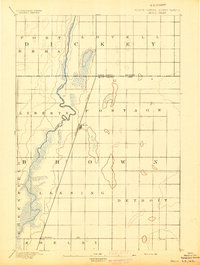 1894 Hecla1894 Print · USGSThe northern Dakota plains are captured here in the 1890s as the rail and river determined the pulse of new settlements. Genealogists and historians can trace the early township grids and rail stops like Hecla, Houghton, and the frontier hamlet of Detroit.4 unique versions available
 - 1894 Map of Savo
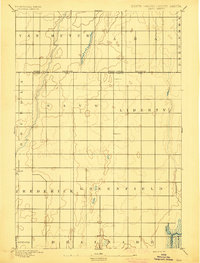 1894 Savo1894 Print · USGSThe Dakota borderlands come into focus in the early 1890s, capturing the early township organization and rail development of the prairie. Genealogists and historians can trace the paths of the Maple River and the C. M. & St. P. R. R. through Frederick and Oneota.
 - 1894 Map of Fullerton
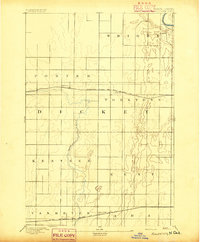 1894 Fullerton1894 Print · USGSNorth Dakota's southern prairie was a landscape of new townships and expanding railroads in the late nineteenth century. Genealogists and historians can trace the early footprints of Fullerton and Yorktown or the original route of the Maple River.2 unique versions available
 - 1894 Map of Oakes
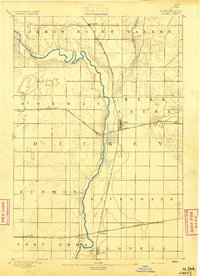 1894 Oakes1894 Print · USGSSoutheast North Dakota at the close of the nineteenth century is revealed as a burgeoning rail hub centered on the James River Valley. Genealogists can locate early homesteading era settlements like Port Emma, Glover, and the bustling junction at Oakes.2 unique versions available
 - 1895 Map of Lamoure
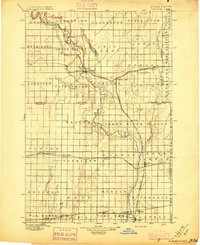 1895 Lamoure1895 Print · USGSSoutheastern North Dakota was a landscape of rapid rail expansion and river-based settlement in the mid-1890s. Genealogists and historians can trace the early foundations of towns like Lamoure, Oakes, and Grand Rapids along the winding James River.2 unique versions available
 - 1896 Map of Columbia
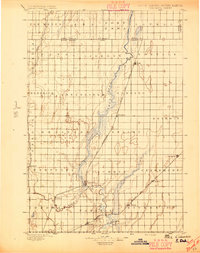 1896 Columbia1896 Print · USGSSettlement along the upper James River valley flourished in the 1890s as railroads expanded through the Dakota Territory. Trace the rail-fed growth of Columbia and Hecla alongside the waters of Sand Lake and Lake Columbia.3 unique versions available
 - 1896 Map of Edgeley
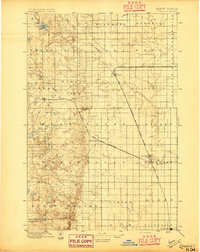 1896 Edgeley1896 Print · USGSDakota Territory had only recently achieved statehood when these rail lines began carving through the prairie. Genealogists can trace the early foundations of Edgeley, Kulm, and Ellendale alongside rural townships like Whitestone and Glenmore.2 unique versions available
 - 1899 Map of Ellendale
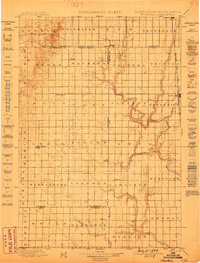 1899 Ellendale1899 Print · USGSNorth Dakota and South Dakota borderlands come into focus at the close of the nineteenth century as the railroad transforms the prairie. Genealogists and historians can trace the early growth of Ellendale and Leola along with vanished stops like Alpha and Delhi.2 unique versions available
 - 1918 Map of La Moure
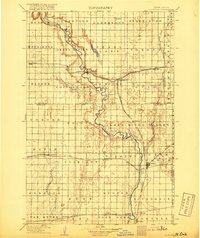 1918 La Moure1918 Print · USGSSoutheastern North Dakota was a thriving rail and agricultural hub during the early twentieth century, as seen in this detailed 1918 survey. Researchers can trace the development of the James River corridor and locate early settlements like Grand Rapids, Oakes, and Port Emma.2 unique versions available
 - 1925 Map of Edgeley
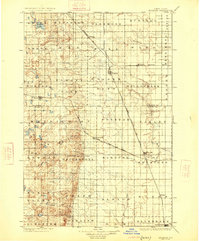 1925 Edgeley1925 Print · USGSLaMoure and Dickey Counties are shown in the mid-1920s as a complex network of rail lines and prairie townships. Trace the early layout of Ellendale, the historical Whitestone Battlefield Park, and rail stops at Deisem and Medberry.2 unique versions available
 - 1952 Map of Glover, 1954 Print
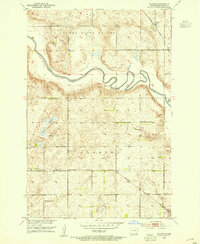 1952 Glover1954 Print · USGSDickey County agriculture and rail transport intersect along the river valley in the early fifties. Genealogists and local historians can trace family-named landmarks like the Norwegian Cem, the settlement of Glover, and the rural School No 3.
 - 1952 Map of Oakes, 1954 Print
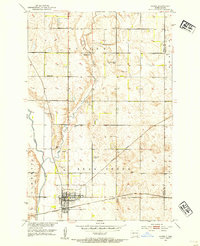 1952 Oakes1954 Print · USGSIn the early fifties, this Dickey County hub sat at a critical rail junction. Trace the path of three major railroads through Oakes, locate local landmarks like Oakes View Cemetery, and identify rural prairie infrastructure including School No 4 and various flowing wells.
 - 1952 Map of Independence, 1954 Print
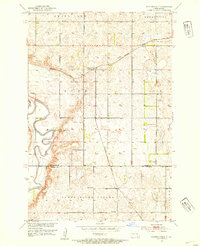 1952 Independence1954 Print · USGSThe rural prairie of La Moure and Dickey Counties comes into focus in the early 1950s as the Northern Pacific railroad crosses the plains. Genealogists and local historians can trace the settlement of Independence and locate historic rural landmarks like School No 2 and the banks of the James River.
 - 1953 Map of Jamestown
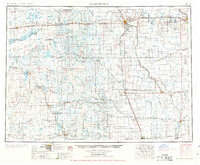 1953 Jamestown1953 Print · USGSSoutheastern North Dakota was a thriving rail and agricultural corridor in the early fifties, anchored by the James River. Researchers can trace the footprints of institutional landmarks like the North Dakota State Hospital and historic sites such as Whitestone Hill Battlefield Park.3 unique versions available
 - 1953 Map of Ellendale South, 1955 Print
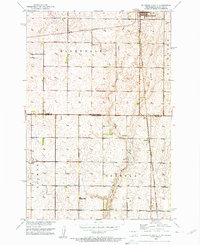 1953 Ellendale South1955 Print · USGSThe borderlands of North and South Dakota are captured here in the early fifties, centering on the rail hub of Ellendale. Genealogists and historians can locate rural schoolhouses like Gustafson Sch and Senn Sch along with the path of the Great Northern railroad.3 unique versions available
 - 1954 Map of Aberdeen, 1964 Print
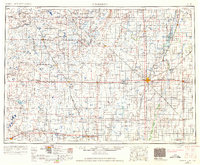 1954 Aberdeen1964 Print · USGSNortheastern South Dakota in the mid-fifties remains a world of rail-dependent prairie towns and sweeping waterfowl refuges. Genealogists can trace family roots through settlements like Eureka and Ipswich or locate rural landmarks near Richmond Lake.2 unique versions available
 - 1955 Map of Oakes SE, 1956 Print
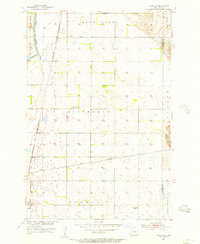 1955 Oakes SE1956 Print · USGSThe rail-driven landscape of Dickey County is captured in the mid-fifties, featuring the strategic junction at Ludden. Researchers can trace the paths of the Great Northern and Riverdale Sch alongside the winding James River.
 - 1955 Map of Fullerton NE, 1956 Print
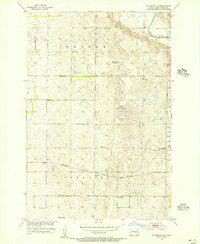 1955 Fullerton NE1956 Print · USGSDickey County, North Dakota, is captured here in the mid-1950s as a landscape of grid-patterned farms and prairie railroads. Researchers can trace the Minneapolis St Paul and Sault Ste Marie line and find rural landmarks like Town Hall and School No 3.
 - 1955 Map of Guelph, 1956 Print
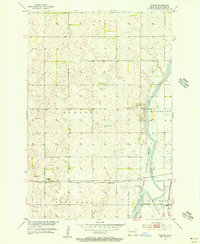 1955 Guelph1956 Print · USGSThe Dickey County prairie comes into focus in the mid-1950s, showing a landscape defined by the James River and vital rail connections. Researchers can trace the rail-side growth of Guelph and Ludden or locate the Ludden Cem and Flowing Well.
 - 1955 Map of Fullerton SE, 1956 Print
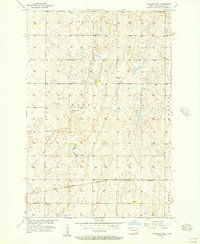 1955 Fullerton SE1956 Print · USGSDickey County farmland during the mid-fifties reveals an era of organized township boundaries and one-room schoolhouses. Genealogists and local historians can locate early educational sites like School No 4 and trace the path of the Great Northern Railroad through Port Emma.
 - 1955 Map of La Moure, 1956 Print
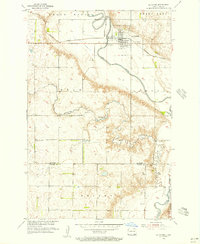 1955 La Moure1956 Print · USGSLa Moure and the surrounding prairie are captured here in the mid-1950s as the river and rail lines dictated local growth. Genealogists can locate Rosehill Cem and St Ansgar Cem, while following the Northern Pacific through town.2 unique versions available
 - 1956 Map of Aberdeen
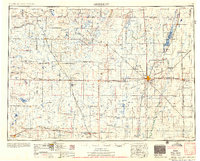 1956 Aberdeen1956 Print · USGSUpper South Dakota during the mid-fifties remains a landscape of rail-connected farming towns and expansive glacial lake basins. Genealogists and historians can trace the paths of the Minneapolis and St Louis railroad through Gettysburg or locate vanished stops near Elm Lake and Richmond Lake.
Showing maps 1-25 of 237
Top cities of Dickey County
- Oakes historical maps
- Ellendale historical maps
- Clement Township historical maps
- Fullerton historical maps
- Forbes historical maps
- Monango historical maps
Frequently asked questions
- What are the different types of historical maps available for Dickey County?
- What is the oldest map of Dickey County?
- Where can I purchase historical maps of Dickey County for my home or office?
- Where can I download high-res historical maps of Dickey County?
- Are there historical topographic maps available for Dickey County?
- Is there historical aerial imagery available for Dickey County?
- Where are historical maps of Dickey County sourced from?