1900s (20th Century) Maps of Madison Township, Ohio
Explore 16 historic maps of Madison Township from the 1900s (20th Century). These maps offer a rare glimpse into what life looked like during the 1900s — showing old roads, neighborhoods, homes, and landmarks that have changed or disappeared over time.
Whether you're researching your family's past, planning a metal detecting trip, or studying how Madison Township's landscape evolved across the 1900s, these high-resolution maps are a powerful tool for exploring the history of this region.
- Focus on a specific era: All maps on this page are from the 1900s, giving you a focused view of this time period.
- See what’s changed: Compare century-old streets, trails, and buildings to today's modern landscape using overlays and satellite layers.
- Research with precision: Use these maps for genealogy, historical research, land use analysis, or educational projects.
- View, download, or print: Maps are fully viewable online in high resolution, and can be downloaded or printed for your own records.
Start exploring Madison Township's history through authentic maps from the 1900s. This is your window into the past.
Madison Township, OH maps
(16)- 1925 Map of East Columbus, 1940 Print
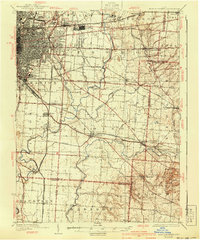 1925 East Columbus1940 Print · USGSGreater Columbus and its eastern suburbs were rapidly expanding in the 1920s as industry and transit lines bridged the gap between city and farm. Genealogists and historians can trace the paths of the ABANDONED CANAL, the legacy of NORTON FIELD, and old village centers like Canal Winchester and Lithopolis.3 unique versions available
 - 1943 Map of East Columbus
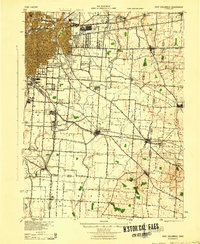 1943 East Columbus1943 Print · USGSEastern Columbus and the Refugee Tract are captured here during the mobilization of the early 1940s. Genealogists and historians can trace the foundations of modern aviation at Port Columbus or find vanished landmarks like the Childrens Home and Norton Field.
 - 1947 Map of Columbus, 1948 Print
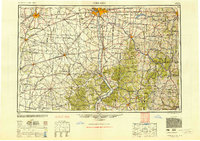 1947 Columbus1948 Print · USGSCentral Ohio in the late 1940s is captured in this survey, showing the post-war transition of its rail hubs and military airfield expansions. Genealogists and historians can trace the paths of the Ohio Canal, the Pennsylvania RR lines, and the Camp Sherman Military Reservation.
 - 1955 Map of Lockbourne, 1956 Print
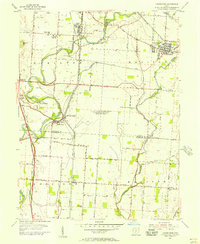 1955 Lockbourne1956 Print · USGSSouth of Columbus in the mid-fifties, the landscape is defined by the massive Lockbourne Air Force Base. Genealogists can trace family names at Watkins Cem or locate the Scioto Valley Grange and Township High Sch.
 - 1955 Map of Canal Winchester, 1956 Print
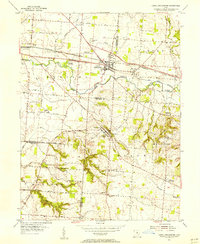 1955 Canal Winchester1956 Print · USGSThe crossroads of Franklin and Fairfield counties are captured here in the mid-fifties, showing the transition from canal-era commerce to a modern rail-and-road network. Genealogists and local historians can locate early landmarks like The Wagnalls Memorial, Township Sch, and Union Grove Cem.
 - 1955 Map of Reynoldsburg, 1956 Print
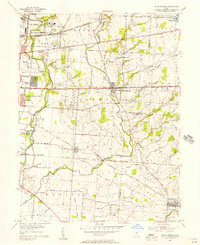 1955 Reynoldsburg1956 Print · USGSThe eastern edges of Columbus and the growing suburbs of Reynoldsburg and Whitehall appear here in the mid-fifties. Genealogists can trace family footprints at Forest Lawn Cemetery or Asbury Ch, while others can find industrial sites like the Claycraft kilns.
 - 1955 Map of Southeast Columbus, 1957 Print
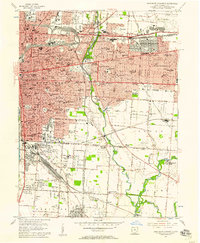 1955 Southeast Columbus1957 Print · USGSSoutheast of downtown Columbus in the mid-fifties, this area shows a dense landscape of parochial schools and major transit junctions. Genealogists and local historians can trace legacy sites like Evergreen Burial Park and the vanished crossroads of Valley Crossing or Munks Corners.
 - 1961 Map of Columbus
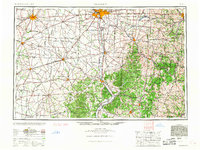 1961 Columbus1961 Print · USGSCentral and Southern Ohio are captured here in the early sixties, as the region's industrial rail hubs and military bases reached their peak. Genealogists and historians can trace the transition from urban Columbus to rural townships along the Scioto River, locating Lockbourne USAF and old junctions like Washington Court House.
 - 1962 Map of Columbus
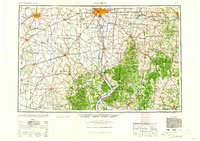 1962 Columbus1962 Print · USGSCentral Ohio during the early sixties reveals a transition from the industrial corridors of Columbus to the forested ridges of the south. Genealogists and historians can trace the rail networks of the Baltimore & Ohio RR and find local landmarks like Washington Court House and Camp Sherman Military Reservation.
 - 1964 Map of Reynoldsburg, 1965 Print
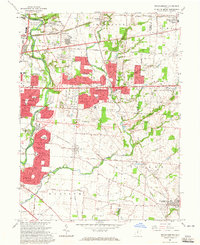 1964 Reynoldsburg1965 Print · USGSEastern Franklin County and parts of Licking and Fairfield counties are captured in the mid-sixties during a period of significant suburban growth. Researchers can trace old family cemetery sites like Pisgah Cem, early rail lines, and the footprint of Port Columbus as it stood decades ago.5 unique versions available
 - 1964 Map of Southeast Columbus, 1966 Print
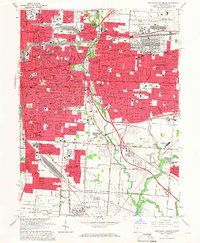 1964 Southeast Columbus1966 Print · USGSSoutheast Columbus and the surrounding Franklin County suburbs are captured during a decade of rapid growth and rail-to-highway transition. Genealogists and local historians can trace family-named sites and vanished junctions like Munks Corners, Valley Crossing, and the Columbus Motor Speedway.5 unique versions available
 - 1964 Map of Lockbourne, 1966 Print
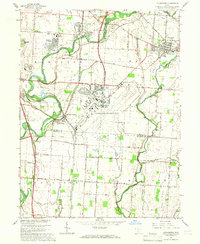 1964 Lockbourne1966 Print · USGSIn the mid-1960s, southern Franklin County saw its rural character meet the expanding footprint of the Cold War military. Genealogists and local historians can trace family-named sites and vanished landmarks from Watkins Cem to the sprawling Lockbourne Air Force Base.3 unique versions available
 - 1966 Map of Canal Winchester, 1967 Print
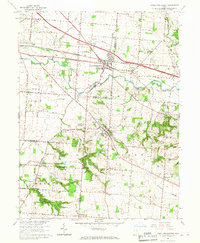 1966 Canal Winchester1967 Print · USGSThe mid-century landscape of Canal Winchester and Lithopolis is detailed here as the suburban expansion of Columbus began reaching these historic villages. Trace family roots at Union Grove Cem, follow the Chesapeake and Ohio rail line, or locate early schools like Township Sch.5 unique versions available
 - 1967 Map of Columbus, 1969 Print
 1967 Columbus1969 Print · USGSCentral Ohio during the late sixties serves as a vital corridor of rail and aviation, from the industrial streets of Springfield to the hangar lines of Lockbourne Air Force Base. Genealogists and researchers can trace the growth of towns like Circleville and London or locate rural landmarks such as St Paul church and the London Correctional Institution.2 unique versions available
 - 1984 Map of Lancaster, 1985 Print
 1984 Lancaster1985 Print · USGSCentral Ohio and the Hocking Valley come into focus during the mid-eighties as suburban growth meets the wooded ridges of the southeast. Researchers can trace transportation networks through Buckeye Lake or locate landmarks like Flint Ridge State Memorial and Moxahala Park.
 - 1992 Map of Lockbourne, 1995 Print
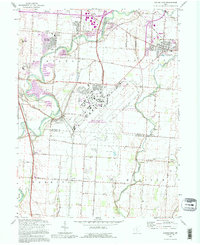 1992 Lockbourne1995 Print · USGSThe Scioto River valley south of Columbus appears here during the early nineties, showing the intersection of military history and rural tradition. Genealogists can trace family landmarks like Fernwood Cem, St Vincents Ch, and the remnants of the Ohio Canal.
End of results
Showing maps 1-16 of 16
Top cities near Madison Township
- Columbus historical maps
- Dublin historical maps
- Lancaster historical maps
- Upper Arlington historical maps
- Reynoldsburg historical maps
- Gahanna historical maps
See more
Top neighborhoods of Madison Township
Frequently asked questions
- What are the different types of historical maps available for Madison Township?
- What is the oldest map of Madison Township?
- Where can I purchase historical maps of Madison Township for my home or office?
- Where can I download high-res historical maps of Madison Township?
- Are there historical topographic maps available for Madison Township?
- Is there historical aerial imagery available for Madison Township?
- Where are historical maps of Madison Township sourced from?