Old Maps of Gibisonville, Ohio
Explore 15 old maps of Gibisonville, spanning from 1910 to today. These high-resolution historic maps reveal how streets, neighborhoods, landmarks, and natural features evolved over time — perfect for genealogy, metal detecting, research, and local history exploration.
What you can do with these maps:
- See how Gibisonville changed over time: Compare historical maps to modern-day views to trace roads, homesites, rail lines & more.
- View detailed metadata: Each map includes creators, publishers, year, scale, and archive source.
- Overlay maps with satellite & LiDAR: Visualize the past alongside modern tools to explore terrain & human change.
- Trusted historical sources: Maps sourced from the USGS, Library of Congress, and other archives.
- Access maps your way: View online, download high-res files, or order prints for personal or research use.
Start exploring old maps of Gibisonville to uncover forgotten places, hidden landmarks, and the deep history beneath your feet.
Gibisonville, OH maps
(15)- 1910 Map of Laurelville, 1962 Print
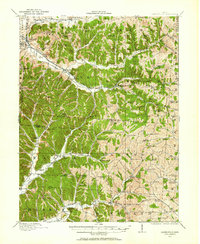 1910 Laurelville1962 Print · USGSHocking and Vinton counties come alive in the decade before the First World War, showing a landscape of ridge-top farms and valley hamlets. Genealogists can locate family landmarks like Eagle Mills, the Indian Mound, and dozens of schools including Tuling School and Union School.
 - 1912 Map of Laurelville, 1939 Print
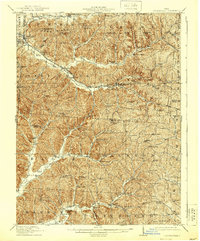 1912 Laurelville1939 Print · USGSHocking and Vinton counties at the dawn of the twentieth century show a landscape of ridge-top schools and creek-side settlements. Researchers can trace the path of the Columbus and Southern RR (Abandoned) and locate landmarks like Ash Cave and the Indian Mound.2 unique versions available
 - 1944 Map of Laurelville
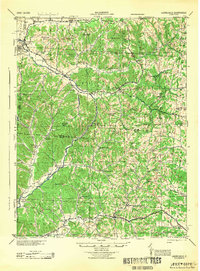 1944 Laurelville1944 Print · USGSMid-century Hocking and Vinton Counties appear here as a patchwork of tight-knit upland communities during the Second World War. Researchers can locate dozens of local landmarks including Adelphi, Eagle Mills, and the Chestnut Grove Church nestled among the hollows.
 - 1947 Map of Columbus, 1948 Print
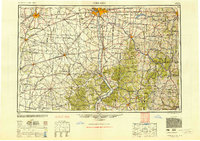 1947 Columbus1948 Print · USGSCentral Ohio in the late 1940s is captured in this survey, showing the post-war transition of its rail hubs and military airfield expansions. Genealogists and historians can trace the paths of the Ohio Canal, the Pennsylvania RR lines, and the Camp Sherman Military Reservation.
 - 1961 Map of Columbus
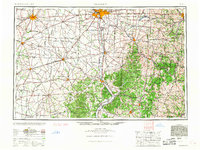 1961 Columbus1961 Print · USGSCentral and Southern Ohio are captured here in the early sixties, as the region's industrial rail hubs and military bases reached their peak. Genealogists and historians can trace the transition from urban Columbus to rural townships along the Scioto River, locating Lockbourne USAF and old junctions like Washington Court House.
 - 1961 Map of South Bloomingville, 1963 Print
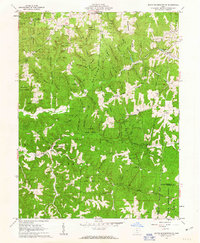 1961 South Bloomingville1963 Print · USGSThe Hocking Hills region in the early sixties was a landscape of deep hollows and forest camps at the height of its mid-century recreational development. Researchers can find numerous family cemeteries and remote landmarks like Old Baptist Cem, the Gold Mine near Huffine Hollow, and the Rock House Lookout Tower.4 unique versions available
 - 1962 Map of Columbus
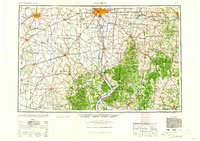 1962 Columbus1962 Print · USGSCentral Ohio during the early sixties reveals a transition from the industrial corridors of Columbus to the forested ridges of the south. Genealogists and historians can trace the rail networks of the Baltimore & Ohio RR and find local landmarks like Washington Court House and Camp Sherman Military Reservation.
 - 1967 Map of Columbus, 1969 Print
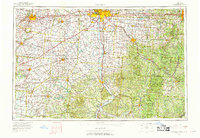 1967 Columbus1969 Print · USGSCentral Ohio during the late sixties serves as a vital corridor of rail and aviation, from the industrial streets of Springfield to the hangar lines of Lockbourne Air Force Base. Genealogists and researchers can trace the growth of towns like Circleville and London or locate rural landmarks such as St Paul church and the London Correctional Institution.2 unique versions available
 - 1980 Map of Wellston, 1982 Print
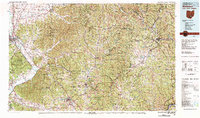 1980 Wellston1982 Print · USGSThe hill country of south-central Ohio in the early eighties shows a landscape of expansive state forests and deep-rooted river towns. Genealogists and historians can trace rural heritage through sites like Buckeye Furnace State Memorial and Mount Zion Cemetery.
 - 2002 Map of South Bloomingville, 2006 Print
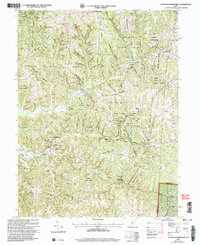 2002 South Bloomingville2006 Print · USGSHocking County’s wooded hollows and creek valleys appear in fine detail during the early 2000s, as public forest lands expanded around local settlements. Researchers can locate many rural burial sites like St John the Baptist Cem or trace the area's schools and lookouts, including the South Bloomingville Sch and Rock House Lookout.
 - 2011 Map of South Bloomingville, 2011 Print
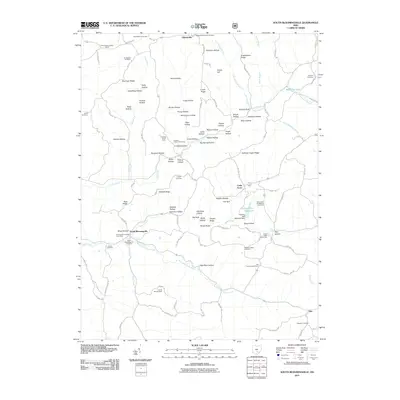 2011 South Bloomingville2011 Print · USGSHocking County’s winding hollows and high ridges are documented in this 2011 survey, showing the rural character of the Ohio hills. Genealogists can trace family plots at Old Baptist Cemetery and Liberty Hill Cemetery or locate landmarks like Gold Mine Hollow.
 - 2013 Map of South Bloomingville, 2013 Print
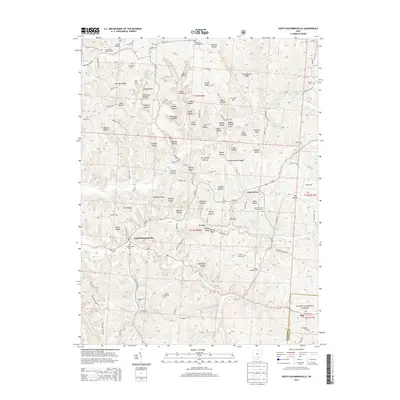 2013 South Bloomingville2013 Print · USGSHocking County’s rugged ridge-and-hollow country is documented here in the early twenty-first century. Genealogists and hikers can trace old family sites and public landmarks like the Rock House Lookout Tower, Wesley Chapel Cem, and the village of South Bloomingville.
 - 2016 Map of South Bloomingville, 2016 Print
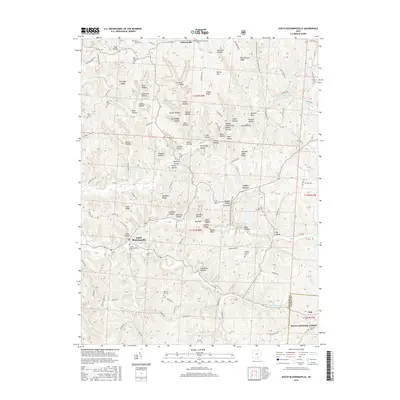 2016 South Bloomingville2016 Print · USGSHocking County’s deeply eroded ridges and hollows are documented in this 2016 survey during a period of modern forest conservation. Genealogists can locate family burial sites at Grant-Moore Cem and South Bloomingville Cem or trace the Buckeye Trail past Parish Rocks.
 - 2019 Map of South Bloomingville, 2019 Print
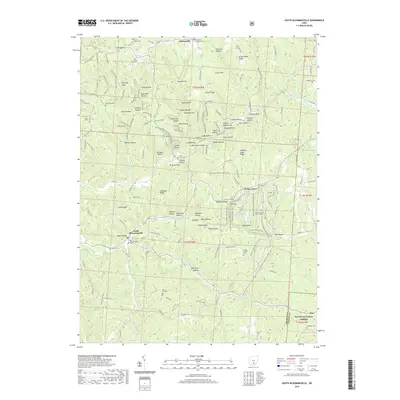 2019 South Bloomingville2019 Print · USGSHocking County’s deeply carved hollows and rural settlements are captured here in the late twenty-tens. Researchers can locate numerous family and church burial grounds like the Methodist Episcopal Cem, Grant Moore Cem, and Ebenezer Cem.
 - 2023 Map of South Bloomingville, 2023 Print
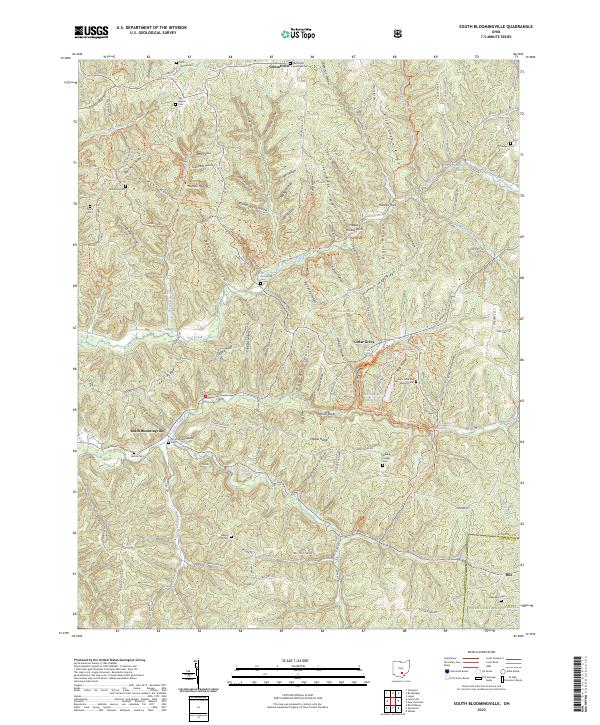 2023 South Bloomingville2023 Print · USGSHocking County’s wooded hollows and ridges are meticulously documented in this recent survey of the South Bloomingville area. Researchers can trace deep family roots at Old Baptist Cem, Wesley Chapel Cem, and find landmarks like Hagley Hollow Arch.
End of results
Showing maps 1-15 of 15
Top cities near Gibisonville
- Lancaster historical maps
- Starr historical maps
- Bremen historical maps
- Amanda historical maps
- Laurelville historical maps
- Sugar Grove historical maps
See more
Frequently asked questions
- What are the different types of historical maps available for Gibisonville?
- What is the oldest map of Gibisonville?
- Where can I purchase historical maps of Gibisonville for my home or office?
- Where can I download high-res historical maps of Gibisonville?
- Are there historical topographic maps available for Gibisonville?
- Is there historical aerial imagery available for Gibisonville?
- Where are historical maps of Gibisonville sourced from?