1900s (20th Century) Maps of Magnolia, Ohio
Explore 9 historic maps of Magnolia from the 1900s (20th Century). These maps offer a rare glimpse into what life looked like during the 1900s — showing old roads, neighborhoods, homes, and landmarks that have changed or disappeared over time.
Whether you're researching your family's past, planning a metal detecting trip, or studying how Magnolia's landscape evolved across the 1900s, these high-resolution maps are a powerful tool for exploring the history of this region.
- Focus on a specific era: All maps on this page are from the 1900s, giving you a focused view of this time period.
- See what’s changed: Compare century-old streets, trails, and buildings to today's modern landscape using overlays and satellite layers.
- Research with precision: Use these maps for genealogy, historical research, land use analysis, or educational projects.
- View, download, or print: Maps are fully viewable online in high resolution, and can be downloaded or printed for your own records.
Start exploring Magnolia's history through authentic maps from the 1900s. This is your window into the past.
Magnolia, OH maps
(9)- 1912 Map of Dover, 1939 Print
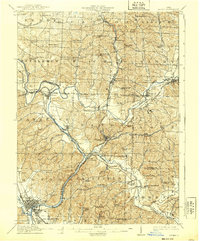 1912 Dover1939 Print · USGSTuscarawas and Stark Counties are shown in the early twentieth century as coal and rail corridors shaped the valley floors. Researchers can locate unique landmarks like the Octagonal School, the historic Zoar community, and the path of the Ohio Treaty Line.2 unique versions available
 - 1944 Map of Dover
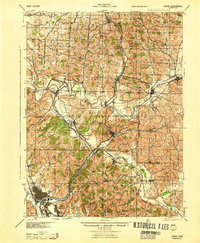 1944 Dover1944 Print · USGSEastern Ohio during the mid-1940s reveals a landscape of river-valley industry and rural schoolhouses. Researchers can trace the rail lines of the Wheeling and Lake Erie or locate community hubs like Octagonal Sch and Zoar Station.
 - 1951 Map of Canton
 1951 Canton1951 Print · USGSThe industrial heartland of Ohio and Pennsylvania reached its mid-century peak during this era of heavy rail and river transit. Genealogists and historians can trace the development of steel towns like Aliquippa and Weirton alongside the Ohio River and major lines of the Pennsylvania RR.
 - 1953 Map of Canton
 1953 Canton1953 Print · USGSThe industrial heartland of Ohio and Pennsylvania is captured at its mid-century peak in this detailed regional survey. Genealogists and historians can trace the vast rail networks of the Pennsylvania RR and find local landmarks like Nimisila Reservoir and Tappan Reservoir.
 - 1957 Map of Canton, 1971 Print
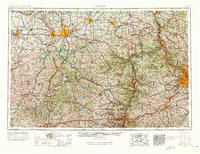 1957 Canton1971 Print · USGSThe industrial heartland of eastern Ohio and western Pennsylvania comes alive in this mid-century survey of the Ohio River Valley. Trace the heritage of rail and river commerce through Pittsburgh, the massive steel towns along the Ohio River, and major junctions on the Pennsylvania RR.3 unique versions available
 - 1961 Map of Waynesburg, 1963 Print
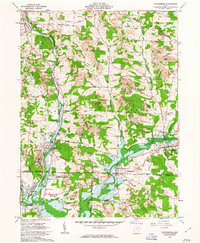 1961 Waynesburg1963 Print · USGSThe industrial valleys of Stark and Carroll counties are shown here during the early sixties, where coal mining and rail transport shaped the local economy. Researchers can trace family sites from Sandyville to Waynesburg, finding landmarks like Bowman Cem, Indian Run Ch, and the Sandy Valley High Sch.4 unique versions available
 - 1962 Map of Canton
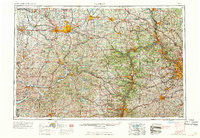 1962 Canton1962 Print · USGSThe industrial heartland of Eastern Ohio and Western Pennsylvania thrives in the early sixties as steel mills and rail lines dominate the river valleys. Genealogists and historians can trace local landmarks like McKinley National Memorial, Malone College, and industrial sites such as Republic Steel Corp.2 unique versions available
 - 1986 Map of Canton
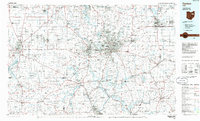 1986 Canton1986 Print · USGSNortheastern Ohio’s industrial corridor and rural heartland are captured here in the mid-1980s as the region's rail and highway networks reached their modern form. Researchers can trace the layout of Canton and Massillon, locate family sites near West Lawn Cemetery, or explore the grounds of Malone College and Walsh College.2 unique versions available
 - 1994 Map of Waynesburg, 1998 Print
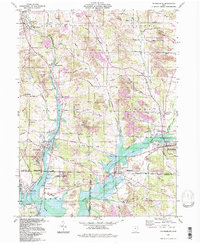 1994 Waynesburg1998 Print · USGSThe tri-county border area of Stark, Tuscarawas, and Carroll counties comes into focus in the 1990s as a hub of surface mining and rail transit. Researchers can trace the layout of Waynesburg and Magnolia alongside landmarks like Evergreen Cemetery and the Conrail line.
End of results
Showing maps 1-9 of 9
Top cities near Magnolia
- Canton historical maps
- Plain historical maps
- Massillon historical maps
- North Canton historical maps
- New Philadelphia historical maps
- Dover historical maps
See more
Frequently asked questions
- What are the different types of historical maps available for Magnolia?
- What is the oldest map of Magnolia?
- Where can I purchase historical maps of Magnolia for my home or office?
- Where can I download high-res historical maps of Magnolia?
- Are there historical topographic maps available for Magnolia?
- Is there historical aerial imagery available for Magnolia?
- Where are historical maps of Magnolia sourced from?