Old Maps of Dayton, Ohio for Genealogy
Trace your family roots with 65 historic maps of Dayton. These high-res maps reveal old neighborhoods, homesites, landmarks, and streets — helping you uncover where your ancestors lived and how the area evolved over time.
- Explore historic neighborhoods: Identify where your relatives may have lived in the 1800s or 1900s.
- Compare maps over time: Trace the changes in streets, buildings, and landmarks for multi-generational research.
- Perfect for genealogy & ancestry research: Used by family historians and researchers to map out lineage and migration.
These maps are an incredible resource for exploring your personal connection to Dayton's past.
Dayton, OH maps
(65)- 1904 Map of Dayton, 1956 Print
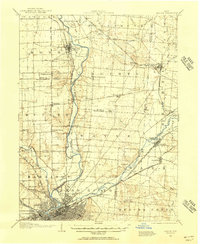 1904 Dayton1956 Print · USGSThe Miami Valley at the dawn of the 1900s shows a landscape transformed by the Miami and Erie Canal and a dense network of interurban electric railways. Researchers can trace historic river communities like Osborn and Tipp City or follow the early path of the National Road.
 - 1905 Map of Brookville, 1953 Print
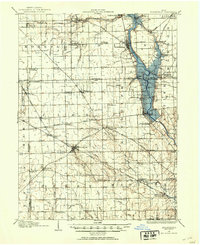 1905 Brookville1953 Print · USGSWestern Montgomery County in the early 1900s shows a landscape of rail-connected farming towns and early river management. Trace the path of the historic National Road through Arlington or locate family sites near Shiloh Church and Harshbarger Schoolhouse.
 - 1906 Map of Dayton, 1935 Print
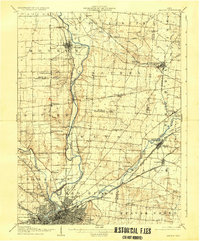 1906 Dayton1935 Print · USGSThe Dayton region in the early twentieth century shows a landscape transitioning from the canal era to the age of electric interurbans and railroads. Trace the original sites of Osborn and Fairfield or locate the path of the Miami and Erie Canal.2 unique versions available
 - 1908 Map of Miamisburg, 1948 Print
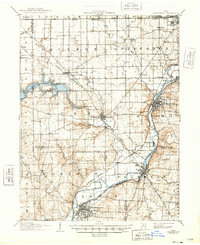 1908 Miamisburg1948 Print · USGSThe Miami Valley at the start of the twentieth century was a hub of electric traction lines and canal history. Genealogists and historians can trace the early layouts of Miamisburg and Franklin, or locate landmarks like Browns Chapel and the National Military Home.
 - 1913 Map of Waynesville
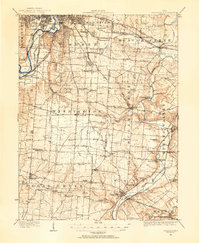 1913 Waynesville1913 Print · USGSThe Miami and Erie Canal and a dense network of electric railways define this Ohio landscape in the decade before the Great War. Researchers can trace the early footprints of Waynesville, Centerville, and Springboro alongside rural landmarks like Washington Mills and Lantz School.
 - 1915 Map of Waynesville, 1942 Print
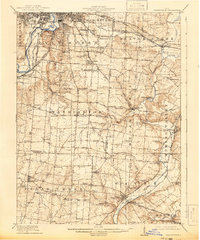 1915 Waynesville1942 Print · USGSThe Dayton suburbs and Warren County countryside are captured here just before the Great War, during the heyday of electric interurban rail. Genealogists can locate specific local landmarks like Lantz School, Wittes Corners, and the historic community of Shakertown.
 - 1953 Map of Cincinnati, 1965 Print
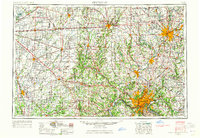 1953 Cincinnati1965 Print · USGSThe Ohio River valley and the industrial heartland of Indiana and Ohio are captured here during the mid-century peak of rail and river commerce. Genealogists and historians can trace connections between Cincinnati and outlying military sites like Camp Atterbury and Bakalar AFB.3 unique versions available
 - 1955 Map of Miamisburg, 1956 Print
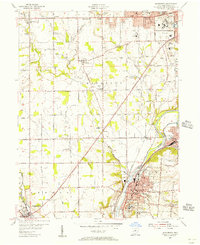 1955 Miamisburg1956 Print · USGSThe industrial corridor of the Great Miami River valley thrived in the mid-fifties as rail lines and new highways connected growing towns. Genealogists and historians can locate family plots at Trissel Cem, trace the grounds of the Veterans Administration Center, or find old schools like the Mark Twain Sch.2 unique versions available
 - 1955 Map of Dayton South, 1956 Print
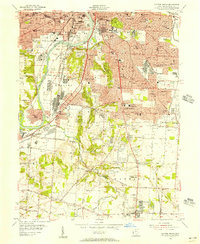 1955 Dayton South1956 Print · USGSSouth of Dayton in the mid-fifties, the landscape was quickly transitioning from farmland to suburban hubs like Kettering and Moraine. Researchers can trace old neighborhood boundaries and find local landmarks such as Alexandersville, University of Dayton, and the Gentile Depot.
 - 1955 Map of Bellbrook, 1956 Print
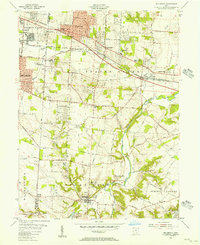 1955 Bellbrook1956 Print · USGSThe Greene County countryside near Bellbrook is caught in a moment of mid-century transition as suburban growth reaches toward the Little Miami River. Genealogists can trace old family footprints at Pioneer Cemetery, Washington Mills, and several rural churches including Mt Zion Ch.
 - 1955 Map of West Milton, 1956 Print
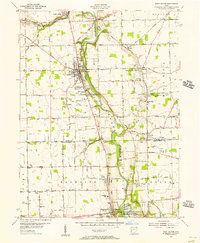 1955 West Milton1956 Print · USGSMiami and Montgomery counties in the mid-fifties reveal a landscape of river-bend settlements and rural townships. Trace family roots at Wheelock Cem, locate the old Township Sch, or find the Drive-in Theater near the Stillwater River.5 unique versions available
 - 1955 Map of Tipp City, 1956 Print
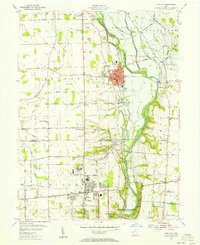 1955 Tipp City1956 Print · USGSMiami County and Montgomery County meet along the river in the mid-fifties as the region transitions from its canal-era roots to a modern aviation hub. Genealogists can trace family landmarks like English Cemetery or Middle District Church while following the historic Miami and Erie Canal.
 - 1955 Map of Trotwood, 1956 Print
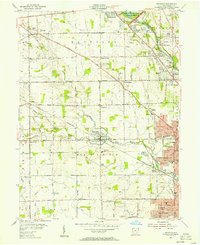 1955 Trotwood1956 Print · USGSThe outskirts of Dayton in the mid-fifties reveal a transition from rural townships to growing suburbs along the Stillwater River. Trace old homesteads and local landmarks like Happy Corners, Cedar Hill Cem, and the Stillwater Sanitarium.
 - 1955 Map of Fairborn, 1957 Print
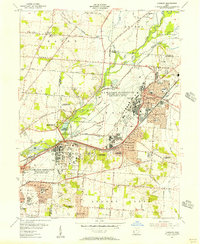 1955 Fairborn1957 Print · USGSGreene County is defined by the massive expansion of the Wright-Patterson Air Force Base during the mid-fifties. Researchers can trace the growth of Fairborn, locate the Wright Bros Memorial, and find family-named landmarks like the John Cox Cemetery.
 - 1955 Map of Dayton North, 1957 Print
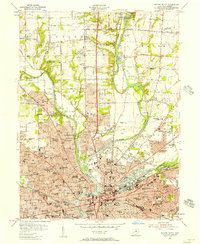 1955 Dayton North1957 Print · USGSNorth Dayton and its river valleys are captured here in the mid-fifties, showing a landscape defined by flood control and post-war suburban growth. Genealogists and historians can locate the Orville Wright Home, the Quaker Cem, and local rail stops like Johnson Station.
 - 1957 Map of Cincinnati
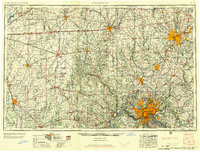 1957 Cincinnati1957 Print · USGSThe Ohio River valley and its surrounding highlands thrived during the mid-fifties industrial peak, centered on the bustling Cincinnati and Dayton metropolitan hubs. Researchers can trace the extensive rail networks and military sites like Wright-Patterson AFB and Camp Atterbury.
 - 1965 Map of Dayton North, 1967 Print
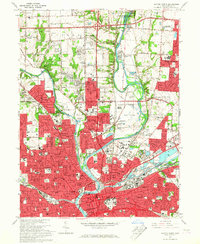 1965 Dayton North1967 Print · USGSDayton and its northern suburbs underwent rapid mid-century growth where the Great Miami and Mad Rivers meet. Researchers can trace the development of Huber Heights, locate the Siena Sisters of Mercy Rest Home, or find early sites like Poplar Hill Cem.5 unique versions available
 - 1965 Map of Tipp City, 1967 Print
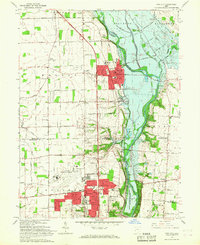 1965 Tipp City1967 Print · USGSMiami County's river valley transition is captured here in the mid-sixties as Vandalia and Tipp City expand toward the Dayton Municipal Airport. Researchers can trace old family landmarks and rural hubs like Pearson Cem, Ginghamsburg, and the Middle District Sch.4 unique versions available
 - 1965 Map of Fairborn, 1967 Print
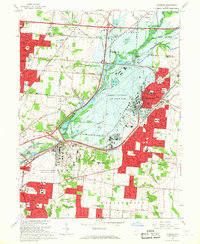 1965 Fairborn1967 Print · USGSThe Dayton suburbs and Fairborn area undergo rapid postwar expansion during the mid-sixties, centered on the massive Wright-Patterson Air Force Base. Researchers can trace the early layout of Wright State University and vanished rail stops along the Erie Lackawanna.6 unique versions available
 - 1965 Map of Miamisburg, 1967 Print
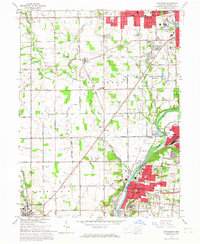 1965 Miamisburg1967 Print · USGSThe Great Miami River valley in the mid-sixties shows a landscape of industrial growth and rural tradition south of Dayton. Researchers can locate family roots at Highland Memorial Cemetery, trace the old rail lines, or find the Mound Laboratory near the Miamisburg Mound State Memorial.4 unique versions available
 - 1965 Map of Trotwood, 1967 Print
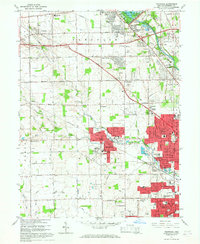 1965 Trotwood1967 Print · USGSWest of Dayton in the mid-sixties, this area shows a landscape transitioning from family farms to suburban developments. Genealogists and local historians can trace legacy sites like Cedar Hill Cem, Dahio Airfield, and the notable Precious Blood Convent.5 unique versions available
 - 1965 Map of Bellbrook, 1967 Print
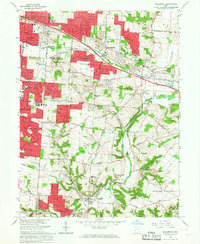 1965 Bellbrook1967 Print · USGSGreene and Montgomery Counties are captured during a period of suburban transition in the mid-1960s. Researchers can locate family landmarks like the Pioneer Cem, the historic Covered Bridge, and old schoolhouses including Bell Sch.5 unique versions available
 - 1966 Map of Dayton South, 1968 Print
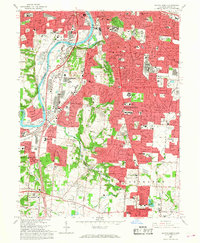 1966 Dayton South1968 Print · USGSThe southern suburbs of Montgomery County were rapidly expanding in the mid-sixties as Dayton reached into the surrounding hills. Researchers can trace institutional history and family locations at the Dayton State Hospital, Calvary Cemetery, and the Gentile AF Depot.5 unique versions available
 - 1986 Map of Dayton
 1986 Dayton1986 Print · USGSThe Miami Valley and the Indiana-Ohio borderlands reached a peak of suburban and industrial connectivity in the mid-eighties. Genealogists and historians can trace family burial sites at Miami Memorial Garden (Cem) and the development surrounding Wright-Patterson Air Force Base.2 unique versions available
 - 1996 Map of Dayton North, 1999 Print
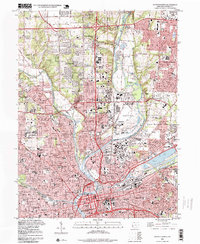 1996 Dayton North1999 Print · USGSNorth Dayton and its neighboring townships come alive in the late nineties as a bustling hub of river-confluence industry and suburban growth. Researchers can trace the layout of Sinclair College, locate the Dayton Memorial Park (Cemetery), and see the footprint of Wright-Patterson Air Force Base.
Showing maps 1-25 of 65
Top cities near Dayton
- Kettering historical maps
- Beavercreek historical maps
- Huber Heights historical maps
- Fairborn historical maps
- Trotwood historical maps
- Xenia historical maps
See more
Top neighborhoods of Dayton
- Fort McKinley historical maps
- Crown Point historical maps
- Residence Park historical maps
- Cornell Heights historical maps
- Hearthstone historical maps
- Belmont historical maps
See more
Frequently asked questions
- What are the different types of historical maps available for Dayton?
- What is the oldest map of Dayton?
- Where can I purchase historical maps of Dayton for my home or office?
- Where can I download high-res historical maps of Dayton?
- Are there historical topographic maps available for Dayton?
- Is there historical aerial imagery available for Dayton?
- Where are historical maps of Dayton sourced from?