Old Maps of Alfalfa County, Oklahoma
Explore 156 old maps of Alfalfa County, spanning from 1955 to today. These high-resolution historic maps reveal how streets, neighborhoods, landmarks, and natural features evolved over time — perfect for genealogy, metal detecting, research, and local history exploration.
What you can do with these maps:
- See how Alfalfa County changed over time: Compare historical maps to modern-day views to trace roads, homesites, rail lines & more.
- View detailed metadata: Each map includes creators, publishers, year, scale, and archive source.
- Overlay maps with satellite & LiDAR: Visualize the past alongside modern tools to explore terrain & human change.
- Trusted historical sources: Maps sourced from the USGS, Library of Congress, and other archives.
- Access maps your way: View online, download high-res files, or order prints for personal or research use.
Start exploring old maps of Alfalfa County to uncover forgotten places, hidden landmarks, and the deep history beneath your feet.
Alfalfa County, OK maps
(156)- 1955 Map of Woodward, 1967 Print
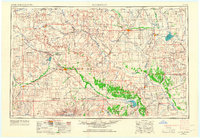 1955 Woodward1967 Print · USGSNorthwest Oklahoma and the bordering plains are captured during the mid-sixties, showing a landscape defined by river valleys and massive water projects. Researchers can trace family roots in towns like Woodward and Alva or locate landmarks such as the Western Oklahoma State Hospital and Kegelman AF.3 unique versions available
 - 1956 Map of Ringwood, 1957 Print
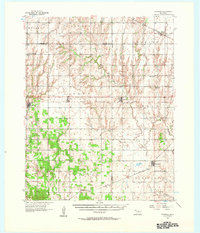 1956 Ringwood1957 Print · USGSNorthern Oklahoma in the mid-fifties presents a landscape of prairie townships and vital rail hubs. Researchers can trace family roots through numerous rural sites like Pleasant Hill Cem, Parker Ch, and the Vernon Sch (Abandoned).
 - 1958 Map of Woodward
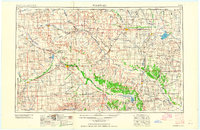 1958 Woodward1958 Print · USGSNorthwest Oklahoma and the neighboring panhandle borders are shown here during a period of steady mid-century growth. Researchers can trace the rail networks of the Atchison Topeka and Santa Fe and locate landmarks like the Western Oklahoma State Hospital and Port Supply Reservoir.2 unique versions available
 - 1968 Map of Capron
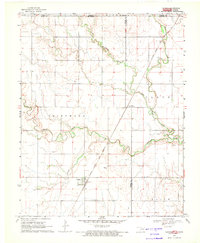 1968 Capron1968 Print · USGSWoods County and Alfalfa County meet along the Kansas border in the late sixties, where the railroad and winding creeks shaped rural life. Genealogists and local historians can locate the Capron Cem and trace the Atchison Topeka and Santa Fe tracks through Capron and Loder Siding.3 unique versions available
 - 1968 Map of Carmen, 1970 Print
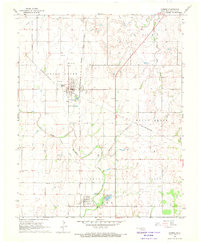 1968 Carmen1970 Print · USGSIn the late 1960s, this Alfalfa County landscape was a busy intersection of Oklahoma's oil and rail industries. You can trace the path of three major railroads through Carmen and Aline, or locate family sites at Pleasant Ridge Cem and Eagle Chief Cem.
 - 1969 Map of Jet
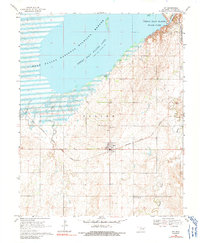 1969 Jet1969 Print · USGSThe prairie landscape of Alfalfa County in the late sixties centers on the town of Jet as the rail line still shapes the local topography. Researchers can pinpoint family history at Pleasant View Cem, Milan Valley Cem, and the shores of Great Salt Plains Lake.3 unique versions available
 - 1969 Map of Goltry, 1971 Print
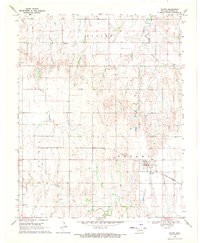 1969 Goltry1971 Print · USGSAlfalfa County's agricultural heartland is captured here in the late sixties, centered on the rail-side town of Goltry. Researchers can locate family landmarks like Good Hope Cem, Karoma Cem, and the Timber Lake Ch among the section lines.
 - 1969 Map of Dacoma, 1971 Print
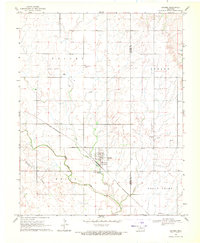 1969 Dacoma1971 Print · USGSThe agricultural plains of Woods County are captured here in the late sixties as the town of Dacoma remains a key rail stop. Researchers can locate family heritage sites like Union Center Cem and trace the original St Louis - San Francisco railroad route.2 unique versions available
 - 1969 Map of Lambert, 1971 Print
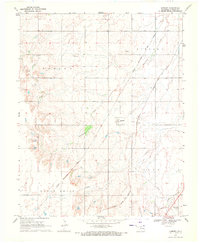 1969 Lambert1971 Print · USGSAlfalfa County is captured in the late 1960s at the height of its rail-and-resource economy. Researchers can trace the intersections of the Chicago Rock Island and Pacific near Lambert or locate family sites at Auburn Cem.
 - 1969 Map of Alva SE, 1971 Print
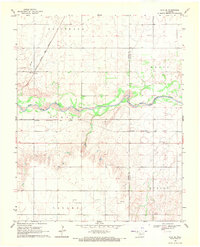 1969 Alva SE1971 Print · USGSNorthwestern Oklahoma’s prairie and river landscape is captured here in the late sixties as railroads still dominated the rural transit corridors. Genealogists can locate Liberty Cem and Short Springs Cem or trace rail activity at Brink and Ashley.
 - 1969 Map of Fairview NE, 1971 Print
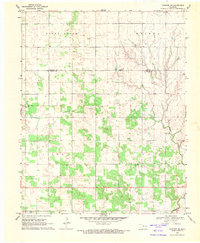 1969 Fairview NE1971 Print · USGSMajor and Alfalfa counties appear in the late sixties as a landscape of rural homesteads and emerging energy production. Researchers can trace local lineage through several sites like Square Cedar Cem, Wildwood Ch, and the small settlement of Carwile.
 - 1969 Map of Amorita, 1971 Print
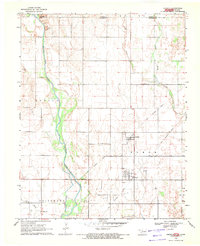 1969 Amorita1971 Print · USGSAlfalfa County's borderlands are captured here in the late sixties, where the Medicine Lodge River winds through a landscape of farming and oil extraction. Local historians can trace the Old Railroad Grade and find family sites at the Byron-Amorita Cem or near the small town of Byron.
 - 1969 Map of Burlington, 1971 Print
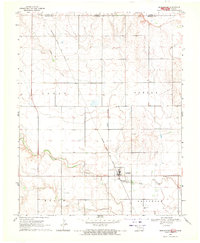 1969 Burlington1971 Print · USGSBurlington sat at a critical railroad juncture near the Kansas-Oklahoma border in the late sixties. Researchers can trace the path of the Atchison Topeka and Santa Fe railroad and locate the Apostolic Cemetery and Apostolic Church.
 - 1969 Map of Manchester, 1971 Print
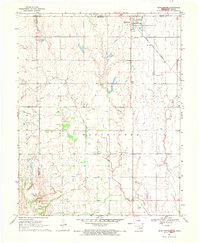 1969 Manchester1971 Print · USGSThe Oklahoma-Kansas state line meets at the town of Manchester in the late sixties, where the local economy follows the tracks of the Atchison Topeka and Santa Fe. Genealogists can locate family sites like the IOOF Cem or the SS Peter and Paul Cem and its nearby church.2 unique versions available
 - 1969 Map of Nash, 1971 Print
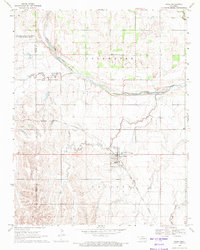 1969 Nash1971 Print · USGSNorth-central Oklahoma's agricultural and military landscape is captured here in the late sixties. Genealogists and historians can trace the town of Nash alongside the Dunkard Cem, Eagle Grove Ch, and the sprawling Kegelman Auxiliary Field.
 - 1969 Map of Helena, 1971 Print
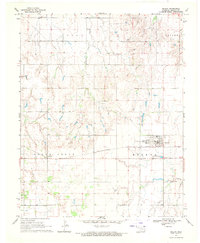 1969 Helena1971 Print · USGSAlfalfa County's plains were a hub of rail transport and rural community life in the late sixties. Genealogists and local historians can trace the foundations of Helena, locate the Helena State School for Boys, and find the Robert Cem near the St Louis-San Francisco tracks.2 unique versions available
 - 1969 Map of Sand Creek, 1971 Print
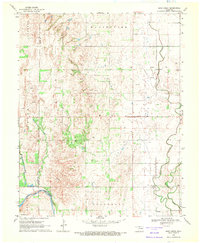 1969 Sand Creek1971 Print · USGSThe northern Oklahoma borderlands are captured here in the late sixties, where the Manchester Oil and Gas Field meets the Salt Fork Arkansas River. Trace family roots and rural industry through Fairview Cem, the Hawley settlement, and numerous Gas Wells.
 - 1969 Map of Manchester SW, 1971 Print
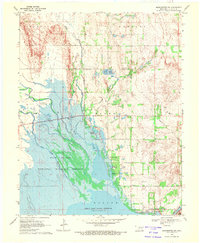 1969 Manchester SW1971 Print · USGSAlfalfa County's unique saline landscape is documented here in the late sixties, where the river meets the reservoir. Researchers can trace the rural infrastructure of the era, from the Ware Cem and Union Valley Ch to the local Fish Hatchery.
 - 1969 Map of Manchester NW, 1971 Print
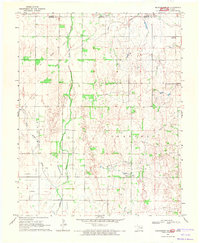 1969 Manchester NW1971 Print · USGSAlfalfa County farmsteads and the Kansas borderlands are captured here in the late sixties as the rural landscape evolved. Researchers can trace the path of the Old Railroad Grade and locate local centers like the Mennonite Cem or Willow Glen Ch.2 unique versions available
 - 1969 Map of Cleo Springs, 1971 Print
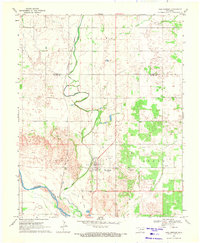 1969 Cleo Springs1971 Print · USGSMajor and Alfalfa counties in the late sixties show a landscape balancing traditional agriculture with a growing petroleum industry. Researchers can trace the Atchison Topeka and Santa Fe rail line, locate Cleo Springs Cemetery, and explore the banks of the Cimarron River.
 - 1969 Map of Cherokee North, 1971 Print
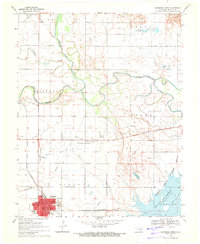 1969 Cherokee North1971 Print · USGSAlfalfa County's saline landscape is captured here in the late sixties as it transitions from a rail-dependent hub to a center for conservation and energy. You can trace the Atchison Topeka and Santa Fe Railroad lines or locate the Stella Friends Academy Cem.
 - 1969 Map of Jet SE, 1971 Print
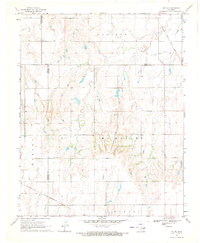 1969 Jet SE1971 Print · USGSNorth-central Oklahoma's plains were defined by competing railroads and sprawling townships in the late sixties. Trace the routes of the Atchison Topeka and Santa Fe and St Louis San Francisco past an early Oil Well.2 unique versions available
 - 1969 Map of Glass Mountains NE, 1971 Print
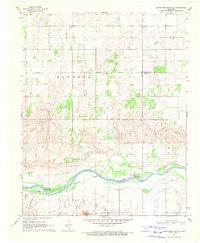 1969 Glass Mountains NE1971 Print · USGSNorthwestern Oklahoma’s prairie and river lowlands are captured here in the late sixties, showing the rural communities of Woods and Major counties. Genealogists and historians can locate Pleasant Ridge Cem, Oakdale Ch, and early energy sites like the Southwest Oakdale Gas Field.
 - 1969 Map of Ingersoll, 1971 Print
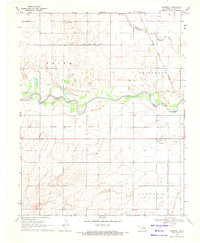 1969 Ingersoll1971 Print · USGSAlfalfa County during the late sixties shows a landscape where the river and rail converge near the settlement of Ingersoll. Researchers can trace the path of the Chicago Rock Island and Pacific and locate family landmarks like Keith Cem and Driftwood Creek.
 - 1969 Map of Dacoma SE, 1971 Print
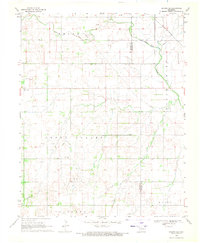 1969 Dacoma SE1971 Print · USGSWoods and Alfalfa counties show a landscape of rural tradition and growing petroleum production in the late sixties. Genealogists and historians can trace family ties at the Good Hope Cem and Green Valley Ch or follow the path of the St Louis San Francisco railroad.
Showing maps 1-25 of 156
Top cities of Alfalfa County
- Cherokee historical maps
- Helena historical maps
- Carmen historical maps
- Goltry historical maps
- Jet historical maps
- Aline historical maps
See more
Frequently asked questions
- What are the different types of historical maps available for Alfalfa County?
- What is the oldest map of Alfalfa County?
- Where can I purchase historical maps of Alfalfa County for my home or office?
- Where can I download high-res historical maps of Alfalfa County?
- Are there historical topographic maps available for Alfalfa County?
- Is there historical aerial imagery available for Alfalfa County?
- Where are historical maps of Alfalfa County sourced from?