Old Maps of Kenefic, Oklahoma for Metal Detecting
Plan your next treasure hunt with 11 historic maps of Kenefic. Find old homesites, ghost towns, trails, and gathering spots that may be lost to time — perfect for identifying promising metal detecting locations.
- Locate forgotten sites: Uncover places like long-lost settlements, abandoned rail lines, or gathering spots.
- Plan better hunts: Use map overlays combined with LiDAR or satellite views to narrow in on historically rich areas.
- Made for detectorists: Thousands of hobbyists use these maps to discover relics, coins, and hidden history.
Use these historic maps to boost your research and find new opportunities beneath the surface of Kenefic.
Kenefic, OK maps
(11)- 1899 Map of Atoka
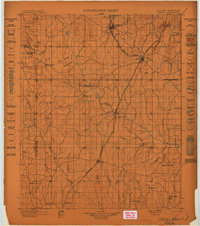 1899 Atoka1899 Print · USGSIn the final years of the Indian Territory, this map details the complex border between the Chickasaw and Choctaw Nations. Genealogists can trace early homesteads near Old Boggy Depot, the Buffalo Creek Church, and the Chickasaw Rock Academy.
 - 1900 Map of Atoka
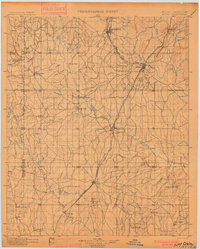 1900 Atoka1900 Print · USGSIndian Territory at the turn of the century shows the developing rail-and-river network before Oklahoma statehood. Genealogists and historians can trace original settlements like Old Boggy Depot, find the Chickasaw Rock Academy, and follow the Missouri Kansas and Texas R.R. through Atoka.4 unique versions available
 - 1957 Map of Ardmore, 1968 Print
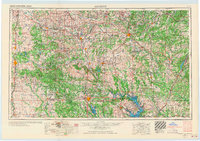 1957 Ardmore1968 Print · USGSSouth-central Oklahoma in the late fifties was a landscape of rising reservoir waters and expanding rail lines. Genealogists and historians can trace the foundations of Ardmore and Duncan or locate early recreation sites at Platt National Park and Lake Murray State Park.3 unique versions available
 - 1963 Map of Ardmore
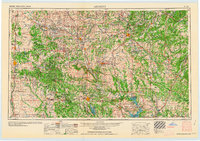 1963 Ardmore1963 Print · USGSSouthern Oklahoma during the early sixties shows a landscape defined by the Arbuckle Mountains and a booming energy economy. Genealogists and historians can trace family-named sites across the Ardmore Oil Field, find old schools like Southeastern State College, or locate historic markers such as Boggy Depot State Park.2 unique versions available
 - 1969 Map of Caddo North, 1971 Print
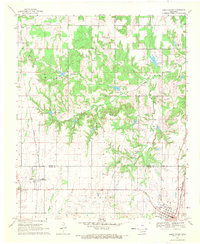 1969 Caddo North1971 Print · USGSThe Oklahoma borderlands of Atoka and Bryan counties come alive in this late-sixties study of the Kenefic and Caddo area. Researchers can trace the dual rail lines of the Kansas Oklahoma and Gulf and the Missouri Kansas Texas or locate family sites at Maytubby Cem and Perkins Cem.
 - 1985 Map of Tishomingo, 1986 Print
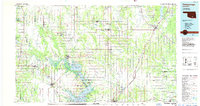 1985 Tishomingo1986 Print · USGSSouthern Oklahoma in the mid-eighties reveals a landscape shaped by significant water projects and conservation lands. Genealogists and historians can trace the footprints of communities like Wapanucka and Bromide alongside the Washita River and Lake Texoma.3 unique versions available
 - 2010 Map of Caddo North, 2010 Print
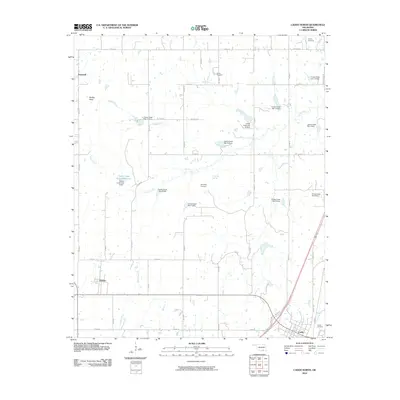 2010 Caddo North2010 Print · USGSBryan County at the start of the decade reveals a rural Oklahoma landscape shaped by the Caney Creek watershed. Genealogists and local historians can locate early burial grounds such as Indian Cemetery and Maytubby Cemetery or trace landmarks like Nails Xing.
 - 2012 Map of Caddo North, 2012 Print
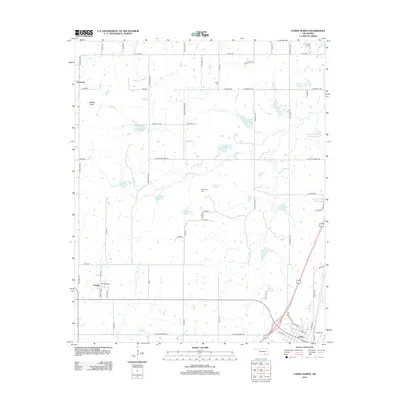 2012 Caddo North2012 Print · USGSBryan County at the start of the 2010s shows a landscape transformed by water management and rural settlement. Researchers can trace family history at Maytubby Cem or Indian Cem, and explore the areas surrounding Kenefic and Buffalo Head.
 - 2016 Map of Caddo North, 2016 Print
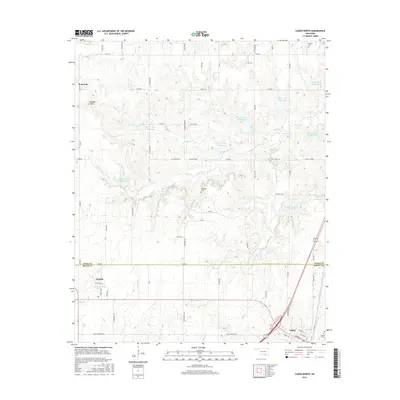 2016 Caddo North2016 Print · USGSCaddo and Kenefic sit along the border of Atoka and Bryan Counties during a decade of significant watershed development. Researchers can trace local lineage through the Maytubby Cem and Perkins Cem or explore the many reservoirs along Caney Cr.
 - 2018 Map of Caddo North, 2018 Print
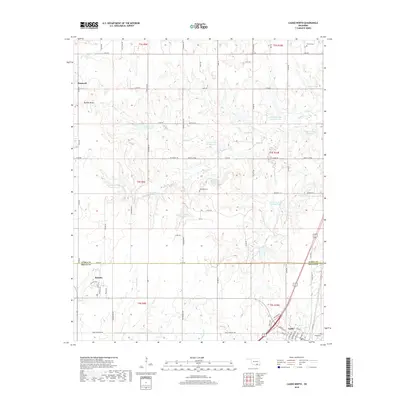 2018 Caddo North2018 Print · USGSThe borderlands of Bryan and Atoka Counties are captured here in the late 2010s, showing a landscape of rural townships and sophisticated water management. Researchers can locate family sites at Maytubby Cemetery, the northern grid of Caddo, or the settlement at Kenefic.
 - 2022 Map of Caddo North, 2022 Print
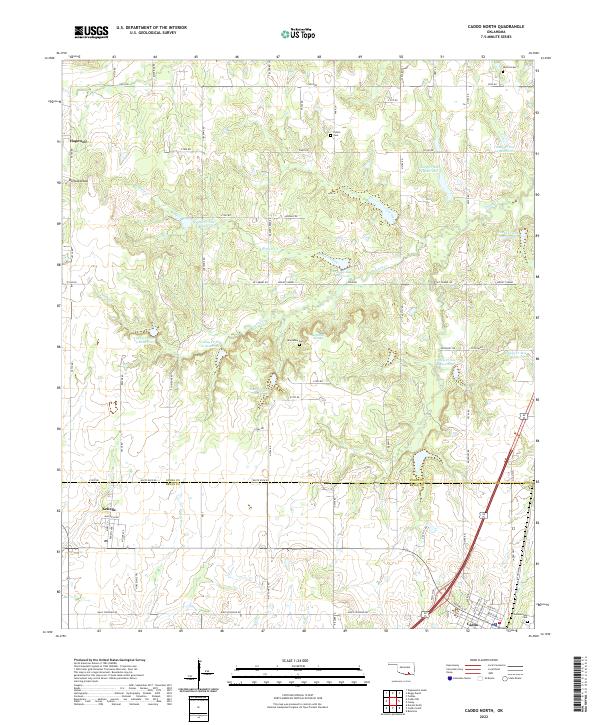 2022 Caddo North2022 Print · USGSThe borderlands of Atoka and Bryan counties appear here during a contemporary period of rural settlement and water management. Genealogists and local historians can trace family sites like Maytubby Cem, the town of Kenefic, and landmarks along Nails Crossing Rd.
End of results
Showing maps 1-11 of 11
Top cities near Kenefic
- Durant historical maps
- Atoka historical maps
- Calera historical maps
- Caddo historical maps
- Bokchito historical maps
- Wapanucka historical maps
See more
Frequently asked questions
- What are the different types of historical maps available for Kenefic?
- What is the oldest map of Kenefic?
- Where can I purchase historical maps of Kenefic for my home or office?
- Where can I download high-res historical maps of Kenefic?
- Are there historical topographic maps available for Kenefic?
- Is there historical aerial imagery available for Kenefic?
- Where are historical maps of Kenefic sourced from?