Old Maps of Harper County, Oklahoma for Academic Research
Study the evolution of Harper County with 208 high-resolution historic maps. Whether you're teaching, researching, or modeling changes in land use, these maps provide essential visual documentation of urban, environmental, and geographic change.
- Analyze long-term change: Track patterns in development, transportation, and natural features.
- Ideal for environmental or urban studies: Support academic projects with primary historical map data.
- Use in the classroom or lab: Educators and researchers rely on these maps to bring historical context to life.
These maps are a powerful tool for teaching, research, and visualizing how Harper County has changed over the decades.
Harper County, OK maps
(208)- 1892 Map of Meade
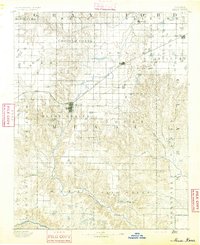 1892 Meade1892 Print · USGSSouthwestern Kansas at the end of the nineteenth century centers on the growing rail hub of Meade. Genealogists and historians can trace early prairie settlements and rail stops like Fowler, Minneola, and the riverside site of Odee.5 unique versions available
 - 1894 Map of Sitka
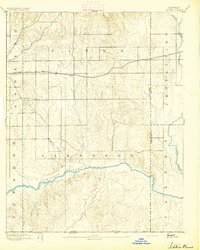 1894 Sitka1894 Print · USGSSouthwest Kansas in the late nineteenth century was a landscape of deep river draws and new rail connections. Trace the path of the Atchison Topeka and Santa Fé R.R. through Sitka or follow the early surveyed courses of the Cimarron River and Bluff Creek.2 unique versions available
 - 1896 Map of Ashland
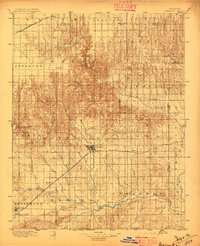 1896 Ashland1896 Print · USGSClark County at the close of the nineteenth century was a landscape of expanding railroads and emerging cattle-towns. Genealogists and researchers can trace the early footprints of Ashland, locate the remote Jacobs Well, and follow the original routes of the Atchison Topeka and Santa Fe R. R.3 unique versions available
 - 1954 Map of Perryton, 1966 Print
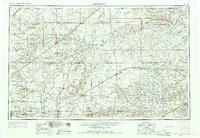 1954 Perryton1966 Print · USGSThe High Plains of the Texas and Oklahoma panhandles are shown during a period of steady growth in the mid-1950s. Genealogists and researchers can trace rail history and local landmarks like Panhandle A & M College, Spurlock Chapel, and the isolated Lord Station.3 unique versions available
 - 1955 Map of Woodward, 1967 Print
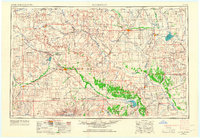 1955 Woodward1967 Print · USGSNorthwest Oklahoma and the bordering plains are captured during the mid-sixties, showing a landscape defined by river valleys and massive water projects. Researchers can trace family roots in towns like Woodward and Alva or locate landmarks such as the Western Oklahoma State Hospital and Kegelman AF.3 unique versions available
 - 1955 Map of Pratt, 1968 Print
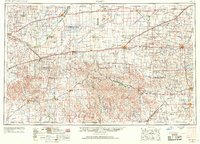 1955 Pratt1968 Print · USGSSouth-central Kansas during the mid-fifties presents a landscape of sprawling oil fields and critical rail junctions. Researchers can trace the paths of the Atchison Topeka and Santa Fe railroad or locate local landmarks like the Blue Ridge Community House and Camp Carlisle.3 unique versions available
 - 1955 Map of Dodge City, 1968 Print
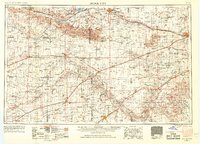 1955 Dodge City1968 Print · USGSSouthwest Kansas in the mid-fifties reveals an expansive landscape of cattle towns, early gas fields, and prairie outposts. Researchers can trace rural school districts like Moundview and Good Luck or locate the Kansas State Game Farm near Lakin.3 unique versions available
 - 1958 Map of Perryton
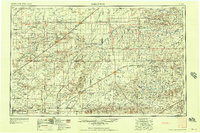 1958 Perryton1958 Print · USGSThe Oklahoma Panhandle and Texas borderlands come alive in this mid-century survey, showing the vital rail-and-ranch economy of the High Plains. Researchers can trace historic stops along the Chicago Rock Island and Pacific and locate rural landmarks like Bethel Church and Spurlock Chapel.
 - 1958 Map of Woodward
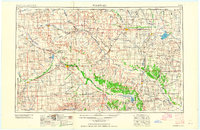 1958 Woodward1958 Print · USGSNorthwest Oklahoma and the neighboring panhandle borders are shown here during a period of steady mid-century growth. Researchers can trace the rail networks of the Atchison Topeka and Santa Fe and locate landmarks like the Western Oklahoma State Hospital and Port Supply Reservoir.2 unique versions available
 - 1958 Map of Dodge City
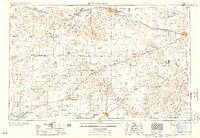 1958 Dodge City1958 Print · USGSSouthwest Kansas in the late fifties shows a landscape of river-valley agriculture and burgeoning energy infrastructure. Genealogists can trace rural life through numerous landmarks like Fairview Cemetery, the Goodwell School, and Concord Church.
 - 1959 Map of Pratt
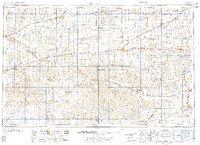 1959 Pratt1959 Print · USGSSouth-central Kansas thrived as a rail and agricultural hub in the late fifties, where the Arkansas River meets a vast grid of section roads. Researchers can trace the path of the Missouri Pacific railroad through settlements like Turon and Stafford, or locate family landmarks like the Prairie Oak School.2 unique versions available
 - 1959 Map of Dodge City
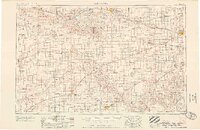 1959 Dodge City1959 Print · USGSSouthwest Kansas in the mid-fifties is captured at its agricultural height, centered on the vital rail and river hubs of Dodge City and Garden City. Genealogists and local historians can trace rural school districts like Shockey School and Hickok School or locate the Fairview Cemetery.
 - 1970 Map of Gate, 1972 Print
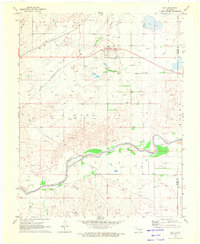 1970 Gate1972 Print · USGSThe Oklahoma panhandle town of Gate is captured here during its mid-century energy boom. Researchers can trace the Missouri-Kansas-Texas rail line and locate rural landmarks like Zelma Cem, Cline Cem, and Gate Lake.
 - 1970 Map of Lookout, 1972 Print
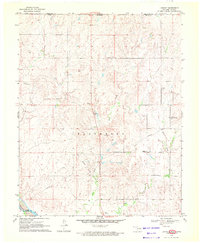 1970 Lookout1972 Print · USGSThe Oklahoma-Kansas borderlands in the early 1970s reveal a landscape shaped by the energy industry and rural community life. Researchers can trace the sprawling Patterson Oil and Gas Field and locate landmarks like Lookout Ch and the Coy Community Hall.
 - 1970 Map of Gate NE, 1972 Print
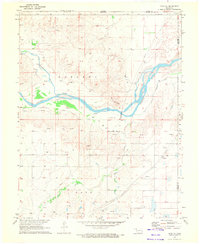 1970 Gate NE1972 Print · USGSBeaver County is captured in the early seventies, showing a landscape defined by the winding Cimarron River and increasing energy infrastructure. Researchers can locate Gate Cem and trace water history via the Old Settlers Irrigation Ditch.
 - 1970 Map of Buffalo SE, 1973 Print
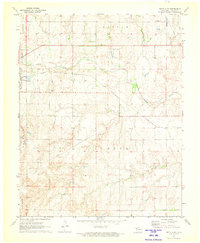 1970 Buffalo SE1973 Print · USGSHarper County at the dawn of the seventies shows a prairie landscape shaped by rail and resource extraction. Genealogists and local historians can trace family locations near Hopewell Cem, the Atchison Topeka and Santa Fe tracks, or the outskirts of Buffalo.
 - 1970 Map of Selman NW, 1973 Print
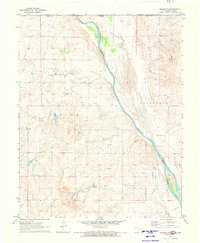 1970 Selman NW1973 Print · USGSThe Oklahoma-Kansas borderlands come into focus in the early 1970s as industrial exploration meets traditional ranching. Local researchers can locate the Lutheran Cem, the rural settlement of Lodge, and numerous Gas Wells along the Cimarron River.
 - 1970 Map of Buffalo NW, 1973 Print
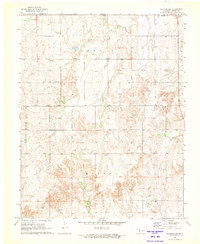 1970 Buffalo NW1973 Print · USGSThe Oklahoma-Kansas borderlands come into focus at the dawn of the 1970s, showcasing a rural landscape defined by township lines and cattle-country creek beds. Researchers can locate the settlement of Willard, a local Cem, and numerous Gas Wells along Snake Creek.2 unique versions available
 - 1970 Map of Rosston NW, 1973 Print
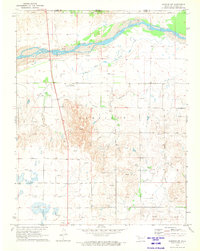 1970 Rosston NW1973 Print · USGSAcross the Harper County line in the early 1970s, this survey shows a landscape of Oklahoma ranchland and riverbeds integrated with the energy industry. Researchers can find the Ditch Valley Community Building and trace the Old Settlers Irrigation Ditch and Redoubt Creek.
 - 1970 Map of Laverne SW, 1973 Print
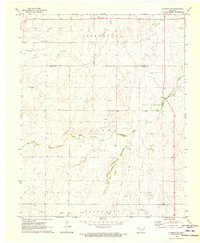 1970 Laverne SW1973 Print · USGSThe borderlands of Ellis and Harper Counties are captured here during the 1970s energy boom. Genealogists and historians can trace the rural township lines of Speermoore and Otter, locating landmarks like Speermoore Cem and the Caliche Pit.2 unique versions available
 - 1970 Map of Rosston NE, 1973 Print
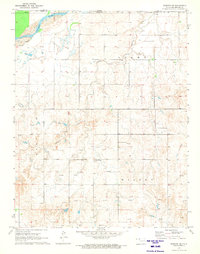 1970 Rosston NE1973 Print · USGSNorth of the Harper County line in the early 1970s, this landscape shows the intersection of ranching and energy extraction. Genealogists and historians can trace the Old Settlers Irr Ditch and locate burials at Pleasant Valley Cem.
 - 1970 Map of Sleeping Bear Creek SW, 1973 Print
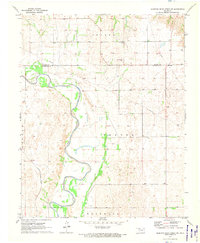 1970 Sleeping Bear Creek SW1973 Print · USGSNorthwestern Oklahoma in the early 1970s shows a landscape of river bends and rural social centers. Genealogists and historians can trace the path of the North Canadian River past the Rock Church Cem and the Missouri - Kansas - Texas railroad.
 - 1970 Map of Buffalo NE, 1973 Print
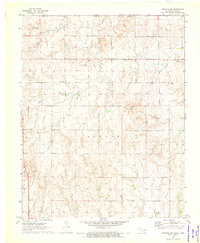 1970 Buffalo NE1973 Print · USGSThe Oklahoma-Kansas state line north of Buffalo is documented here during the early 1970s, showcasing a rural landscape of ranching and oil extraction. Researchers can locate community centers like the Paruna Community Hall and trace family sites at Willow Creek Cem.
 - 1970 Map of Sleeping Bear Creek NW, 1973 Print
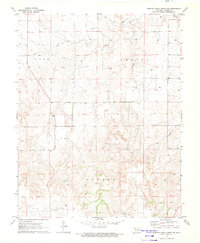 1970 Sleeping Bear Creek NW1973 Print · USGSHarper County's high plains and gas fields come into focus in this early 1970s survey. Researchers can trace land ownership patterns across the GOOD, SALINE, and CENTER townships while locating landmarks like Fern Cem and various Gas Wells.
 - 1970 Map of Sleeping Bear Creek SE, 1973 Print
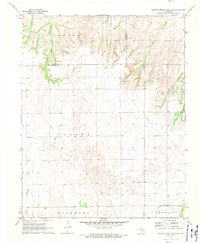 1970 Sleeping Bear Creek SE1973 Print · USGSThe Oklahoma high plains at the dawn of the 1970s reveal a landscape defined by ranching section lines and oil production. Researchers can trace family sites near Lathrop Cem or follow the paths of Sleeping Bear Creek and Traders Creek.
Showing maps 1-25 of 208
Top cities of Harper County
Frequently asked questions
- What are the different types of historical maps available for Harper County?
- What is the oldest map of Harper County?
- Where can I purchase historical maps of Harper County for my home or office?
- Where can I download high-res historical maps of Harper County?
- Are there historical topographic maps available for Harper County?
- Is there historical aerial imagery available for Harper County?
- Where are historical maps of Harper County sourced from?