Old Maps of Payne, Oklahoma
Explore 10 old maps of Payne, spanning from 1902 to today. These high-resolution historic maps reveal how streets, neighborhoods, landmarks, and natural features evolved over time — perfect for genealogy, metal detecting, research, and local history exploration.
What you can do with these maps:
- See how Payne changed over time: Compare historical maps to modern-day views to trace roads, homesites, rail lines & more.
- View detailed metadata: Each map includes creators, publishers, year, scale, and archive source.
- Overlay maps with satellite & LiDAR: Visualize the past alongside modern tools to explore terrain & human change.
- Trusted historical sources: Maps sourced from the USGS, Library of Congress, and other archives.
- Access maps your way: View online, download high-res files, or order prints for personal or research use.
Start exploring old maps of Payne to uncover forgotten places, hidden landmarks, and the deep history beneath your feet.
Payne, OK maps
(10)- 1902 Map of Rush Springs
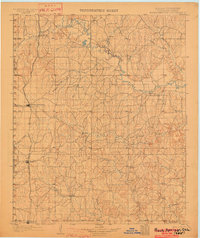 1902 Rush Springs1902 Print · USGSThe Chickasaw Nation landscape at the turn of the century is defined by its deep river valleys and the arrival of the iron horse. Genealogists can trace early homesteads and rail-side growth in Rush Springs, Marlow, and settlements like Erin Springs along the Washita River.4 unique versions available
 - 1957 Map of Ardmore, 1968 Print
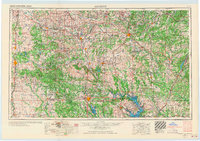 1957 Ardmore1968 Print · USGSSouth-central Oklahoma in the late fifties was a landscape of rising reservoir waters and expanding rail lines. Genealogists and historians can trace the foundations of Ardmore and Duncan or locate early recreation sites at Platt National Park and Lake Murray State Park.3 unique versions available
 - 1963 Map of Ardmore
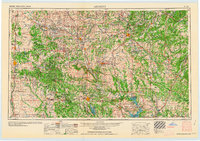 1963 Ardmore1963 Print · USGSSouthern Oklahoma during the early sixties shows a landscape defined by the Arbuckle Mountains and a booming energy economy. Genealogists and historians can trace family-named sites across the Ardmore Oil Field, find old schools like Southeastern State College, or locate historic markers such as Boggy Depot State Park.2 unique versions available
 - 1966 Map of Criner, 1967 Print
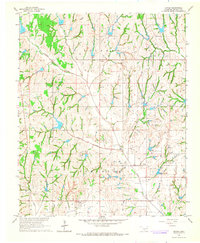 1966 Criner1967 Print · USGSMcClain County, Oklahoma, was a landscape of active petroleum production and rural homesteads in the 1960s. Genealogists and historians can trace local life through the Northeast Criner Oil Field and the small settlements of Criner and Payne.3 unique versions available
 - 1986 Map of Pauls Valley
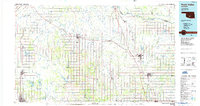 1986 Pauls Valley1986 Print · USGSGarvin County and its neighbors are shown in the mid-1980s during a period of steady growth along the Washita River. Researchers can trace the path of the Atchison Topeka and Santa Fe railroad through Pauls Valley or locate rural sites like Mt Olive Church and Erin Springs.2 unique versions available
 - 2010 Map of Criner, 2010 Print
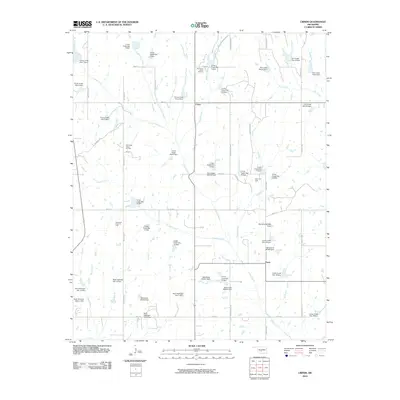 2010 Criner2010 Print · USGSMcClain County's rural landscape is captured here in the early 2000s, showcasing a sophisticated network of water management and oil production. Researchers can locate the small communities of Criner and Payne alongside numerous named impoundments like Criner Creek Site 5 Dam and the Northeast Criner Oil Field.
 - 2012 Map of Criner, 2012 Print
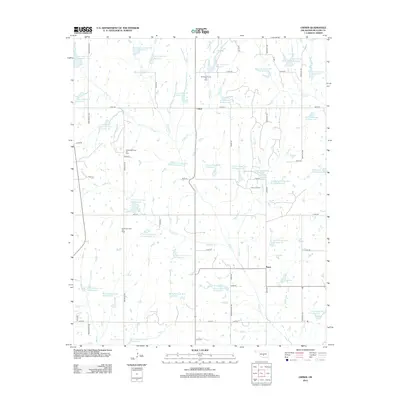 2012 Criner2012 Print · USGSMcClain County at the turn of the decade shows a managed prairie landscape where oil extraction and flood control reservoirs define the terrain. Researchers can trace land use patterns near Criner and Payne, identifying locations within the Northeast Criner Oil Field and the complex Criner Creek Site 5 Reservoir system.
 - 2016 Map of Criner, 2016 Print
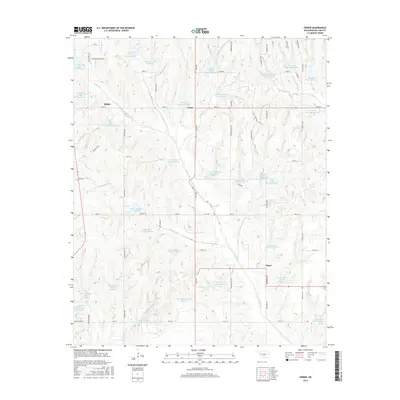 2016 Criner2016 Print · USGSMcClain County’s rural landscape is revealed in the mid-2010s, showing a region defined by extensive watershed management. Local historians can trace the grid of country roads connecting Dibble, Criner, and numerous reservoirs like Finn Creek Site 6 Reservoir.
 - 2018 Map of Criner, 2018 Print
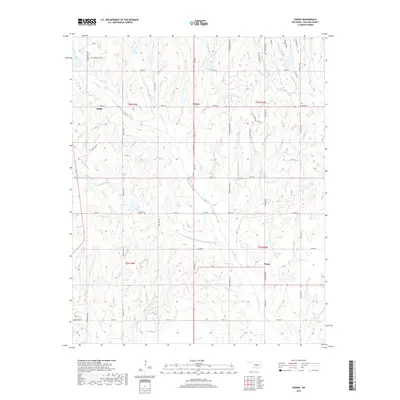 2018 Criner2018 Print · USGSMcClain County is captured here in the late 2010s, showing a rural Oklahoma landscape shaped by the winding valleys of Criner Creek. Researchers can trace local roads through the settlements of Dibble, Criner, and Payne to find family-named landmarks like Finn Ridge Rd.
 - 2022 Map of Criner, 2022 Print
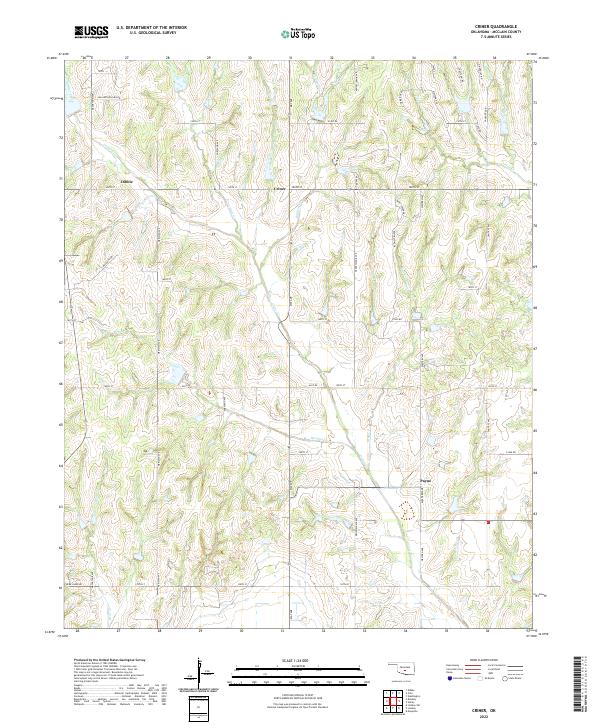 2022 Criner2022 Print · USGSMcClain County’s rolling prairie and creek bottoms are documented here in the early twenty-first century. Researchers can trace family lands and rural crossroads between the settlements of Dibble and Payne, following landmarks like Criner Creek and Finn Ridge Road.
End of results
Showing maps 1-10 of 10
Top cities near Payne
- Blanchard historical maps
- Noble historical maps
- Purcell historical maps
- Slaughterville historical maps
- Lindsay historical maps
- Lexington historical maps
See more
Frequently asked questions
- What are the different types of historical maps available for Payne?
- What is the oldest map of Payne?
- Where can I purchase historical maps of Payne for my home or office?
- Where can I download high-res historical maps of Payne?
- Are there historical topographic maps available for Payne?
- Is there historical aerial imagery available for Payne?
- Where are historical maps of Payne sourced from?