Old Maps of McClain County, Oklahoma
Explore 159 old maps of McClain County, spanning from 1893 to today. These high-resolution historic maps reveal how streets, neighborhoods, landmarks, and natural features evolved over time — perfect for genealogy, metal detecting, research, and local history exploration.
What you can do with these maps:
- See how McClain County changed over time: Compare historical maps to modern-day views to trace roads, homesites, rail lines & more.
- View detailed metadata: Each map includes creators, publishers, year, scale, and archive source.
- Overlay maps with satellite & LiDAR: Visualize the past alongside modern tools to explore terrain & human change.
- Trusted historical sources: Maps sourced from the USGS, Library of Congress, and other archives.
- Access maps your way: View online, download high-res files, or order prints for personal or research use.
Start exploring old maps of McClain County to uncover forgotten places, hidden landmarks, and the deep history beneath your feet.
McClain County, OK maps
(159)- 1893 Map of Norman
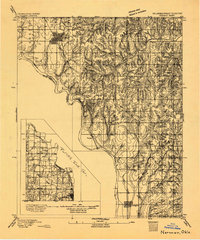 1893 Norman1893 Print · USGSOklahoma Territory and Indian Territory meet along the river in the late nineteenth century. Trace the early footprints of Norman, Noble, and Purcell along the Atchison Topeka and Santa Fe R. R. and the winding Canadian River.2 unique versions available
 - 1893 Map of Oklahoma City
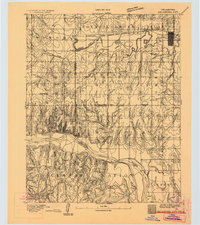 1893 Oklahoma City1893 Print · USGSOklahoma City and the surrounding territory are captured here in the 1890s, just as the rail lines began transforming the landscape. You can trace early township developments and find the historic border between the Oklahoma territory and the Chickasaw Nation near Walden and Clancy.
 - 1898 Map of Purcell
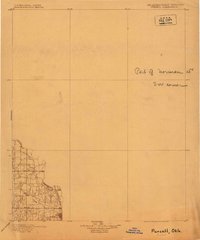 1898 Purcell1898 Print · USGSOklahoma and Indian Territory are captured at the end of the century during a period of rapid regional expansion. Genealogists and historians can trace the early rail alignment of the G C and S F R R as it passes through Purcell near Walnut Creek.
 - 1898 Map of Pauls Valley, 1954 Print
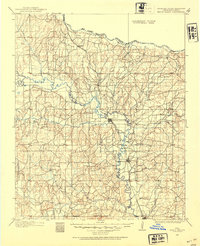 1898 Pauls Valley1954 Print · USGSThe Chickasaw Nation is documented at the turn of the century, showing the rail-driven growth of the Washita River valley. Researchers can trace early settlements like Whitebead and Wynnewood along the Gulf Colorado and Santa Fe RR.
 - 1901 Map of Stonewall
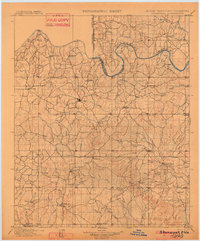 1901 Stonewall1901 Print · USGSBefore Oklahoma statehood, this late-century survey captures the Chickasaw Nation and Seminole Nation borderlands in high detail. Researchers can locate early schools like Collins Institute and trace the paths between settlements such as Stonewall, Ada, and Fitzhugh.4 unique versions available
 - 1902 Map of Pauls Valley
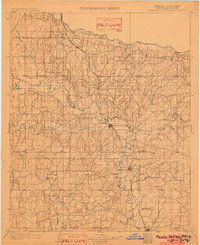 1902 Pauls Valley1902 Print · USGSThe Chickasaw Nation at the turn of the century shows a landscape of river-valley agriculture and burgeoning rail towns. Genealogists and historians can trace the early footprints of Pauls Valley, Wynnewood, and Whitebead before statehood.5 unique versions available
 - 1902 Map of Rush Springs
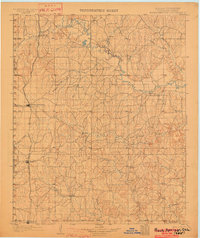 1902 Rush Springs1902 Print · USGSThe Chickasaw Nation landscape at the turn of the century is defined by its deep river valleys and the arrival of the iron horse. Genealogists can trace early homesteads and rail-side growth in Rush Springs, Marlow, and settlements like Erin Springs along the Washita River.4 unique versions available
 - 1904 Map of Chickasha
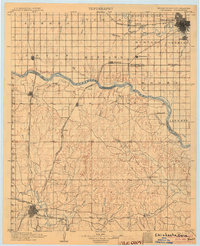 1904 Chickasha1904 Print · USGSIndian Territory and Oklahoma Territory meet in this detailed 1904 survey, showing the region just years before statehood. Genealogists can trace the early rail stops at Minco and Tuttle or locate family homesteads near Womack and Dibble.4 unique versions available
 - 1925 Map of Norman NO 2
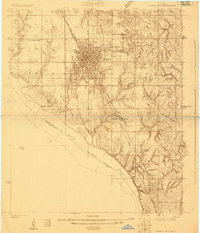 1925 Norman NO 21925 Print · USGSNorman and the university grounds are pictured in the mid-twenties during a period of steady growth along the river bluffs. Genealogists can locate family-named landmarks and rural schoolhouses like White Mound School and Adair School.
 - 1936 Map of Norman
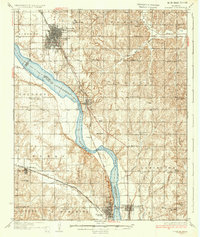 1936 Norman1936 Print · USGSThe river valley between Norman and Purcell is captured here in the mid-1930s as the railroad and river define local growth. Genealogists can trace family footprints across dozens of rural landmarks, from the University of Oklahoma to local schools like Goldsby Sch and Lone Star Sch.5 unique versions available
 - 1954 Map of Oklahoma City
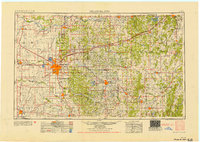 1954 Oklahoma City1954 Print · USGSOklahoma City and its surrounding counties are captured here in the early fifties during a period of significant postwar growth. Researchers can trace the development of the Turner Turnpike and locate aviation hubs like Tinker Field or Will Rogers Field.
 - 1956 Map of Oklahoma City, 1957 Print
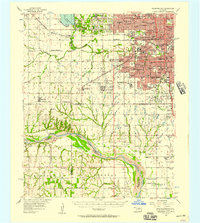 1956 Oklahoma City1957 Print · USGSCentral Oklahoma in the mid-fifties shows the transition from a rail-centered capital to a modern aviation and oil hub. Researchers can trace family roots through neighborhood landmarks like St Patricks Sch, Fairlawn Cem, and the old Union Station.2 unique versions available
 - 1956 Map of Oklahoma City SE, 1957 Print
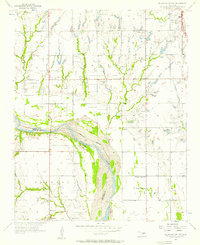 1956 Oklahoma City SE1957 Print · USGSSouth of Oklahoma City in the mid-fifties, the landscape transitions from busy airfields to the oil-rich river bottoms. Trace family roots at Antioch Ch and Moore Cem, or locate early aviation sites like Country Club Airport.3 unique versions available
 - 1957 Map of Ardmore, 1968 Print
 1957 Ardmore1968 Print · USGSSouth-central Oklahoma in the late fifties was a landscape of rising reservoir waters and expanding rail lines. Genealogists and historians can trace the foundations of Ardmore and Duncan or locate early recreation sites at Platt National Park and Lake Murray State Park.3 unique versions available
 - 1957 Map of Oklahoma City, 1969 Print
 1957 Oklahoma City1969 Print · USGSCentral Oklahoma is captured here in a period of significant mid-century growth and industrialization. Researchers can trace family roots through numerous rural markers like Memory Lane Cem, New Hope School, and the sprawling grounds of Tinker Air Force Base.3 unique versions available
 - 1963 Map of Ardmore
 1963 Ardmore1963 Print · USGSSouthern Oklahoma during the early sixties shows a landscape defined by the Arbuckle Mountains and a booming energy economy. Genealogists and historians can trace family-named sites across the Ardmore Oil Field, find old schools like Southeastern State College, or locate historic markers such as Boggy Depot State Park.2 unique versions available
 - 1963 Map of Oklahoma City
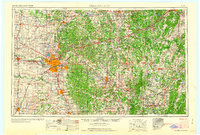 1963 Oklahoma City1963 Print · USGSCentral Oklahoma in the early sixties showcases a landscape of rapid suburban growth and established oil production. Researchers can trace historic rail lines like the Chicago Rock Island and Pacific RR or locate rural landmarks such as Mayflower School and Bethel Church.
 - 1964 Map of Byars, 1966 Print
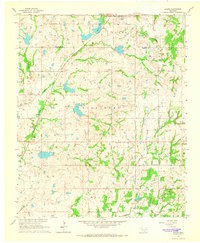 1964 Byars1966 Print · USGSOklahoma's central plains during the mid-sixties show a landscape of active extraction and old prairie settlements. Trace family roots through local landmarks like Dixon Chapel, Byars Cem, and the rail-side community of Boudinot along the Atchison Topeka and Santa Fe.2 unique versions available
 - 1965 Map of Newcastle, 1966 Print
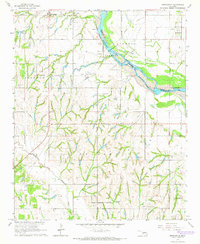 1965 Newcastle1966 Print · USGSCentral Oklahoma's river borderlands in the mid-1960s reveal a landscape of growing oil fields and rural townships. Trace family history at Warren Cem or follow the legacy of energy production through the North Lindsay Ridge Oil Field.4 unique versions available
 - 1965 Map of Cole, 1966 Print
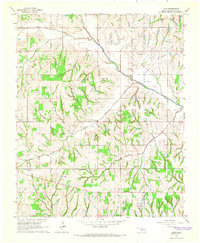 1965 Cole1966 Print · USGSMcClain County comes to life in the mid-1960s as a landscape of rural communities and active energy production. Researchers can trace the legacy of the West Washington Oil Field or locate local landmarks like the Iron Chapel and Dibble Cem.2 unique versions available
 - 1965 Map of Rosedale, 1966 Print
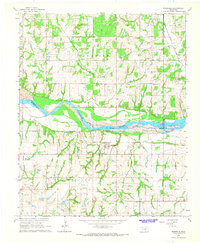 1965 Rosedale1966 Print · USGSCentrally located on the Oklahoma prairie in the mid-sixties, this area shows the intersection of three counties along the Canadian River. Genealogists can trace family names and locations via landmarks like Rosedale Cem, Douglas Ch, and the settlements of Corbett and Box.2 unique versions available
 - 1965 Map of Dibble, 1966 Print
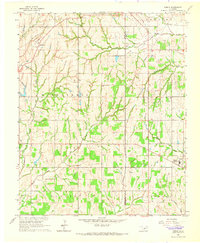 1965 Dibble1966 Print · USGSOklahoma prairie life across the Grady and McClain county line is captured here in the mid-1960s. Researchers can locate family roots at Hale Cem and Naples Cem, or trace the early energy industry through the North Dibble Oil Field.2 unique versions available
 - 1965 Map of Byars SW, 1966 Print
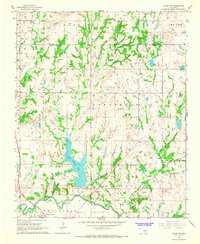 1965 Byars SW1966 Print · USGSGarvin County's river-and-rail landscape is captured here in the mid-1960s as oil production and water management reshaped the plains. Researchers can locate the Indian Meridian, the Pauls Valley Oil Field, and rural landmarks like Civit and Blue Branch Cem.3 unique versions available
 - 1965 Map of Wayne, 1966 Print
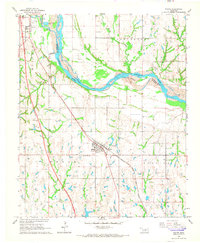 1965 Wayne1966 Print · USGSMid-century McClain County is documented here as the railroad-era towns of Wayne and Purcell continued to evolve alongside the Canadian River. Researchers can trace old property lines near the Old Indian Treaty Boundary and locate the Denton Cem or the West Corbett Oil Field.3 unique versions available
 - 1965 Map of Norman, 1966 Print
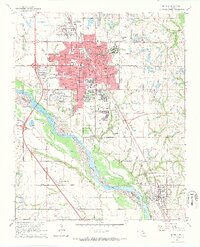 1965 Norman1966 Print · USGSNorman and the Canadian River valley are shown in the mid-1960s during a period of significant institutional and industrial expansion. Researchers can trace the layout of the University of Oklahoma and locate rural landmarks like Adkins Cem and Goldsby Ch.3 unique versions available
Showing maps 1-25 of 159
Top cities of McClain County
- Newcastle historical maps
- Purcell historical maps
- Goldsby historical maps
- Wayne historical maps
- Washington historical maps
- Cole historical maps
See more
Frequently asked questions
- What are the different types of historical maps available for McClain County?
- What is the oldest map of McClain County?
- Where can I purchase historical maps of McClain County for my home or office?
- Where can I download high-res historical maps of McClain County?
- Are there historical topographic maps available for McClain County?
- Is there historical aerial imagery available for McClain County?
- Where are historical maps of McClain County sourced from?