1900s (20th Century) Maps of Davis, Oklahoma
Explore 11 historic maps of Davis from the 1900s (20th Century). These maps offer a rare glimpse into what life looked like during the 1900s — showing old roads, neighborhoods, homes, and landmarks that have changed or disappeared over time.
Whether you're researching your family's past, planning a metal detecting trip, or studying how Davis's landscape evolved across the 1900s, these high-resolution maps are a powerful tool for exploring the history of this region.
- Focus on a specific era: All maps on this page are from the 1900s, giving you a focused view of this time period.
- See what’s changed: Compare century-old streets, trails, and buildings to today's modern landscape using overlays and satellite layers.
- Research with precision: Use these maps for genealogy, historical research, land use analysis, or educational projects.
- View, download, or print: Maps are fully viewable online in high resolution, and can be downloaded or printed for your own records.
Start exploring Davis's history through authentic maps from the 1900s. This is your window into the past.
Davis, OK maps
(11)- 1901 Map of Ardmore
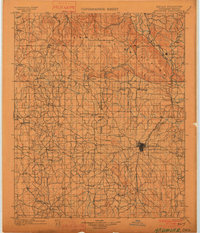 1901 Ardmore1901 Print · USGSThe Chickasaw Nation of Indian Territory is captured here at the turn of the century, showing a landscape of burgeoning rail towns and early industry. Researchers can trace the Gulf Colorado and Santa Fe line through Ardmore or locate early Asphalt Mine sites near Newport.6 unique versions available
 - 1902 Map of Pauls Valley
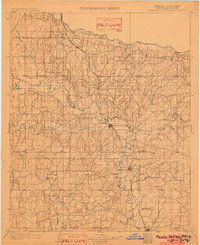 1902 Pauls Valley1902 Print · USGSThe Chickasaw Nation at the turn of the century shows a landscape of river-valley agriculture and burgeoning rail towns. Genealogists and historians can trace the early footprints of Pauls Valley, Wynnewood, and Whitebead before statehood.5 unique versions available
 - 1918 Map of Ardmore
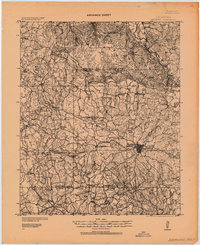 1918 Ardmore1918 Print · USGSSouthern Oklahoma was a hub of energy production and rail traffic during the late teens. Researchers can trace the early infrastructure of the Healdton Oil Fields, find vanished sites like Joiner City, or locate the Post Oak School.
 - 1957 Map of Ardmore, 1968 Print
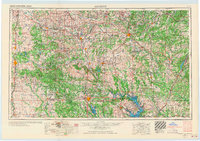 1957 Ardmore1968 Print · USGSSouth-central Oklahoma in the late fifties was a landscape of rising reservoir waters and expanding rail lines. Genealogists and historians can trace the foundations of Ardmore and Duncan or locate early recreation sites at Platt National Park and Lake Murray State Park.3 unique versions available
 - 1963 Map of Ardmore
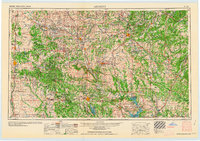 1963 Ardmore1963 Print · USGSSouthern Oklahoma during the early sixties shows a landscape defined by the Arbuckle Mountains and a booming energy economy. Genealogists and historians can trace family-named sites across the Ardmore Oil Field, find old schools like Southeastern State College, or locate historic markers such as Boggy Depot State Park.2 unique versions available
 - 1964 Map of Turner Falls, 1966 Print
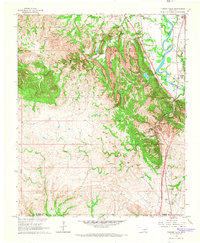 1964 Turner Falls1966 Print · USGSThe Arbuckle Mountains meet the Washita River in the mid-1960s, a time of significant highway expansion and recreation growth. Trace the waterfalls of Honey Creek, find the Green Hill Cem, or locate landmarks like the Jolly Aero Airport and Cedar Village.2 unique versions available
 - 1965 Map of Davis, 1966 Print
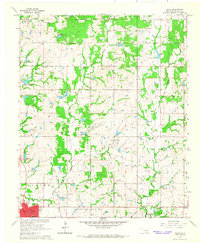 1965 Davis1966 Print · USGSMid-century Murray County is shown here during a period of industrial growth, where the town of Davis sits surrounded by several active oil fields. Researchers can locate the Sandy Ch Cem, follow the Old RR Grade, and trace family roots near Chigley or Iona.2 unique versions available
 - 1965 Map of Joy, 1966 Print
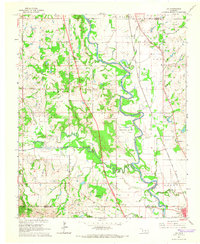 1965 Joy1966 Print · USGSThe Arbuckle Mountains and Washita River valley are captured here in the mid-1960s, showing a landscape defined by oil production and frontier history. Researchers can locate the Fort Arbuckle Ruins, trace the Gulf Colorado and Santa Fe rail line, or find family names at Butterfly Cem and Chigley.2 unique versions available
 - 1965 Map of Dougherty, 1966 Print
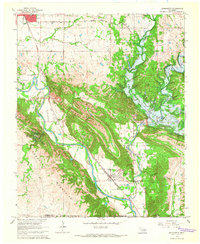 1965 Dougherty1966 Print · USGSThe Arbuckle Mountains and Washita River valley are captured mid-transition in the 1960s as a new reservoir begins to fill. Researchers can locate the Arbuckle Dam (Under Constr) and trace family landmarks like James Cem or the Falls Creek Assembly.3 unique versions available
 - 1986 Map of Ardmore
 1986 Ardmore1986 Print · USGSSouthern Oklahoma in the mid-eighties was a landscape of rugged geology and deep petroleum roots. Genealogists and historians can trace the development of Ardmore and Healdon alongside the vast Sholem Alechem Oil Field and the rails of the AT & SF RR.2 unique versions available
 - 1986 Map of Pauls Valley
 1986 Pauls Valley1986 Print · USGSGarvin County and its neighbors are shown in the mid-1980s during a period of steady growth along the Washita River. Researchers can trace the path of the Atchison Topeka and Santa Fe railroad through Pauls Valley or locate rural sites like Mt Olive Church and Erin Springs.2 unique versions available
End of results
Showing maps 1-11 of 11
Top cities near Davis
- Ardmore historical maps
- Pauls Valley historical maps
- Sulphur historical maps
- Wynnewood historical maps
- Springer historical maps
- Katie historical maps
See more
Top neighborhoods of Davis
Frequently asked questions
- What are the different types of historical maps available for Davis?
- What is the oldest map of Davis?
- Where can I purchase historical maps of Davis for my home or office?
- Where can I download high-res historical maps of Davis?
- Are there historical topographic maps available for Davis?
- Is there historical aerial imagery available for Davis?
- Where are historical maps of Davis sourced from?