Old Maps of Doga, Oklahoma for Academic Research
Study the evolution of Doga with 10 high-resolution historic maps. Whether you're teaching, researching, or modeling changes in land use, these maps provide essential visual documentation of urban, environmental, and geographic change.
- Analyze long-term change: Track patterns in development, transportation, and natural features.
- Ideal for environmental or urban studies: Support academic projects with primary historical map data.
- Use in the classroom or lab: Educators and researchers rely on these maps to bring historical context to life.
These maps are a powerful tool for teaching, research, and visualizing how Doga has changed over the decades.
Doga, OK maps
(10)- 1936 Map of Belford
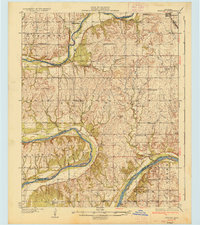 1936 Belford1936 Print · USGSOsage and Noble counties come into focus in the mid-1930s, showing a rural landscape defined by the winding Arkansas River. Genealogists and local historians can trace numerous country school sites like Braden Sch and Pleasant Valley Sch, alongside the Atchison Topeka and Santa Fe Ry through Apperson.3 unique versions available
 - 1955 Map of Enid, 1966 Print
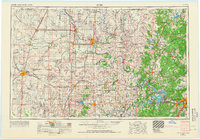 1955 Enid1966 Print · USGSNorth-central Oklahoma's transition from open plains to the blackjack hills of the Osage Indian Reservation is captured in the mid-1950s. Researchers can trace the development of the Naval Reserve Oil Field, the grounds of Vance AFB, and the early footprints of Tulsa and Stillwater.4 unique versions available
 - 1958 Map of Enid
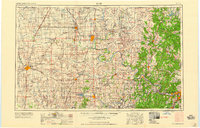 1958 Enid1958 Print · USGSNorthern Oklahoma is mapped here in the late fifties, showcasing a dense network of petroleum production and historic tribal lands. Researchers can trace the legacy of the Osage Indian Reservation, early energy hubs like the Cushing Oil Field, and the Chilocco Indian Agricultural School.2 unique versions available
 - 1978 Map of Doga Creek
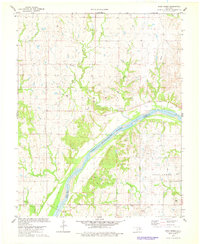 1978 Doga Creek1978 Print · USGSOsage and Pawnee counties meet along the Arkansas River in the late seventies, where the energy industry and tribal lands intersect. Researchers can trace family history at Drake Cem or map the industrial landscape of the Oil Field and Coal Creek.
 - 1985 Map of Pawhuska, 1986 Print
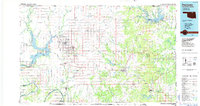 1985 Pawhuska1986 Print · USGSThe Osage Indian Reservation and its tribal capital at Pawhuska are seen here in the mid-1980s as the region's ranching and oil legacies matured. Genealogists and historians can trace family-named sites and vanished industrial tracks near Bigheart, Wynona, and Gray Horse.2 unique versions available
 - 2009 Map of Doga Creek, 2009 Print
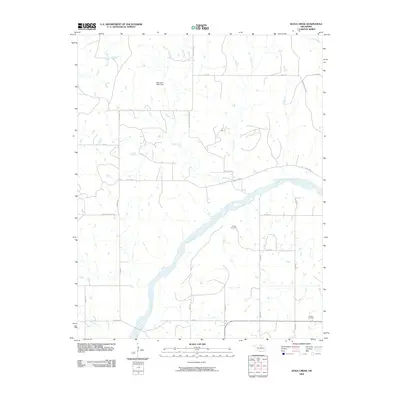 2009 Doga Creek2009 Print · USGSOsage County's rural landscape is defined by the sweeping Arkansas River and its network of prairie tributaries in this 2009 survey. Genealogists and local historians can trace family locations near Drake Cemetery, Ralston Cemetery, and the Oknoname 13901 Dam.
 - 2012 Map of Doga Creek, 2012 Print
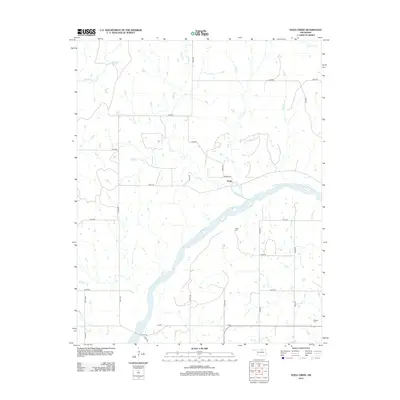 2012 Doga Creek2012 Print · USGSOsage County's river valley and rural uplands are shown in detail during the early 2000s. Genealogists and local historians can locate burial grounds like Drake Cem and trace the winding paths of Doga Cr and the Arkansas River.
 - 2016 Map of Doga Creek, 2016 Print
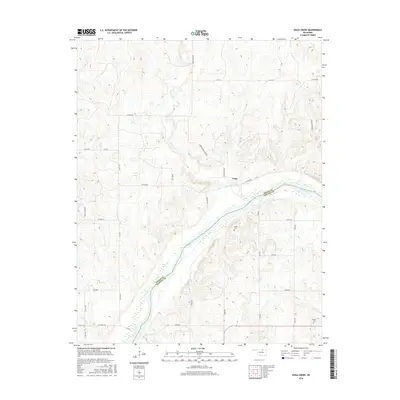 2016 Doga Creek2016 Print · USGSOsage and Pawnee counties meet along the winding banks of the Arkansas River in the mid-2010s. Researchers can locate family landmarks such as Drake Cem and Ralston Cem or trace the rural roads surrounding the settlement of Doga and Doga Creek.
 - 2018 Map of Doga Creek, 2018 Print
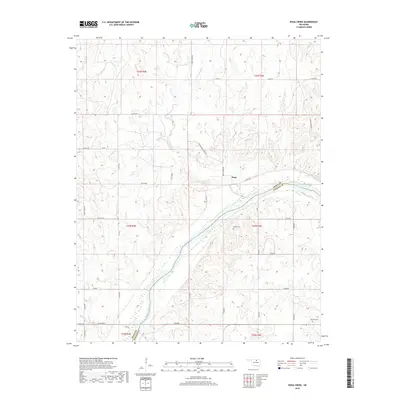 2018 Doga Creek2018 Print · USGSThe Osage and Pawnee county line meets along the Arkansas River in this recent survey of the Oklahoma ranchlands. Genealogists can locate family burial sites at Drake Cem and Ralston Cem or trace the rural drainage of Doga Cr and Wild Cr.
 - 2022 Map of Doga Creek, 2022 Print
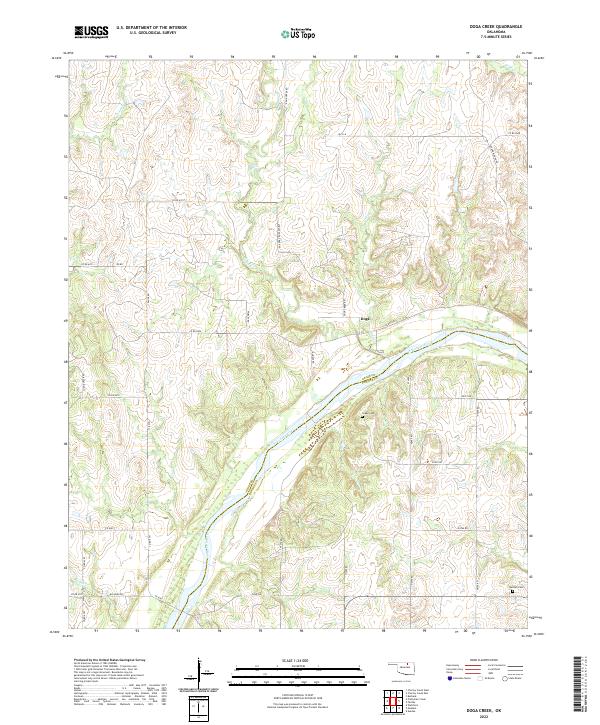 2022 Doga Creek2022 Print · USGSThe Arkansas River valley at the Osage and Pawnee county line is documented here in the early twenty-first century. Researchers can locate family landmarks like Drake Cem, Ralston Cem, and the rural settlement at Doga.
End of results
Showing maps 1-10 of 10
Top cities near Doga
- Ponca City historical maps
- Pawnee historical maps
- Fairfax historical maps
- Shidler historical maps
- Kaw City historical maps
- Ralston historical maps
See more
Frequently asked questions
- What are the different types of historical maps available for Doga?
- What is the oldest map of Doga?
- Where can I purchase historical maps of Doga for my home or office?
- Where can I download high-res historical maps of Doga?
- Are there historical topographic maps available for Doga?
- Is there historical aerial imagery available for Doga?
- Where are historical maps of Doga sourced from?