1900s (20th Century) Maps of Claremore, Oklahoma
Explore 15 historic maps of Claremore from the 1900s (20th Century). These maps offer a rare glimpse into what life looked like during the 1900s — showing old roads, neighborhoods, homes, and landmarks that have changed or disappeared over time.
Whether you're researching your family's past, planning a metal detecting trip, or studying how Claremore's landscape evolved across the 1900s, these high-resolution maps are a powerful tool for exploring the history of this region.
- Focus on a specific era: All maps on this page are from the 1900s, giving you a focused view of this time period.
- See what’s changed: Compare century-old streets, trails, and buildings to today's modern landscape using overlays and satellite layers.
- Research with precision: Use these maps for genealogy, historical research, land use analysis, or educational projects.
- View, download, or print: Maps are fully viewable online in high resolution, and can be downloaded or printed for your own records.
Start exploring Claremore's history through authentic maps from the 1900s. This is your window into the past.
Claremore, OK maps
(15)- 1901 Map of Claremore
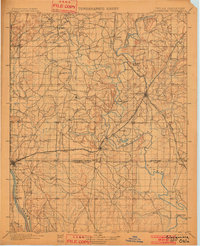 1901 Claremore1901 Print · USGSThe Cherokee, Osage, and Creek Nations converge in the Indian Territory during this era of rapid railroad expansion. Researchers can trace early settlements and tribal boundaries, locating the Island Ferry, the junction at Claremore, and early Tulsa.4 unique versions available
 - 1901 Map of Pryor
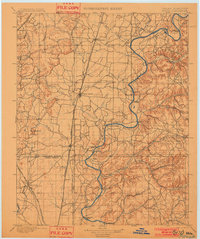 1901 Pryor1901 Print · USGSIndian Territory at the turn of the century shows a landscape transitioning from tribal lands to a rail-connected frontier. Genealogists and historians can trace early river crossings like Markham Ferry and Dirteater Ford alongside frontier settlements like Choteau and Bushyhead.5 unique versions available
 - 1914 Map of Claremore, 1959 Print
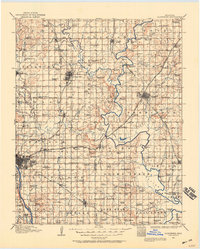 1914 Claremore1959 Print · USGSNortheastern Oklahoma was a landscape of river crossings and rail towns in the years just before the Great War. Genealogists and researchers can trace the locations of dozens of vanished rural schools like Elm Ridge School, river landmarks such as Thomas Ferry, and the early footprints of Broken Arrow and Tulsa.
 - 1916 Map of Claremore
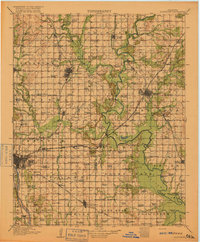 1916 Claremore1916 Print · USGSThe Verdigris River valley and the burgeoning rail hubs of Rogers and Tulsa counties are captured here just after Oklahoma statehood. Genealogists can locate family homesteads near dozens of early schools like Fair Valley School or early churches such as Greenwood Chapel.4 unique versions available
 - 1954 Map of Tulsa
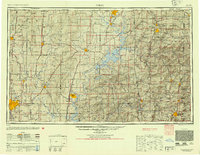 1954 Tulsa1954 Print · USGSNortheast Oklahoma and the Ozark border are shown here during a period of massive industrial and infrastructure growth. Researchers can trace the legacy of the Tri-State Mining District and the development of major reservoirs like Grand Lake O' The Cherokees.2 unique versions available
 - 1958 Map of Tulsa, 1968 Print
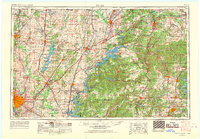 1958 Tulsa1968 Print · USGSNortheast Oklahoma and the Ozark borderlands are captured here during a massive era of reservoir construction and highway expansion. Researchers can trace the mid-century footprints of Tulsa, the sprawling Lake O' the Cherokees, and historical sites like Pea Ridge National Military Park.3 unique versions available
 - 1963 Map of Tulsa
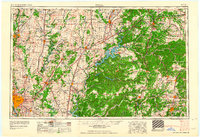 1963 Tulsa1963 Print · USGSThe Oklahoma and Arkansas borderlands are shown here in the early sixties, a time of massive reservoir construction and heavy mining. Genealogists can trace family roots through settlements like Nowata, Pryor, and Jay, or locate historical zinc and lead mines and coal mines.
 - 1963 Map of Sageeyah, 1964 Print
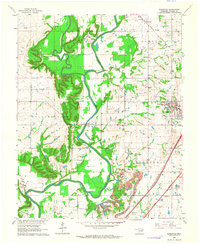 1963 Sageeyah1964 Print · USGSRogers County in the early sixties reveals a landscape of river-bottom agriculture and emerging heavy transit. Researchers can locate vanished landmarks like the Oklahoma Military Academy and rural schoolhouses such as Lone Elm Sch and South Limestone Sch.3 unique versions available
 - 1963 Map of Claremore, 1964 Print
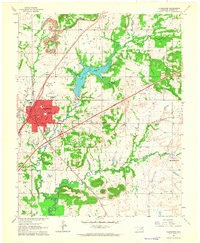 1963 Claremore1964 Print · USGSClaremore and its rural surroundings thrive in the early sixties as the Will Rogers Turnpike brings new infrastructure to the Verdigris Hills. Researchers can trace family sites like Lowrance Ranch, local schools including Justus Sch, and the grounds of Woodlawn Cem.3 unique versions available
 - 1963 Map of Inola, 1964 Print
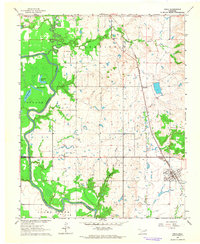 1963 Inola1964 Print · USGSNortheastern Oklahoma’s agricultural and industrial landscape is captured here in the early sixties, as the Verdigris River valley transitions toward Rogers and Wagoner counties. Genealogists and historians can locate rural landmarks like Sweeten Cemetery, Gregory School, and the Missouri Pacific rail corridor.3 unique versions available
 - 1970 Map of Bushyhead, 1971 Print
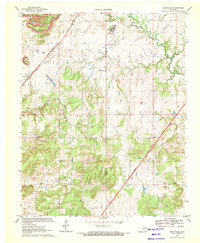 1970 Bushyhead1971 Print · USGSNorth of Claremore in the early seventies, this Rogers County landscape shows a mix of traditional prairie life and heavy industry. Genealogists can trace family landmarks like Dawes Cem and Beck Cem, while mapping the impact of the Strip Mine operations and the St Louis - San Francisco railroad.2 unique versions available
 - 1970 Map of Osage Hills, 1972 Print
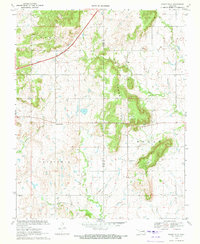 1970 Osage Hills1972 Print · USGSNortheast Oklahoma's rural landscape is captured here in the early seventies, showing the intersection of new infrastructure and established local settlements. Genealogists and historians can trace family-named sites like Vann Cem and Union Chapel, or explore the development around Harmony Star and the Will Rogers Toll Road.2 unique versions available
 - 1970 Map of Chouteau NW, 1972 Print
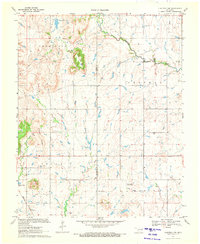 1970 Chouteau NW1972 Print · USGSNortheast Oklahoma at the start of the seventies reveals a rural landscape anchored by the Missouri Pacific railroad and family-centered landmarks. Genealogists and local historians can locate the Amish Cem, Brethren Cem, and the prominent Scaly Bark Mountain.
 - 1970 Map of Foyil, 1972 Print
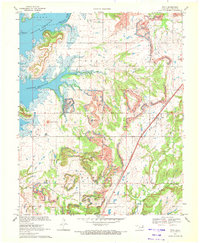 1970 Foyil1972 Print · USGSNortheastern Oklahoma underwent significant transformation in the early seventies as large-scale coal extraction and water projects reshaped the Rogers County countryside. Researchers can trace the sprawling strip mines and the expansion of the Oologah Reservoir alongside local sites like Oowala Cem and New Hope Ch.2 unique versions available
 - 1985 Map of Tulsa
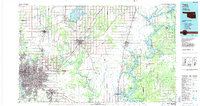 1985 Tulsa1985 Print · USGSNortheastern Oklahoma in the mid-eighties shows a landscape shaped by massive reservoirs and a bustling transportation network. Researchers can trace the path of the Will Rogers Turnpike or locate local landmarks like Mohawk Park and Oologah Lake.2 unique versions available
End of results
Showing maps 1-15 of 15
Top cities near Claremore
- Tulsa historical maps
- Owasso historical maps
- Pryor Creek historical maps
- Catoosa historical maps
- Verdigris historical maps
- Chelsea historical maps
See more
Frequently asked questions
- What are the different types of historical maps available for Claremore?
- What is the oldest map of Claremore?
- Where can I purchase historical maps of Claremore for my home or office?
- Where can I download high-res historical maps of Claremore?
- Are there historical topographic maps available for Claremore?
- Is there historical aerial imagery available for Claremore?
- Where are historical maps of Claremore sourced from?