1900s (20th Century) Maps of Greenhorn, Oregon
Explore 6 historic maps of Greenhorn from the 1900s (20th Century). These maps offer a rare glimpse into what life looked like during the 1900s — showing old roads, neighborhoods, homes, and landmarks that have changed or disappeared over time.
Whether you're researching your family's past, planning a metal detecting trip, or studying how Greenhorn's landscape evolved across the 1900s, these high-resolution maps are a powerful tool for exploring the history of this region.
- Focus on a specific era: All maps on this page are from the 1900s, giving you a focused view of this time period.
- See what’s changed: Compare century-old streets, trails, and buildings to today's modern landscape using overlays and satellite layers.
- Research with precision: Use these maps for genealogy, historical research, land use analysis, or educational projects.
- View, download, or print: Maps are fully viewable online in high resolution, and can be downloaded or printed for your own records.
Start exploring Greenhorn's history through authentic maps from the 1900s. This is your window into the past.
Greenhorn, OR maps
(6)- 1901 Map of Sumpter
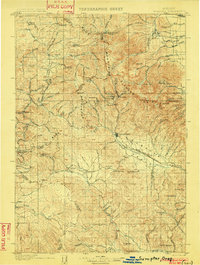 1901 Sumpter1901 Print · USGSThe Oregon gold boom is at its peak in this turn-of-the-century survey of the high Elkhorn Range. Miners and genealogists can trace the early rail corridor of the Sumpter Valley River and locate historic camps like Bourne, Belleview, and French Diggings.4 unique versions available
 - 1955 Map of Canyon City, 1966 Print
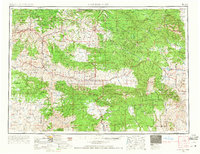 1955 Canyon City1966 Print · USGSCentral Oregon's high desert and timber country are captured here in the mid-fifties, showing the rugged ranching and logging landscape. Trace the path of the Sumpter Valley Ry or locate remote settlements like Izee, Whitney, and Ritter.4 unique versions available
 - 1959 Map of Canyon City
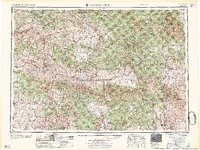 1959 Canyon City1959 Print · USGSEastern Oregon in the late fifties was a landscape of high timber and remote river valleys shaped by the cattle and mining trades. Genealogists and historians can trace the paths of the Sumpter Valley RR and find early settlements like Antone, Richmond, and Dayville.2 unique versions available
 - 1972 Map of Greenhorn, 1976 Print
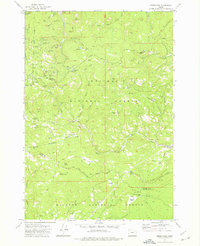 1972 Greenhorn1976 Print · USGSThe high country of the Blue Mountains comes into focus in the early 1970s, revealing a landscape deeply marked by its mining and timber heritage. Genealogists and historians can trace the remnants of Robinsonville, the Old Railroad Grade, and dozens of lode mines like the IXL Mine.2 unique versions available
 - 1987 Map of Bates
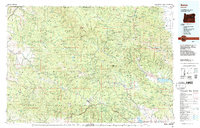 1987 Bates1987 Print · USGSEastern Oregon's rugged mining and timber heartland is detailed here in the late 1980s. Local historians and genealogists can trace the Sumpter Valley Railroad and find historic mining sites like the Standard Mine and settlements at Greenhorn or Galena.
 - 1995 Map of Greenhorn, 1998 Print
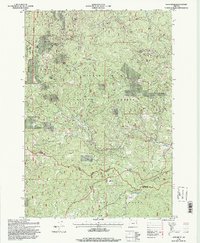 1995 Greenhorn1998 Print · USGSThe high gold country of the Blue Mountains is documented here in the mid-1990s, where Baker and Grant Counties meet. Genealogists and researchers can trace historical sites like Robinsonville, the Greenhorn Cemetery, and dozens of lode mines including the IXL and Ophir Mine.
End of results
Showing maps 1-6 of 6
Top cities near Greenhorn
Frequently asked questions
- What are the different types of historical maps available for Greenhorn?
- What is the oldest map of Greenhorn?
- Where can I purchase historical maps of Greenhorn for my home or office?
- Where can I download high-res historical maps of Greenhorn?
- Are there historical topographic maps available for Greenhorn?
- Is there historical aerial imagery available for Greenhorn?
- Where are historical maps of Greenhorn sourced from?