Old Maps of Tiller, Oregon for Metal Detecting
Plan your next treasure hunt with 15 historic maps of Tiller. Find old homesites, ghost towns, trails, and gathering spots that may be lost to time — perfect for identifying promising metal detecting locations.
- Locate forgotten sites: Uncover places like long-lost settlements, abandoned rail lines, or gathering spots.
- Plan better hunts: Use map overlays combined with LiDAR or satellite views to narrow in on historically rich areas.
- Made for detectorists: Thousands of hobbyists use these maps to discover relics, coins, and hidden history.
Use these historic maps to boost your research and find new opportunities beneath the surface of Tiller.
Tiller, OR maps
(15)- 1891 Map of Ashland
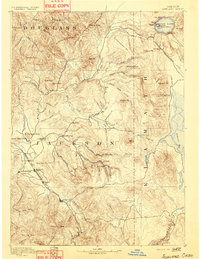 1891 Ashland1891 Print · USGSSouthern Oregon's Rogue River Valley was undergoing rapid transformation in the late nineteenth century as rail lines connected its emerging towns. Genealogists and historians can trace early property and settlement patterns near Jacksonville, Medford, and the pristine Crater Lake basin.
 - 1893 Map of Ashland
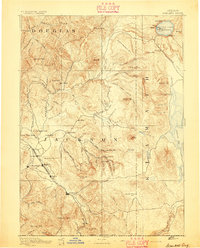 1893 Ashland1893 Print · USGSSouthern Oregon in the late nineteenth century was a region of rapid change as the Oregon and California R. R. linked the valley floor. Researchers can trace the early footprints of Jacksonville, Medford, and Ashland, or locate landmarks like Crater Lake and Mt Pitt.6 unique versions available
 - 1897 Map of Ashland, 1937 Print
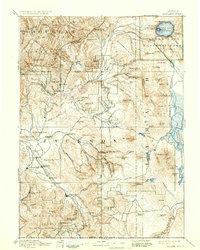 1897 Ashland1937 Print · USGSSouthern Oregon's Rogue River Valley is captured here in the late nineteenth century as the railroad began to transform local commerce. Trace the early footprints of Jacksonville and Medford, or locate remote landmarks like Wizard Island and the high peaks of the Rogue River National Forest.
 - 1944 Map of Tiller, 1946 Print
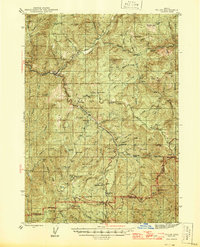 1944 Tiller1946 Print · USGSDouglas County and Jackson County meet along high ridges during the mid-1940s, where remote ranching and timber mills defined the South Umpqua valley. Researchers can trace family homesteads like Lucas Ranch or search for old industrial sites such as the Banfield Mine and Old Johnson Mill.5 unique versions available
 - 1955 Map of Medford, 1964 Print
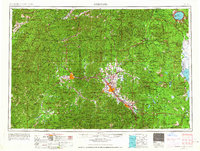 1955 Medford1964 Print · USGSSouthern Oregon's valley towns and high peaks are captured here in the mid-1950s, showing the region before the completion of the modern interstate system. Genealogists and historians can trace the development of timber and mining outposts from Wolf Creek to Butte Falls and the early roads to Crater Lake.3 unique versions available
 - 1957 Map of Medford
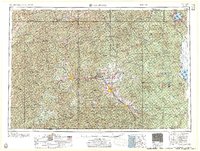 1957 Medford1957 Print · USGSSouthern Oregon during the mid-fifties is captured here as a region of growing valley cities and vast timberlands. Genealogists and historians can trace the rail-and-road corridors connecting Medford, Jacksonville, and Grants Pass to more remote locales like Wolf Creek or Butte Falls.
 - 1958 Map of Medford
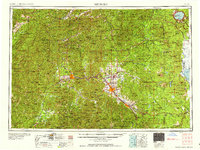 1958 Medford1958 Print · USGSSouthern Oregon's Rogue River valley thrived in the 1950s as a crossroads of rail and road. Researchers can trace the legacy of timber and tourism through Southern Pacific RR lines and landmarks like Crater Lake and Oregon Caves National Monument.
 - 1989 Map of Tiller, 1990 Print
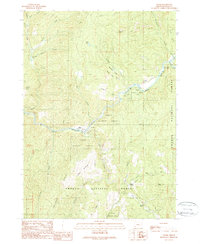 1989 Tiller1990 Print · USGSThe South Umpqua River valley in Douglas County was a landscape of forest management and mountain settlements in the late 1980s. Researchers can locate remote landmarks like the Rainville Cemetery, Graham Placer Mines, and the Drew School.
 - 1989 Map of Crater Lake, 1990 Print
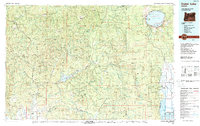 1989 Crater Lake1990 Print · USGSJackson County and the High Cascades are captured in the late eighties, showing a landscape shaped by vast national forests and the deep waters of Crater Lake. You can trace rural life near Prospect and Butte Falls or locate landmarks like the Cinnabar Mine and Wizard Island.
 - 1998 Map of Tiller, 2000 Print
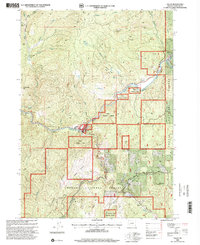 1998 Tiller2000 Print · USGSThe South Fork Umpqua River corridor in the late nineties shows a landscape shaped by forestry, mining, and small mountain settlements. Researchers can trace the heritage of the region through the Graham Placer Mines, Drew School, and rural burials at Rainville Cemetery.
 - 2011 Map of Tiller, 2011 Print
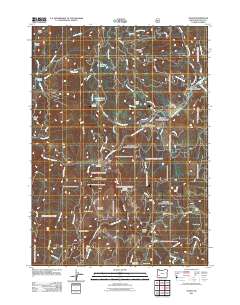 2011 Tiller2011 Print · USGSCovers Tiller, including Drew, Douglas County, and other nearby areas
 - 2014 Map of Tiller, 2014 Print
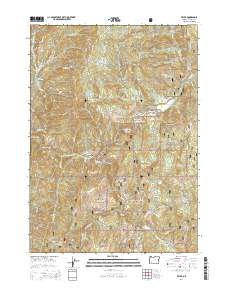 2014 Tiller2014 Print · USGSCovers Tiller, including Drew, Douglas County, and other nearby areas
 - 2017 Map of Tiller, 2017 Print
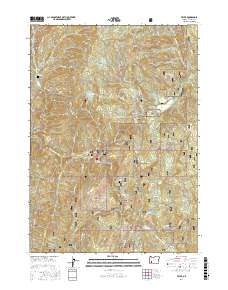 2017 Tiller2017 Print · USGSCovers Tiller, including Drew, Douglas County, and other nearby areas
 - 2020 Map of Tiller, 2020 Print
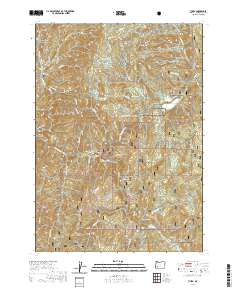 2020 Tiller2020 Print · USGSCovers Tiller, including Drew, Douglas County, and other nearby areas
 - 2023 Map of Tiller, 2023 Print
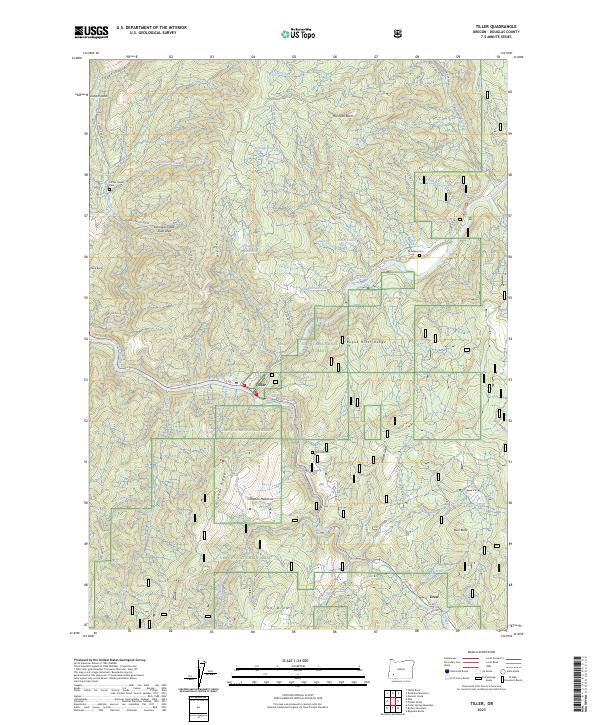 2023 Tiller2023 Print · USGSDouglas County forest lands come into focus in the early 2020s, centered on the mountain confluence at Tiller. Researchers can locate family landmarks like Rainville Cem or trace the river-bound communities of Drew and The Drew.
End of results
Showing maps 1-15 of 15
Frequently asked questions
- What are the different types of historical maps available for Tiller?
- What is the oldest map of Tiller?
- Where can I purchase historical maps of Tiller for my home or office?
- Where can I download high-res historical maps of Tiller?
- Are there historical topographic maps available for Tiller?
- Is there historical aerial imagery available for Tiller?
- Where are historical maps of Tiller sourced from?