1900s (20th Century) Maps of Grants Pass, Oregon
Explore 12 historic maps of Grants Pass from the 1900s (20th Century). These maps offer a rare glimpse into what life looked like during the 1900s — showing old roads, neighborhoods, homes, and landmarks that have changed or disappeared over time.
Whether you're researching your family's past, planning a metal detecting trip, or studying how Grants Pass's landscape evolved across the 1900s, these high-resolution maps are a powerful tool for exploring the history of this region.
- Focus on a specific era: All maps on this page are from the 1900s, giving you a focused view of this time period.
- See what’s changed: Compare century-old streets, trails, and buildings to today's modern landscape using overlays and satellite layers.
- Research with precision: Use these maps for genealogy, historical research, land use analysis, or educational projects.
- View, download, or print: Maps are fully viewable online in high resolution, and can be downloaded or printed for your own records.
Start exploring Grants Pass's history through authentic maps from the 1900s. This is your window into the past.
Grants Pass, OR maps
(12)- 1908 Map of Grants Pass
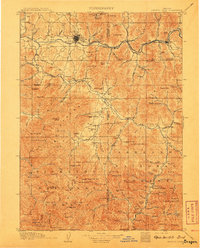 1908 Grants Pass1908 Print · USGSThe Rogue River valley and Siskiyou Mountains are shown here during a peak era of mineral extraction and rail expansion. Researchers can trace historic claims like the Granite Hill Mine or find early settlements such as Woodville and Wilderville before modern development altered the landscape.5 unique versions available
 - 1954 Map of Grants Pass, 1956 Print
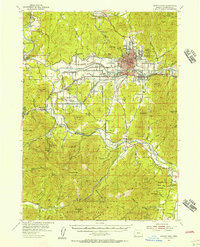 1954 Grants Pass1956 Print · USGSGrants Pass and the surrounding river valleys are captured here in the mid-fifties, showing a landscape defined by the Rogue River and timbered mountain ranges. Local historians can trace family-named schools and early mining operations, from Jerome Prairie Sch to the Humdinger Mine and Sloan Cem.4 unique versions available
 - 1955 Map of Medford, 1964 Print
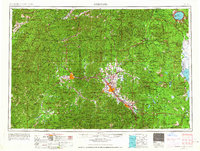 1955 Medford1964 Print · USGSSouthern Oregon's valley towns and high peaks are captured here in the mid-1950s, showing the region before the completion of the modern interstate system. Genealogists and historians can trace the development of timber and mining outposts from Wolf Creek to Butte Falls and the early roads to Crater Lake.3 unique versions available
 - 1957 Map of Medford
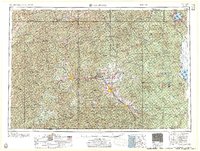 1957 Medford1957 Print · USGSSouthern Oregon during the mid-fifties is captured here as a region of growing valley cities and vast timberlands. Genealogists and historians can trace the rail-and-road corridors connecting Medford, Jacksonville, and Grants Pass to more remote locales like Wolf Creek or Butte Falls.
 - 1958 Map of Medford
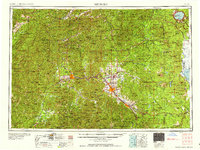 1958 Medford1958 Print · USGSSouthern Oregon's Rogue River valley thrived in the 1950s as a crossroads of rail and road. Researchers can trace the legacy of timber and tourism through Southern Pacific RR lines and landmarks like Crater Lake and Oregon Caves National Monument.
 - 1974 Map of Grants Pass NW, 1977 Print
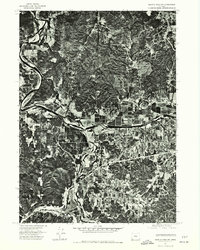 1974 Grants Pass NW1977 Print · USGSThe confluence of the Rogue and Applegate rivers is captured here during the mid-1970s, showing the intersection of Oregon timberland and valley agriculture. Researchers can trace the exact 1974 layout of Wilderville and the winding banks of the Rogue River.
 - 1974 Map of Grants Pass NE, 1979 Print
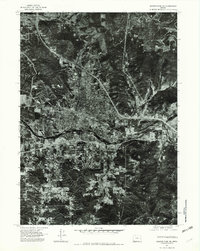 1974 Grants Pass NE1979 Print · USGSGrants Pass is captured during a mid-seventies period of expansion as the city spans the banks of the Rogue River. Researchers can trace the layout of residential neighborhoods and industrial sites near Gilbert Creek and Grants Pass Peak.2 unique versions available
 - 1986 Map of Wilderville
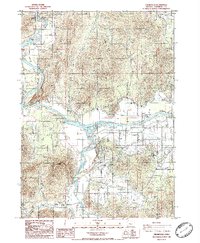 1986 Wilderville1986 Print · USGSIn the mid-1980s, the rural valleys of Josephine County centered on the active waters of the Rogue. Researchers can trace the path of the Old Railroad Grade and locate local landmarks such as the Cemetery near Wilderville or the confluence at Applegate River.
 - 1986 Map of Grants Pass
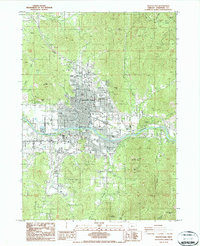 1986 Grants Pass1986 Print · USGSGrants Pass and the Rogue River valley are captured in the mid-1980s, showcasing the transition from industrial mining to a regional residential hub. Researchers can trace the Jewett Mine, explore the County Fairgrounds, or locate the Croxton Pioneer Memorial Park.
 - 1989 Map of Grants Pass, 1990 Print
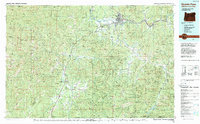 1989 Grants Pass1990 Print · USGSSouthern Oregon's river valleys and mountain ranges are captured here in the late eighties, just as the region’s recreation and transit networks were maturing. Local historians can trace old settlements like Waldo and Holland or follow the Southern Pacific line through Grants Pass.
 - 1996 Map of Grants Pass, 1999 Print
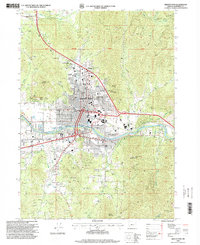 1996 Grants Pass1999 Print · USGSGrants Pass transitioned through the late twentieth century as a bustling river town surrounded by historic gold and quartz mines. Researchers can trace the development of the Rogue River corridor through landmarks like the Ida Mine, County Fairgrounds, and Croxton-Pioneer Memorial Park.
 - 1996 Map of Wilderville, 1999 Print
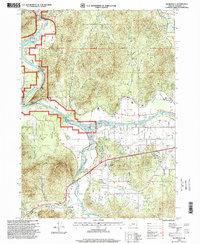 1996 Wilderville1999 Print · USGSThe Josephine County riverfront in the mid-nineties shows a landscape of established communities and active waterways. Researchers can locate the Wilderville settlement and Cemetery, or trace water features like the Main Canal and the Applegate River.
End of results
Showing maps 1-12 of 12
Top cities near Grants Pass
Top neighborhoods of Grants Pass
Frequently asked questions
- What are the different types of historical maps available for Grants Pass?
- What is the oldest map of Grants Pass?
- Where can I purchase historical maps of Grants Pass for my home or office?
- Where can I download high-res historical maps of Grants Pass?
- Are there historical topographic maps available for Grants Pass?
- Is there historical aerial imagery available for Grants Pass?
- Where are historical maps of Grants Pass sourced from?