Old Maps of Young, Oregon for Metal Detecting
Plan your next treasure hunt with 16 historic maps of Young. Find old homesites, ghost towns, trails, and gathering spots that may be lost to time — perfect for identifying promising metal detecting locations.
- Locate forgotten sites: Uncover places like long-lost settlements, abandoned rail lines, or gathering spots.
- Plan better hunts: Use map overlays combined with LiDAR or satellite views to narrow in on historically rich areas.
- Made for detectorists: Thousands of hobbyists use these maps to discover relics, coins, and hidden history.
Use these historic maps to boost your research and find new opportunities beneath the surface of Young.
Young, OR maps
(16)- 1925 Map of Stayton
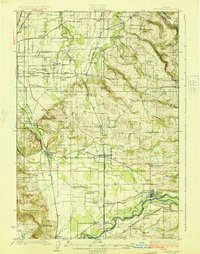 1925 Stayton1925 Print · USGSMarion County in the mid-1920s reveals a dense network of country schools and state institutions linked by the Southern Pacific railroad. Genealogists and historians can trace the foundations of local communities through landmarks like the State Training School, Victor Point School, and Willard Church.3 unique versions available
 - 1941 Map of Stayton
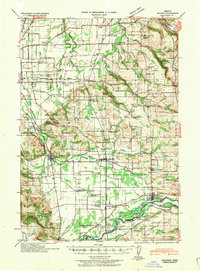 1941 Stayton1941 Print · USGSMarion County agriculture and industry are in full swing just before the war as rail lines connect the Waldo Hills to the river. Trace the locations of dozens of vanished rural schoolhouses like Rocky Point School and rail stops at Durbin or Gesner.
 - 1953 Map of Salem
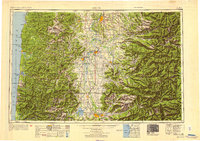 1953 Salem1953 Print · USGSMid-century Oregon comes to life through this detailed survey of the Willamette Valley and the adjacent Pacific coastline. Researchers can trace the rail lines of the Southern Pacific RR, visit rural hubs like Fairview School, or locate coastal landmarks like the Yaquina Head Lighthouse.
 - 1954 Map of Salem
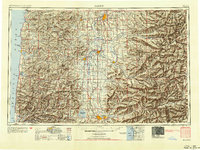 1954 Salem1954 Print · USGSMid-century Western Oregon is centered on the productive Willamette River valley as its cities and infrastructure expand toward the mountains. Genealogists and historians can trace the rail lines of the Southern Pacific RR and Oregon Electric Ry through towns like Dallas, Independence, and Brownsville.
 - 1957 Map of Stayton, 1959 Print
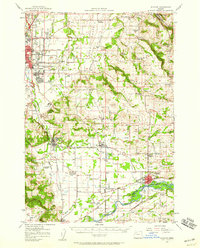 1957 Stayton1959 Print · USGSMarion County farming communities and the eastern fringes of the state capital are captured here during the late fifties. Genealogists can trace family names and rural landmarks across the Waldo Hills, including the John T Wisner Cemetery and numerous country schools like Rickey School.2 unique versions available
 - 1960 Map of Salem, 1968 Print
 1960 Salem1968 Print · USGSThe Willamette Valley and the surrounding mountain ranges are shown here in the 1960s during a period of significant reservoir construction. Genealogists and historians can trace rail lines like the Oregon Electric and find communities from Lincoln City on the coast to Sweet Home and Mill City in the foothills.2 unique versions available
 - 1962 Map of Salem
 1962 Salem1962 Print · USGSThe Willamette Valley and the surrounding Oregon ranges are captured here in the early sixties, showing the vital growth of the state's primary agricultural and academic corridor. Researchers can trace the mid-century footprints of Oregon State University and the University of Oregon, alongside rural landmarks like Camp Adair and Black Butte Mine.
 - 1963 Map of Salem
 1963 Salem1963 Print · USGSMid-century Oregon comes into focus as the Willamette Valley’s timber and agricultural industries meet the growing campuses of Oregon State University and the University of Oregon. Researchers can trace old rail lines like the Oregon Electric Railway and locate family plots at Siletz Cem or Dallas Cem.
 - 1969 Map of Stayton, 1971 Print
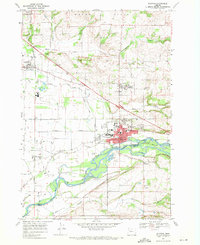 1969 Stayton1971 Print · USGSThe fertile Willamette Valley transitions into the foothills of the Cascades during the late sixties. Researchers can trace family history through numerous rural burial grounds like Lone Fir Cem and Wisner Cem, or locate landmarks in Stayton and Aumsville.2 unique versions available
 - 1983 Map of North Santiam River, 1984 Print
 1983 North Santiam River1984 Print · USGSThe western Cascades and Willamette Valley transition in the early eighties, from the state capital to the high timberlands. Genealogists and historians can trace rail lines like the Southern Pacific and explore communities from Mill City to Silver Falls City.
 - 1991 Map of North Santiam River, 1993 Print
 1991 North Santiam River1993 Print · USGSMarion and Linn counties come into focus in the early 1990s as the Santiam River valley transitions from the Willamette Valley floor to the Cascade peaks. Researchers can trace timber and rail history through Mill City, locate family landmarks near Stayton, or explore the boundaries of Silver Falls State Park.
 - 2011 Map of Stayton, 2011 Print
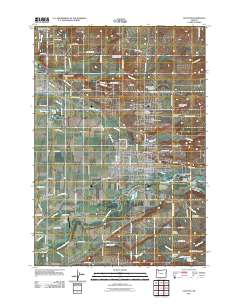 2011 Stayton2011 Print · USGSCovers Young, including Stayton, Aumsville, and other nearby areas
 - 2014 Map of Stayton, 2014 Print
 2014 Stayton2014 Print · USGSCovers Young, including Stayton, Aumsville, and other nearby areas
 - 2017 Map of Stayton, 2017 Print
 2017 Stayton2017 Print · USGSCovers Young, including Stayton, Aumsville, and other nearby areas
 - 2020 Map of Stayton, 2020 Print
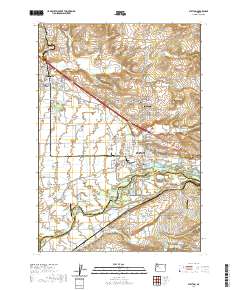 2020 Stayton2020 Print · USGSCovers Young, including Stayton, Aumsville, and other nearby areas
 - 2023 Map of Stayton, 2023 Print
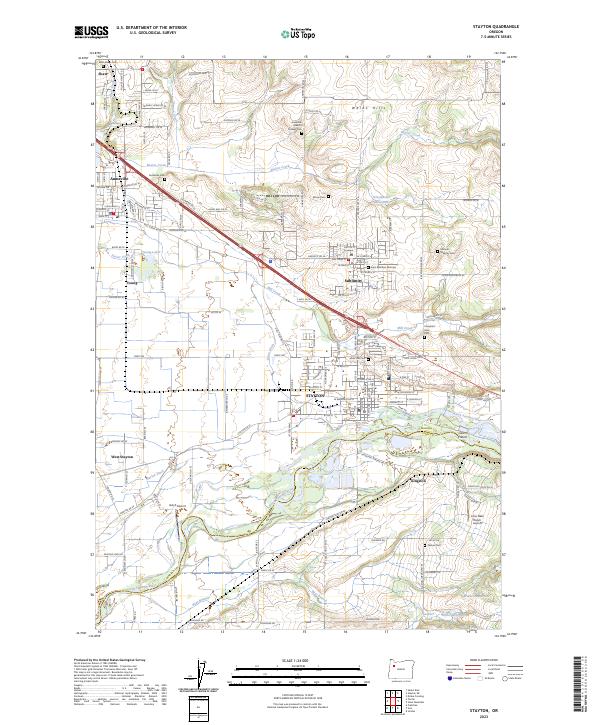 2023 Stayton2023 Print · USGSMarion and Linn counties appear in this contemporary survey, showcasing the enduring agricultural and hydraulic networks east of Salem. Researchers can trace family history through numerous sites like Saint Boniface Old Cem and the Lone Oak Cem.
End of results
Showing maps 1-16 of 16
Top cities near Young
- Salem historical maps
- Albany historical maps
- Keizer historical maps
- Silverton historical maps
- Stayton historical maps
- Aumsville historical maps
See more
Frequently asked questions
- What are the different types of historical maps available for Young?
- What is the oldest map of Young?
- Where can I purchase historical maps of Young for my home or office?
- Where can I download high-res historical maps of Young?
- Are there historical topographic maps available for Young?
- Is there historical aerial imagery available for Young?
- Where are historical maps of Young sourced from?