Old Maps of Mahoning, Dunbar Township
Explore 16 old maps of Mahoning, spanning from 1900 to today. These high-resolution historic maps reveal how streets, neighborhoods, landmarks, and natural features evolved over time — perfect for genealogy, metal detecting, research, and local history exploration.
What you can do with these maps:
- See how Mahoning changed over time: Compare historical maps to modern-day views to trace roads, homesites, rail lines & more.
- View detailed metadata: Each map includes creators, publishers, year, scale, and archive source.
- Overlay maps with satellite & LiDAR: Visualize the past alongside modern tools to explore terrain & human change.
- Trusted historical sources: Maps sourced from the USGS, Library of Congress, and other archives.
- Access maps your way: View online, download high-res files, or order prints for personal or research use.
Start exploring old maps of Mahoning to uncover forgotten places, hidden landmarks, and the deep history beneath your feet.
Mahoning, Dunbar Township maps
(16)- 1900 Map of Uniontown
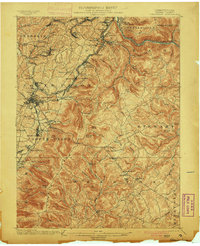 1900 Uniontown1900 Print · USGSFayette County at the turn of the century shows a landscape defined by the iron and coal industries and early American frontier history. Researchers can locate significant sites like Fort Necessity, Braddocks Grave, and the path of the National Pike.5 unique versions available
 - 1931 Map of Uniontown, 1956 Print
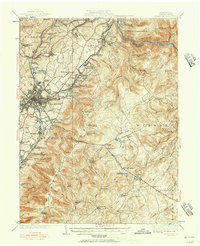 1931 Uniontown1956 Print · USGSFayette County is captured in the early 1930s during a period of transition for its mountain communities and industrial furnace towns. Genealogists can trace family roots at Sylvan Heights Cem or locate the rural Hughes Sch and Wharton Furnace.2 unique versions available
 - 1939 Map of Uniontown
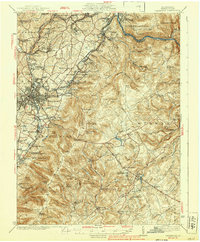 1939 Uniontown1939 Print · USGSFayette County was a powerhouse of industry and history during the 1930s. Genealogists and historians can trace the coke ovens and colliery towns from Juniatta Ovens to Lemont Furnace, or locate the Fort Necessity Battlefield Site.2 unique versions available
 - 1948 Map of Cumberland
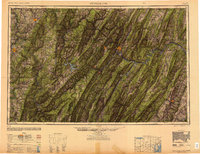 1948 Cumberland1948 Print · USGSMid-century Appalachia and the Shenandoah Valley are shown in detail, documenting the industrial and transportation hubs of the tri-state area. Genealogists can trace family roots through settlements like Double Tollgate and Bunker Hill or along the Baltimore & Ohio RR.3 unique versions available
 - 1952 Map of Cumberland
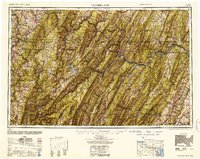 1952 Cumberland1952 Print · USGSThe Potomac Highlands and the Shenandoah Valley are revealed in this early 1950s survey of the Appalachian interior. Researchers can trace the river-and-rail corridors connecting Cumberland, Winchester, and the recreational waters of Deep Creek Lake.
 - 1956 Map of Cumberland, 1966 Print
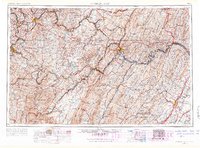 1956 Cumberland1966 Print · USGSThe tri-state Highlands in the mid-1950s show a landscape shaped by coal, timber, and the massive presence of the Baltimore & Ohio RR. Researchers can trace the industrial corridor from Cumberland through the Allegheny Mountains to mountain retreats like Deep Creek Lake.6 unique versions available
 - 1957 Map of Cumberland
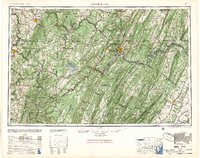 1957 Cumberland1957 Print · USGSThe Potomac River valley and the ridges of the Allegheny Front define this mid-century landscape at the intersection of Maryland, West Virginia, and Pennsylvania. Trace the steam-era rail lines of the Baltimore and Ohio RR or locate rural landmarks like St Stephens Church and Stony River Dam.
 - 1961 Map of Cumberland
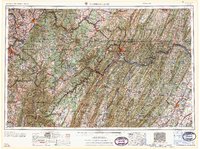 1961 Cumberland1961 Print · USGSThe tri-state highlands of Maryland, West Virginia, and Pennsylvania are shown in the mid-twentieth century as a complex landscape of ridges and river valleys. Researchers can trace the winding Potomac River and find old rail-and-river towns like Cumberland, Keyser, and Morgantown.
 - 1962 Map of Cumberland
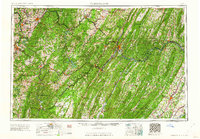 1962 Cumberland1962 Print · USGSThe central Appalachians meet at the height of the mid-century industrial era, showing the rugged topography between Morgantown and Winchester. Genealogists can trace family lands near Fort Necessity or along the vital Baltimore & Ohio RR corridors.
 - 1963 Map of Uniontown, 1965 Print
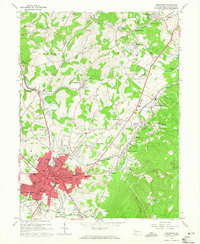 1963 Uniontown1965 Print · USGSUniontown and the surrounding Fayette County hills are captured here in the early sixties, a landscape defined by mining heritage and deep-rooted parishes. Genealogists and local historians can trace family locations through numerous sites like Calvary Cem, Vances Mill, and the many schools of North Union.3 unique versions available
 - 1979 Map of Morgantown, 1983 Print
 1979 Morgantown1983 Print · USGSThe northern Appalachian borderlands are captured here in the late seventies, showing the tri-state area of West Virginia, Pennsylvania, and Maryland. Genealogists and historians can trace the Mason and Dixon Line through mountain settlements like Markleysburg and across the Youghiogheny River Lake.
 - 2010 Map of Uniontown, 2010 Print
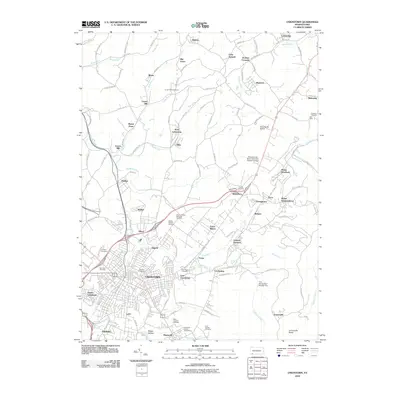 2010 Uniontown2010 Print · USGSThe Fayette County seat and its surrounding industrial townships are shown in detail during the early 2010s. Local researchers can trace family roots through numerous sites like Oak Hill Cemetery, Saint Josephs Cemetery, and the historic settlement at Lemont Furnace.
 - 2013 Map of Uniontown, 2013 Print
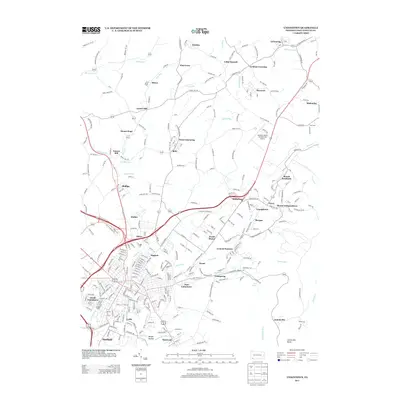 2013 Uniontown2013 Print · USGSFayette County at the start of the twenty-first century reveals a dense network of residential patches and aviation infrastructure. Genealogists and local historians can trace the streets of South Uniontown or locate the storied grounds of Lemont Furnace and Jumonville Rocks.
 - 2016 Map of Uniontown, 2016 Print
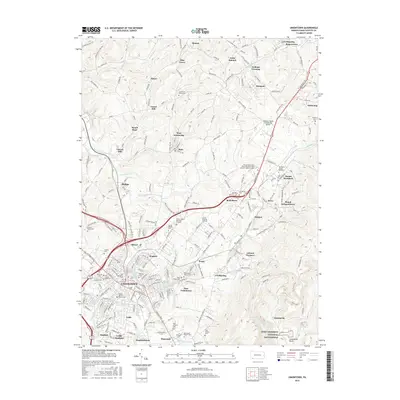 2016 Uniontown2016 Print · USGSUniontown and its surrounding coal-patch towns are captured here in the mid-2010s, showing the intersection of heavy industry and historical preservation. Genealogists can trace family plots at Oak Grove Cem or locate former works like Lemont Furnace.
 - 2019 Map of Uniontown, 2019 Print
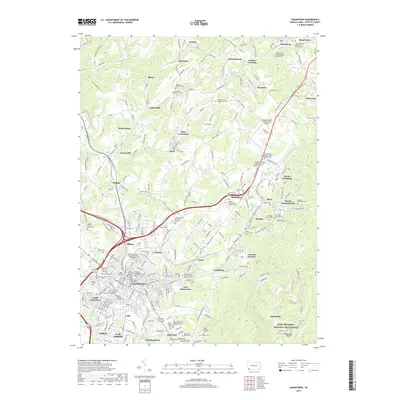 2019 Uniontown2019 Print · USGSFayette County’s industrial and civic heart is captured here in the late twenty-tens, showing the dense settlement of Uniontown alongside the rising terrain of Laurel Hill. Genealogists can locate dozens of burial sites like Old Laurel Hill Presbyterian Cem and the Hebrew Cem Association Burial Grounds.
 - 2023 Map of Uniontown, 2023 Print
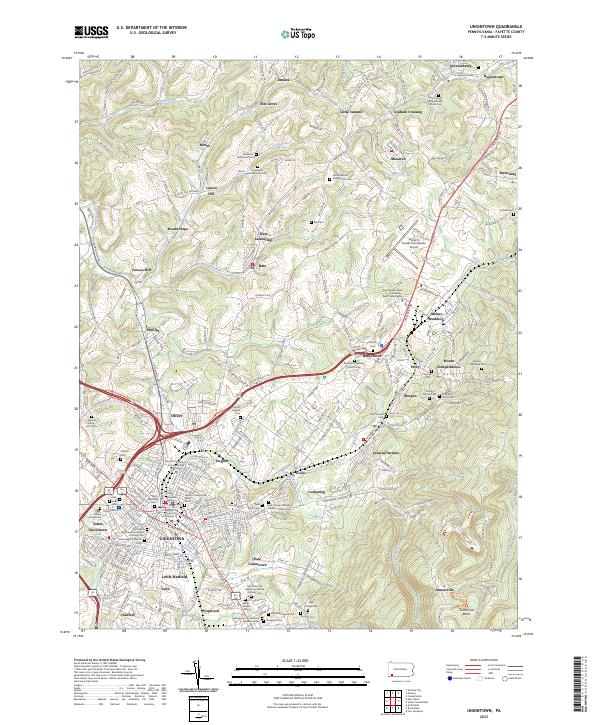 2023 Uniontown2023 Print · USGSThe Fayette County seat and its surrounding coal-patch heritage are captured here in the 2020s. Genealogists can trace family names through dozens of sites like Old Laurel Hill Presbyterian Cem and the Zaring-Matthews Cem.
End of results
Showing maps 1-16 of 16
Top cities near Mahoning
- Uniontown historical maps
- Connellsville historical maps
- Redstone historical maps
- Scottdale historical maps
- Mount Pleasant historical maps
- Springhill Township historical maps
See more
Frequently asked questions
- What are the different types of historical maps available for Mahoning?
- What is the oldest map of Mahoning?
- Where can I purchase historical maps of Mahoning for my home or office?
- Where can I download high-res historical maps of Mahoning?
- Are there historical topographic maps available for Mahoning?
- Is there historical aerial imagery available for Mahoning?
- Where are historical maps of Mahoning sourced from?