Old Maps of Georges Township, Pennsylvania for Academic Research
Study the evolution of Georges Township with 55 high-resolution historic maps. Whether you're teaching, researching, or modeling changes in land use, these maps provide essential visual documentation of urban, environmental, and geographic change.
- Analyze long-term change: Track patterns in development, transportation, and natural features.
- Ideal for environmental or urban studies: Support academic projects with primary historical map data.
- Use in the classroom or lab: Educators and researchers rely on these maps to bring historical context to life.
These maps are a powerful tool for teaching, research, and visualizing how Georges Township has changed over the decades.
Georges Township, PA maps
(55)- 1900 Map of Uniontown
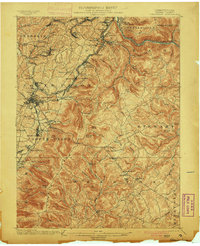 1900 Uniontown1900 Print · USGSFayette County at the turn of the century shows a landscape defined by the iron and coal industries and early American frontier history. Researchers can locate significant sites like Fort Necessity, Braddocks Grave, and the path of the National Pike.5 unique versions available
 - 1900 Map of Masontown
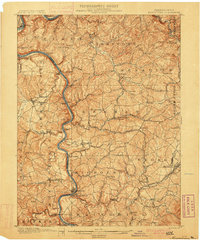 1900 Masontown1900 Print · USGSThe Monongahela River valley was a hub of transit and industry at the turn of the century, defined by its numerous ferry crossings and coal-country junctions. Researchers can trace historic river crossings like McCanns Ferry, follow the National Pike, and locate vanished rail stops at Ache Junction.
 - 1902 Map of Morgantown
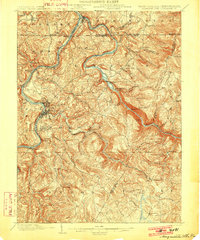 1902 Morgantown1902 Print · USGSMorgantown and the Monongahela River corridor appear here at the dawn of the twentieth century, captured during a period of industrial growth. Genealogists and historians can trace old iron industry sites like Clinton Furnace, river crossings at Ice's Ferry, and early rail routes.5 unique versions available
 - 1903 Map of Masontown
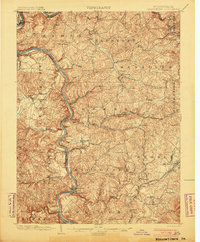 1903 Masontown1903 Print · USGSThe Monongahela River valley at the turn of the century was a vital artery of ferries and river locks connecting Fayette and Greene Counties. Genealogists and local historians can trace family roots through riverfront landings and towns like Greensboro, Masontown, and Smithfield.4 unique versions available
 - 1904 Map of Bruceton
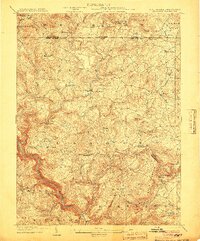 1904 Bruceton1904 Print · USGSPreston County was a landscape of mountain ridges and milling hamlets shortly after the turn of the century. Genealogists can trace family roots through upland settlements like Clifton Mills, Hazelton, and the rural Cuzzart P.O.3 unique versions available
 - 1925 Map of Morgantown
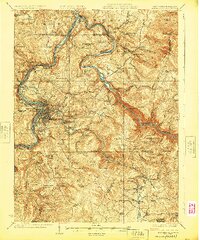 1925 Morgantown1925 Print · USGSMorgantown and the Monongahela River valley are shown in the mid-1920s as industrial rail corridors and mountain settlements expanded. Trace old family schoolhouses, mining-era rail stops at Dellslow Sta, and the historic Laurel Iron Works near the Cheat River.2 unique versions available
 - 1926 Map of Bruceton
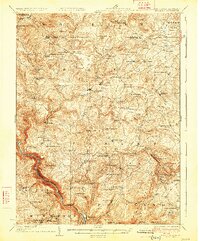 1926 Bruceton1926 Print · USGSPreston County and the Pennsylvania borderlands are captured here in the mid-twenties, a time when mountain life was centered on rural mills and schools. Genealogists can trace family footprints at Old Brick Church, Clifton Mills, and the Gaflisch Mine.2 unique versions available
 - 1931 Map of Uniontown, 1956 Print
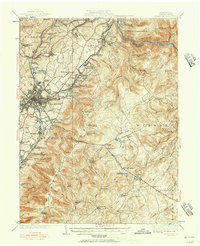 1931 Uniontown1956 Print · USGSFayette County is captured in the early 1930s during a period of transition for its mountain communities and industrial furnace towns. Genealogists can trace family roots at Sylvan Heights Cem or locate the rural Hughes Sch and Wharton Furnace.2 unique versions available
 - 1931 Map of Masontown, 1957 Print
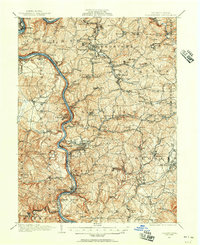 1931 Masontown1957 Print · USGSFayette County’s industrial landscape is captured here during the 1930s, showing the high-water mark of the regional coal and coke era. Genealogists and historians can trace company towns and numbered mines like Tower Hill No 1 and Thompson No 2 alongside river crossings like Crows Ferry.
 - 1931 Map of Bruceton Mills, 1962 Print
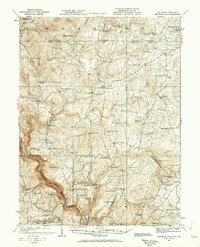 1931 Bruceton Mills1962 Print · USGSNorthern Preston County and the Pennsylvania border are shown in the 1930s as a landscape of rural mills and mountain schools. Genealogists can locate family names at Glade Farms, Clifton Mills, and the Old Brick Church.
 - 1931 Map of Morgantown, 1962 Print
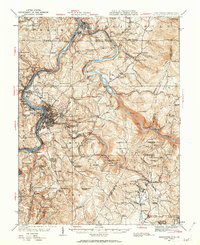 1931 Morgantown1962 Print · USGSMorgantown and the Monongahela River valley are shown here during the early twentieth-century peak of the regional rail-and-river economy. Genealogists can trace family names through numerous rural landmarks like Lazzell School, Burns Chapel, and Clinton Furnace.
 - 1933 Map of Bruceton
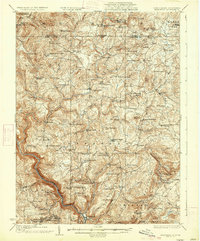 1933 Bruceton1933 Print · USGSPreston County and the Pennsylvania borderlands are shown here in the early 1930s, defined by a deep-rooted network of rural schools and milling sites. Researchers can trace family history through dozens of local landmarks like Clifton Mills, the Old Brick Church, and Caflisch Mine.3 unique versions available
 - 1933 Map of Morgantown
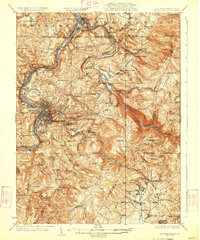 1933 Morgantown1933 Print · USGSMorgantown and the surrounding Monongalia County river valleys are captured here in the early 1930s during a period of industrial maturity. Genealogists and historians can trace family locations near Clinton Furnace, Maidsville PO and Sta, and McClure Chapel.3 unique versions available
 - 1935 Map of Masontown
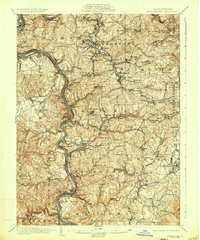 1935 Masontown1935 Print · USGSFayette and Greene Counties come alive in the 1930s as the river-and-rail economy of the Monongahela Valley reaches its peak. Genealogists can trace family roots through numerous country schools like Christopher Sch and historic sites such as Friendship Hill.2 unique versions available
 - 1939 Map of Uniontown
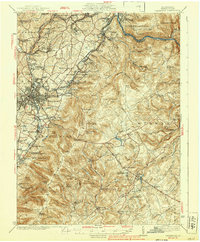 1939 Uniontown1939 Print · USGSFayette County was a powerhouse of industry and history during the 1930s. Genealogists and historians can trace the coke ovens and colliery towns from Juniatta Ovens to Lemont Furnace, or locate the Fort Necessity Battlefield Site.2 unique versions available
 - 1948 Map of Cumberland
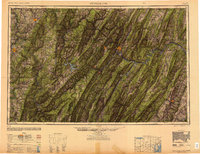 1948 Cumberland1948 Print · USGSMid-century Appalachia and the Shenandoah Valley are shown in detail, documenting the industrial and transportation hubs of the tri-state area. Genealogists can trace family roots through settlements like Double Tollgate and Bunker Hill or along the Baltimore & Ohio RR.3 unique versions available
 - 1952 Map of Cumberland
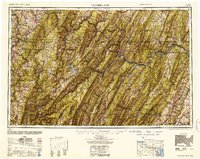 1952 Cumberland1952 Print · USGSThe Potomac Highlands and the Shenandoah Valley are revealed in this early 1950s survey of the Appalachian interior. Researchers can trace the river-and-rail corridors connecting Cumberland, Winchester, and the recreational waters of Deep Creek Lake.
 - 1956 Map of Cumberland, 1966 Print
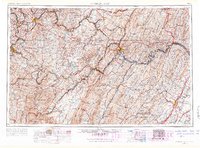 1956 Cumberland1966 Print · USGSThe tri-state Highlands in the mid-1950s show a landscape shaped by coal, timber, and the massive presence of the Baltimore & Ohio RR. Researchers can trace the industrial corridor from Cumberland through the Allegheny Mountains to mountain retreats like Deep Creek Lake.6 unique versions available
 - 1957 Map of Cumberland
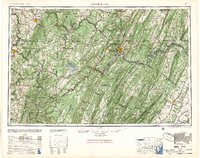 1957 Cumberland1957 Print · USGSThe Potomac River valley and the ridges of the Allegheny Front define this mid-century landscape at the intersection of Maryland, West Virginia, and Pennsylvania. Trace the steam-era rail lines of the Baltimore and Ohio RR or locate rural landmarks like St Stephens Church and Stony River Dam.
 - 1960 Map of Lake Lynn, 1961 Print
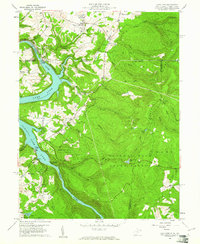 1960 Lake Lynn1961 Print · USGSThe northern West Virginia borderlands appear in the early sixties as a landscape of river-driven industry and growing state forests. Trace early family landmarks like Sugar Grove Sch, the historic Clay Furnace, and the winding route of the Baltimore and Ohio railroad.9 unique versions available
 - 1960 Map of Bruceton Mills, 1961 Print
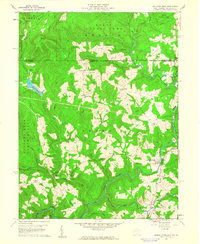 1960 Bruceton Mills1961 Print · USGSThe West Virginia and Pennsylvania border region in the early sixties shows a landscape of timbered ridges and river valleys. Genealogists can locate family landmarks like Mountain Grove Sch, St Peters Cem, and the site of the Old Valley Furnace.5 unique versions available
 - 1961 Map of Cumberland
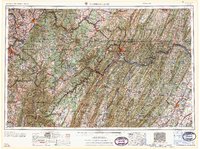 1961 Cumberland1961 Print · USGSThe tri-state highlands of Maryland, West Virginia, and Pennsylvania are shown in the mid-twentieth century as a complex landscape of ridges and river valleys. Researchers can trace the winding Potomac River and find old rail-and-river towns like Cumberland, Keyser, and Morgantown.
 - 1962 Map of Cumberland
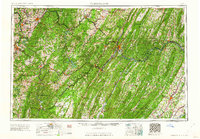 1962 Cumberland1962 Print · USGSThe central Appalachians meet at the height of the mid-century industrial era, showing the rugged topography between Morgantown and Winchester. Genealogists can trace family lands near Fort Necessity or along the vital Baltimore & Ohio RR corridors.
 - 1964 Map of Brownfield, 1965 Print
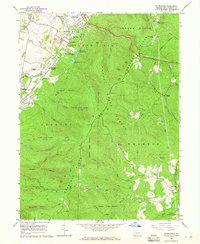 1964 Brownfield1965 Print · USGSFayette County’s industrial and natural landscape is captured here in the mid-1960s as mining and iron heritage meet the forested slopes of Chestnut Ridge. Genealogists and historians can trace family sites at Little White Rock Cem, Oliphant Furnace, and the rural South Union Sch.4 unique versions available
 - 1964 Map of New Salem, 1965 Print
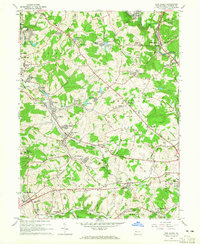 1964 New Salem1965 Print · USGSFayette County’s industrial heartland is seen here during the mid-1960s, a period of transition for its coal and coke communities. Genealogists and historians can trace family roots through settlements like Revere (Uledi PO), Cardale, and Footedale, or locate landmarks such as the Old Toll House.4 unique versions available
Showing maps 1-25 of 55
Top cities near Georges Township
- Morgantown historical maps
- Uniontown historical maps
- Connellsville historical maps
- Luzerne Township historical maps
- Westover historical maps
- Masontown historical maps
See more
Top neighborhoods of Georges Township
- Collier historical maps
- Gilmore historical maps
- Haydentown historical maps
- Highhouse historical maps
- Ruble Mill historical maps
- Shoaf historical maps
See more
Frequently asked questions
- What are the different types of historical maps available for Georges Township?
- What is the oldest map of Georges Township?
- Where can I purchase historical maps of Georges Township for my home or office?
- Where can I download high-res historical maps of Georges Township?
- Are there historical topographic maps available for Georges Township?
- Is there historical aerial imagery available for Georges Township?
- Where are historical maps of Georges Township sourced from?