1900s (20th Century) Maps of Howe Township, Pennsylvania
Explore 16 historic maps of Howe Township from the 1900s (20th Century). These maps offer a rare glimpse into what life looked like during the 1900s — showing old roads, neighborhoods, homes, and landmarks that have changed or disappeared over time.
Whether you're researching your family's past, planning a metal detecting trip, or studying how Howe Township's landscape evolved across the 1900s, these high-resolution maps are a powerful tool for exploring the history of this region.
- Focus on a specific era: All maps on this page are from the 1900s, giving you a focused view of this time period.
- See what’s changed: Compare century-old streets, trails, and buildings to today's modern landscape using overlays and satellite layers.
- Research with precision: Use these maps for genealogy, historical research, land use analysis, or educational projects.
- View, download, or print: Maps are fully viewable online in high resolution, and can be downloaded or printed for your own records.
Start exploring Howe Township's history through authentic maps from the 1900s. This is your window into the past.
Howe Township, PA maps
(16)- 1934 Map of Kane
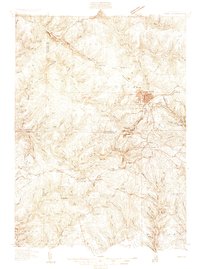 1934 Kane1934 Print · USGSThe timber and oil lands of McKean and Elk counties are captured here in the mid-1930s as a network of railroads and pipelines. Researchers can trace family roots in settlements like De Young PO, locate CCC Camp No 7, or find the Greendale Sch.3 unique versions available
 - 1935 Map of Sheffield
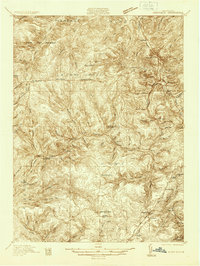 1935 Sheffield1935 Print · USGSThe Allegheny National Forest region in the mid-1930s reveals a landscape of deep timber runs, winding rail lines, and isolated New Deal work camps. Researchers can trace family roots at Cherry Grove Cem or locate forgotten crossroads like Deadmans Corners and Seldom Seen Corners.2 unique versions available
 - 1939 Map of Kane
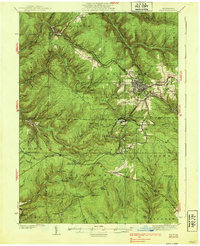 1939 Kane1939 Print · USGSThe northern Pennsylvania plateau in the late 1930s is a landscape of timber-towns and industrial rail sidings. Genealogists and researchers can trace the old Baltimore and Ohio line through Kane, James City, and the rural Russell City De Young P O.3 unique versions available
 - 1941 Map of Sheffield
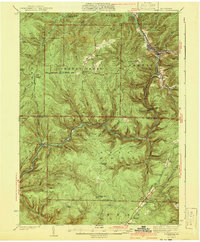 1941 Sheffield1941 Print · USGSForest and Warren Counties are seen here during the early 1940s, a period when local logging and oil activities shaped the landscape. Researchers can trace the Tionesta Valley RR and find remote outposts like Pigeon PO or Seldom Seen Cors.2 unique versions available
 - 1947 Map of Cherry Grove, 1972 Print
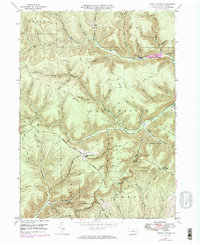 1947 Cherry Grove1972 Print · USGSPotter County's high forest plateaus are captured here as they appeared in the late forties and early seventies. Researchers can trace the old Coudersport and Port Allegany Railroad and locate the Cherry Springs Fire Tower.
 - 1957 Map of Warren, 1964 Print
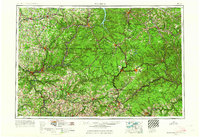 1957 Warren1964 Print · USGSThe northern Pennsylvania oil and timber country comes into focus in the mid-fifties, showing the region before modern highway expansions. Trace the industrial rail networks of the Pennsylvania RR and the early Allegheny River Reservoir near Warren and Oil City.4 unique versions available
 - 1958 Map of Warren
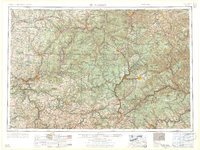 1958 Warren1958 Print · USGSNorthern Pennsylvania’s timber and oil country is captured here during the late fifties, showing the interplay of industrial valleys and vast state forests. Genealogists can trace family connections across the Cornplanter Indian Reservation or through rail hubs like Oil City and Saint Marys.
 - 1959 Map of Warren
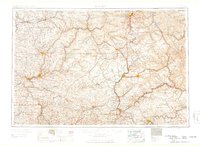 1959 Warren1959 Print · USGSNorthern Pennsylvania's oil and timber country comes alive in this late-fifties study of the forest-clad plateaus. Trace the historic Cornplanter (Indian Reservation), the sprawling Oil Field, and the rail lines of the Pennsylvania RR.2 unique versions available
 - 1966 Map of Russell City, 1967 Print
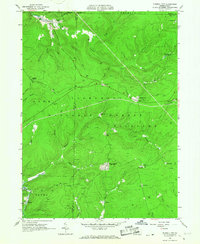 1966 Russell City1967 Print · USGSElk and Forest Counties in the mid-1960s were centers of active timber and energy production within the Allegheny National Forest. Genealogists and researchers can trace the rail-and-resource economy through sites like Russell City, Sheffield Junction, and the numerous gas wells dotting the hills.4 unique versions available
 - 1966 Map of Lynch, 1968 Print
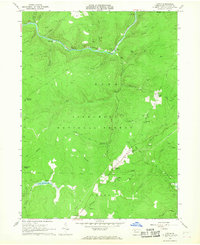 1966 Lynch1968 Print · USGSForest County's deep woods and industrial drainages are captured here in the mid-sixties as oil extraction and forestry shaped the landscape. Genealogists and historians can trace old settlements like Pigeon, Lynch, and Byromtown alongside the Old Railroad Grade.3 unique versions available
 - 1966 Map of Sheffield, 1969 Print
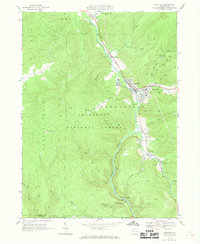 1966 Sheffield1969 Print · USGSWarren and Forest Counties were active hubs of the oil and gas industry in the 1960s, with deep-woods settlements connected by the river and rail. Local historians can trace the footprint of early communities like Henrys Mills and Saybrook alongside landmarks such as St Pauls Ch and the Deer Lick Reservoir.2 unique versions available
 - 1966 Map of Mayburg, 1969 Print
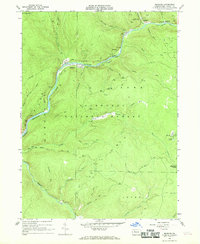 1966 Mayburg1969 Print · USGSForest County during the mid-sixties reveals a deep-woods landscape shaped by resource extraction and early rail lines. Researchers can trace the path of the Old RR Grade through the Allegheny National Forest to find remote locales like Porkey, Blue Jay, and Seldom Seen Corners.3 unique versions available
 - 1966 Map of Cherry Grove, 1970 Print
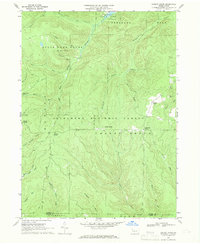 1966 Cherry Grove1970 Print · USGSThe Pennsylvania highlands in the mid-1960s reveal a landscape of forestry, oil extraction, and early recreation. Researchers can trace the Old Railroad Grade and Dunham Siding, or locate the Cherry Grove Cem and Oil Wells scattered across the plateau.4 unique versions available
 - 1971 Map of Warren
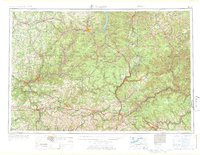 1971 Warren1971 Print · USGSNorth Central Pennsylvania is captured here in the early seventies, showing a landscape defined by industrial centers and massive state forests. Genealogists and historians can trace the rail lines of the Penn Central and Erie Lackawanna connecting towns like Warren, Kane, and Du Bois.
 - 1980 Map of Bradford, 1982 Print
 1980 Bradford1982 Print · USGSNorthern Pennsylvania's oil country and deep forests are captured here during the 1980s. Genealogists and researchers can trace rail-side settlements like Kushequa, Gifford, and Lewis Run or locate specific Oil and Gas Field sites across the plateau.
 - 1983 Map of Warren, 1984 Print
 1983 Warren1984 Print · USGSNorthwestern Pennsylvania at the dawn of the 1980s reveals a landscape defined by the petroleum industry and expansive public lands. Trace the legacy of early oil at Drake Well Memorial Park and Pithole City Historical Site, or locate family sites near Warren State Hospital and Kellettville.
End of results
Showing maps 1-16 of 16
Top cities near Howe Township
- Sheffield Township historical maps
- Wetmore historical maps
- Clarendon historical maps
- Cherry Grove Township historical maps
- Millstone Township historical maps
Top neighborhoods of Howe Township
- Truemans historical maps
- Balltown historical maps
- Blue Jay historical maps
- Pigeon historical maps
- Hastings historical maps
- Iron City historical maps
See more
Frequently asked questions
- What are the different types of historical maps available for Howe Township?
- What is the oldest map of Howe Township?
- Where can I purchase historical maps of Howe Township for my home or office?
- Where can I download high-res historical maps of Howe Township?
- Are there historical topographic maps available for Howe Township?
- Is there historical aerial imagery available for Howe Township?
- Where are historical maps of Howe Township sourced from?