1900s (20th Century) Maps of Conemaugh Township, Pennsylvania
Explore 17 historic maps of Conemaugh Township from the 1900s (20th Century). These maps offer a rare glimpse into what life looked like during the 1900s — showing old roads, neighborhoods, homes, and landmarks that have changed or disappeared over time.
Whether you're researching your family's past, planning a metal detecting trip, or studying how Conemaugh Township's landscape evolved across the 1900s, these high-resolution maps are a powerful tool for exploring the history of this region.
- Focus on a specific era: All maps on this page are from the 1900s, giving you a focused view of this time period.
- See what’s changed: Compare century-old streets, trails, and buildings to today's modern landscape using overlays and satellite layers.
- Research with precision: Use these maps for genealogy, historical research, land use analysis, or educational projects.
- View, download, or print: Maps are fully viewable online in high resolution, and can be downloaded or printed for your own records.
Start exploring Conemaugh Township's history through authentic maps from the 1900s. This is your window into the past.
Conemaugh Township, PA maps
(17)- 1900 Map of Latrobe, 1958 Print
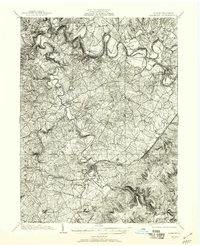 1900 Latrobe1958 Print · USGSThe industrial heart of Westmoreland County is shown at a pivotal moment when the coal and coke industry was reshaping the land. Genealogists and historians can trace the early layouts of Latrobe, Derry, and Blairsville alongside company towns like Whitney and Baggaley.
 - 1902 Map of Latrobe
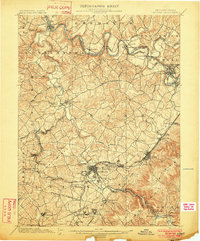 1902 Latrobe1902 Print · USGSWestmoreland County at the opening of the twentieth century was a powerhouse of the American coal and coke industry. Genealogists and industrial historians can trace the early rail networks of the Main Line and locate landmark sites like the St Vincent Monastery and various Coke Ovens.
 - 1902 Map of Elders Ridge, 1957 Print
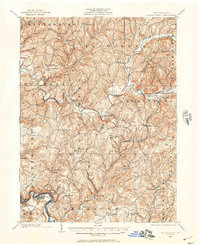 1902 Elders Ridge1957 Print · USGSWestern Pennsylvania at the turn of the century reveals a landscape of deep valleys and rising industrial rail lines. Genealogists can trace family roots through rural hubs like Brick Church, Elderton, and the namesake village of Elders Ridge.2 unique versions available
 - 1903 Map of Latrobe, 1905 Print
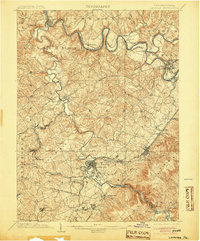 1903 Latrobe1905 Print · USGSWestmoreland County at the turn of the century reveals a landscape defined by the arrival of heavy industry and the winding Conemaugh River. Genealogists can locate family landmarks from the Coke Ovens at Crabtree to the grounds of St. Vincent.6 unique versions available
 - 1904 Map of Elders Ridge
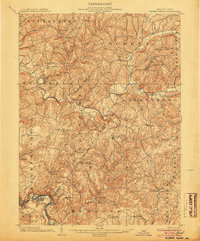 1904 Elders Ridge1904 Print · USGSArmstrong and Indiana Counties are shown here during the early 1900s, when the river-and-rail economy dominated the valley floor. Researchers can trace ancestral roots through rural hamlets like Elders Ridge, Cochran Mills, and Shelocta, or follow the Western Pennsylvania Division (P. R. R.) along the Kiskiminitas River.5 unique versions available
 - 1953 Map of Pittsburgh
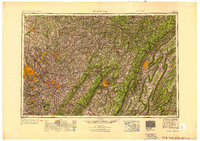 1953 Pittsburgh1953 Print · USGSWestern Pennsylvania's industrial landscape at the start of the fifties shows the steel and rail corridors between Pittsburgh and Altoona. Trace family roots in river towns like Tarentum or follow the Pennsylvania Turnpike across Laurel Hill.
 - 1954 Map of Pittsburgh
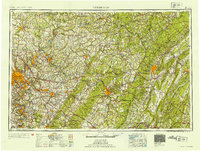 1954 Pittsburgh1954 Print · USGSWestern Pennsylvania in the early fifties remains a powerhouse of heavy industry and vital transit corridors. Genealogists and historians can trace the rail-and-river network connecting Pittsburgh, Johnstown, and Altoona via the Pennsylvania RR and the Lincoln Highway.2 unique versions available
 - 1958 Map of Pittsburgh
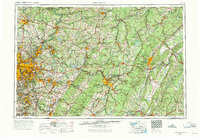 1958 Pittsburgh1958 Print · USGSWestern Pennsylvania in the late fifties shows an industrial heartland defined by the confluence of the Allegheny River and Monongahela River. Researchers can trace the sprawling rail networks of the Pennsylvania RR and find established towns like Butler, Latrobe, and Windber.5 unique versions available
 - 1959 Map of Pittsburgh
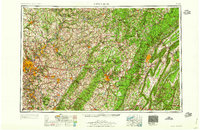 1959 Pittsburgh1959 Print · USGSWestern Pennsylvania in the late fifties is captured here at the height of its industrial era. Genealogists and historians can trace the riverfront growth of Pittsburgh, the rail works at Altoona, and the mountain gaps of Laurel Hill.
 - 1964 Map of Pittsburgh
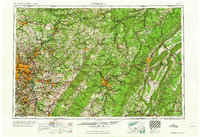 1964 Pittsburgh1964 Print · USGSWestern Pennsylvania in the late fifties and early sixties shows a landscape of powerful river industries and expanding highways. Genealogists and historians can trace the rail corridors of the Pennsylvania RR through industrial hubs like Johnstown, Altoona, and Nanty Glo.
 - 1964 Map of Saltsburg, 1966 Print
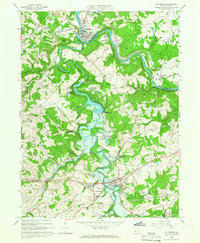 1964 Saltsburg1966 Print · USGSIndiana and Westmoreland Counties during the mid-sixties show a landscape of heavy industry and civil engineering at the junction of two great rivers. Trace the impact of the Loyalhanna Dam on the terrain near Saltsburg and find historic sites like Union Cem and Tunnelton.3 unique versions available
 - 1964 Map of Avonmore, 1966 Print
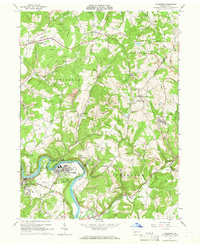 1964 Avonmore1966 Print · USGSThe coal and gas country of the Kiskiminetas valley is captured here in the mid-sixties as extraction and industry shaped local life. Researchers can trace the Pennsylvania Railroad through Avonmore and locate community landmarks like Elders Ridge Joint High Sch and Clarksburg Ch.4 unique versions available
 - 1964 Map of Mc Intyre, 1966 Print
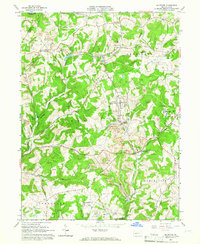 1964 Mc Intyre1966 Print · USGSIndiana and Armstrong counties in the mid-sixties reveal a landscape defined by coal and gas extraction. Genealogists and historians can trace the rail-linked mining towns of Mc Intyre and Coal Run or locate the West Lebanon Cem and Ebenezer Ch.4 unique versions available
 - 1964 Map of Blairsville, 1966 Print
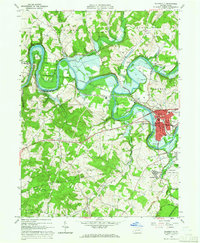 1964 Blairsville1966 Print · USGSThe Conemaugh River valley was a hub of transit and industry in the early sixties, where the steel rails of the Pennsylvania Railroad met the coal mines of Derry. Genealogists can trace family names at Livermore Cem or locate old community landmarks like Old Salem Ch and the Torrance State Hospital.5 unique versions available
 - 1983 Map of Indiana
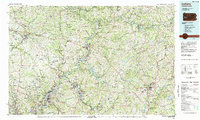 1983 Indiana1983 Print · USGSWestern Pennsylvania in the early eighties shows a landscape of industrial river towns and expanding university campuses. Genealogists can trace family roots through Lucernemines and Spring Church, or locate ancestors in Oakland Cemetery.
 - 1986 Map of Pittsburgh East
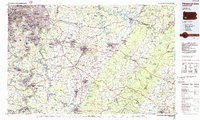 1986 Pittsburgh East1986 Print · USGSWestern Pennsylvania in the mid-eighties shows a landscape defined by industrial rivers and rising mountain ridges. Trace the dense rail networks of CONRAIL and the Pittsburgh and Lake Erie RR connecting historic centers like Monessen, Jeannette, and Connellsville.3 unique versions available
 - 1998 Map of Avonmore, 1999 Print
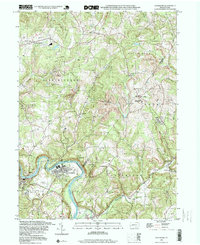 1998 Avonmore1999 Print · USGSThe loop of the Kiskiminetas River defines this landscape in the late nineties, where coal-rich townships meet the river's bend. Genealogists and historians can trace the foundations of local life through the Spring Church, West View Cem, and the Elders Ridge Joint High Sch.
End of results
Showing maps 1-17 of 17
Top cities near Conemaugh Township
- Greensburg historical maps
- White historical maps
- Indiana historical maps
- Jeannette historical maps
- Latrobe historical maps
- Vandergrift historical maps
See more
Top neighborhoods of Conemaugh Township
- Lewisville historical maps
- Foster historical maps
- Bow historical maps
- Tunnelton historical maps
- Clarksburg historical maps
- Nowrytown historical maps
See more
Frequently asked questions
- What are the different types of historical maps available for Conemaugh Township?
- What is the oldest map of Conemaugh Township?
- Where can I purchase historical maps of Conemaugh Township for my home or office?
- Where can I download high-res historical maps of Conemaugh Township?
- Are there historical topographic maps available for Conemaugh Township?
- Is there historical aerial imagery available for Conemaugh Township?
- Where are historical maps of Conemaugh Township sourced from?