1950s Maps of Lycoming County, Pennsylvania
Explore 11 historic maps of Lycoming County from the 1950s. These maps offer a rare glimpse into what life looked like during the 1950s — showing old roads, neighborhoods, homes, and landmarks that have changed or disappeared over time.
Whether you're researching your family's past, planning a metal detecting trip, or studying how Lycoming County's landscape evolved across the 1950s, these high-resolution maps are a powerful tool for exploring the history of this region.
- Focus on a specific era: All maps on this page are from the 1950s, giving you a focused view of this time period.
- See what’s changed: Compare century-old streets, trails, and buildings to today's modern landscape using overlays and satellite layers.
- Research with precision: Use these maps for genealogy, historical research, land use analysis, or educational projects.
- View, download, or print: Maps are fully viewable online in high resolution, and can be downloaded or printed for your own records.
Start exploring Lycoming County's history through authentic maps from the 1950s. This is your window into the past.
Lycoming County, PA maps
(11)- 1950 Map of Lee Fire Tower
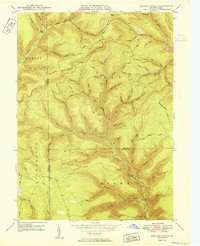 1950 Lee Fire Tower1950 Print · USGSThe Pennsylvania Wilds are captured here at mid-century, showcasing the rugged drainage basins where Potter, Tioga, and Lycoming counties meet. Genealogists and hikers can trace the old Randall Trail, locate the Lee Fire Tower, or find the historical Clay Mine.
 - 1950 Map of Morris
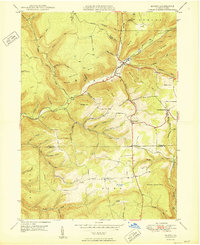 1950 Morris1950 Print · USGSMid-century Tioga County comes alive in this survey of the high hollows and creek valleys surrounding Morris. Genealogists and historians can trace the Erie RR line, locate the Crawford Fire Tower, and explore old rural centers like Hoytville and Oregon Hill.
 - 1953 Map of Benton, 1955 Print
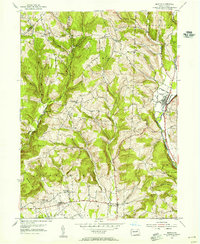 1953 Benton1955 Print · USGSIn the early 1950s, the Fishing Creek valley supported a network of quiet farming townships and small railroad hubs. Genealogists can trace family footprints through sites like Rohrsburg Cem, the Consolidated Sch, and Coles Mill.5 unique versions available
 - 1953 Map of Hughesville, 1956 Print
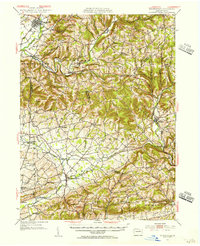 1953 Hughesville1956 Print · USGSThe rural heart of Lycoming and Columbia Counties is captured here in the early fifties, showing a landscape defined by small townships and creek-side settlements. Researchers can locate vanished rural landmarks like Frenchtown Sch, Hendrickson Ch, and the streets of Washingtonville or Jerseytown.3 unique versions available
 - 1953 Map of LaPorte, 1956 Print
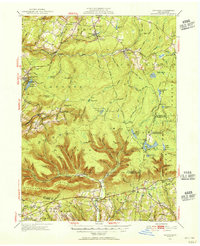 1953 LaPorte1956 Print · USGSSullivan County's plateau country is captured here during the early 1950s, showing a landscape of small coal towns and growing state parks. Researchers can find many rural landmarks, including Painter Mills, Sugarloaf Sch, and the high waters of Ganoga Lake.3 unique versions available
 - 1953 Map of Warrensville, 1956 Print
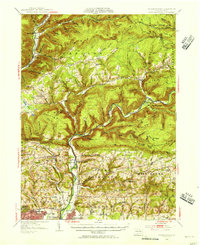 1953 Warrensville1956 Print · USGSThe mountains and valleys of Lycoming County are shown in detail during the early fifties, from the railroad corridor at Bodines to the farms of Montoursville. Genealogists can locate family-named landmarks like Quaker Hill, the Church of the Assumption, and small hamlets such as Barbours or Hoppestown.2 unique versions available
 - 1953 Map of Williamsport, 1956 Print
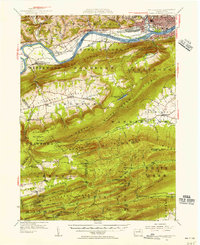 1953 Williamsport1956 Print · USGSThe West Branch Susquehanna River corridor is shown in the early 1950s as a hub of rail and river industry. Genealogists can locate family landmarks from Nippono Park to Elimsport, alongside remote features like the Rauchtown Fire Tower.3 unique versions available
 - 1953 Map of Eagles Mere, 1956 Print
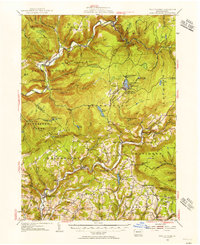 1953 Eagles Mere1956 Print · USGSThe Sullivan County highlands appear in the early 1950s as a landscape of mountain retreats and valley hamlets. Researchers can trace rural landmarks from Picture Rocks to Eagles Mere Park, including Rock Run Ch and the Mawrglen PO.3 unique versions available
 - 1953 Map of Milton, 1956 Print
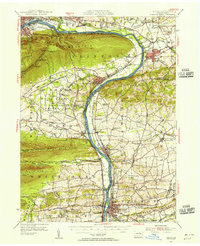 1953 Milton1956 Print · USGSThe Susquehanna Valley thrives during the early fifties, defined by its river-town industries and coal-hauling rail lines. Genealogists can trace family names through country landmarks like Stone Church, Old Furnace, and the U S Military Reservation.2 unique versions available
 - 1954 Map of Williamsport
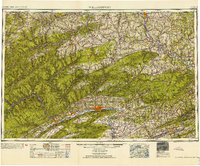 1954 Williamsport1954 Print · USGSNorth-central Pennsylvania in the mid-fifties is defined by the winding West Branch Susquehanna River and its industrial valley. Local historians can trace the massive Susquehanna Ordnance Depot and the extensive rail networks of the Pennsylvania Railroad.
 - 1954 Map of Bloomsburg, 1955 Print
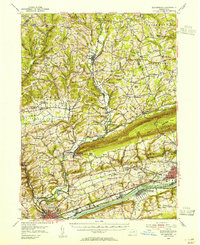 1954 Bloomsburg1955 Print · USGSBloomsburg and the Susquehanna River valley are captured in the mid-fifties, showing the region's transition from riverfront industry to upland farming. Genealogists can trace family names across Coles Mill, Hidlay Ch Cem, and the State Teachers College.2 unique versions available
End of results
Showing maps 1-11 of 11
Top cities of Lycoming County
- Williamsport historical maps
- South Williamsport historical maps
- Montoursville historical maps
- Jersey Shore historical maps
- Montgomery historical maps
- Duboistown historical maps
See more
Frequently asked questions
- What are the different types of historical maps available for Lycoming County?
- What is the oldest map of Lycoming County?
- Where can I purchase historical maps of Lycoming County for my home or office?
- Where can I download high-res historical maps of Lycoming County?
- Are there historical topographic maps available for Lycoming County?
- Is there historical aerial imagery available for Lycoming County?
- Where are historical maps of Lycoming County sourced from?