1940s Maps of Brown Township, Pennsylvania
Explore 11 historic maps of Brown Township from the 1940s. These maps offer a rare glimpse into what life looked like during the 1940s — showing old roads, neighborhoods, homes, and landmarks that have changed or disappeared over time.
Whether you're researching your family's past, planning a metal detecting trip, or studying how Brown Township's landscape evolved across the 1940s, these high-resolution maps are a powerful tool for exploring the history of this region.
- Focus on a specific era: All maps on this page are from the 1940s, giving you a focused view of this time period.
- See what’s changed: Compare century-old streets, trails, and buildings to today's modern landscape using overlays and satellite layers.
- Research with precision: Use these maps for genealogy, historical research, land use analysis, or educational projects.
- View, download, or print: Maps are fully viewable online in high resolution, and can be downloaded or printed for your own records.
Start exploring Brown Township's history through authentic maps from the 1940s. This is your window into the past.
Brown Township, PA maps
(11)- 1943 Map of Hyner
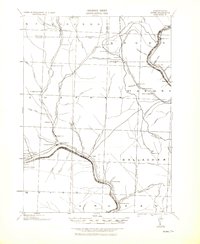 1943 Hyner1943 Print · USGSIn the central Pennsylvania highlands during the mid-1940s, the river and rail lines dictated the life of the valley. Researchers can trace the industrial corridor from Renovo Boro to remote outposts like Slate Run and Young Womanstown.
 - 1943 Map of Waterville
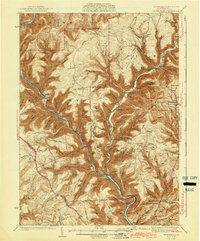 1943 Waterville1943 Print · USGSLycoming County mountain life in the early 1940s centers on the river junctions and rail sidings of the Pine Creek valley. Genealogists and hikers can trace old routes like the Silver Springs Road or find forgotten sites like Ross Siding, Carsontown, and Springer Sch.3 unique versions available
 - 1946 Map of Antrim, 1952 Print
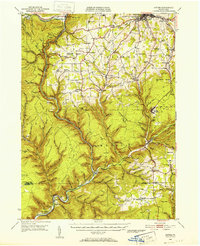 1946 Antrim1952 Print · USGSTioga County in the years following World War II is defined by the deep carving of Pine Creek Gorge and a network of mountain railroads. Genealogists can trace family roots through remote sites like Antrim Cem, Heise Run Sch, and the Cedar Run Ch.2 unique versions available
 - 1946 Map of Renovo East, 1953 Print
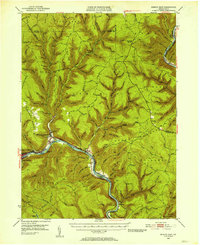 1946 Renovo East1953 Print · USGSThe industrial corridor of the West Branch Susquehanna River is seen here in the mid-1940s, showing the critical rail infrastructure of the Pennsylvania railroad. Genealogists can trace family sites in Gleasonton or Farwell and locate the St Josephs Cem.3 unique versions available
 - 1946 Map of Cedar Run, 1956 Print
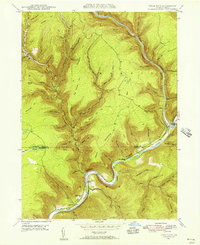 1946 Cedar Run1956 Print · USGSPine Creek Gorge and the rugged Tioga County highlands are captured here in the mid-1940s as the rail-and-river economy still shaped the valley. Researchers can trace family roots near Blackwell Lloyd PO, the Cedar Run Ch, and the remote settlement of Leetonia.4 unique versions available
 - 1946 Map of Slate Run, 1958 Print
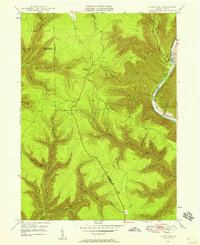 1946 Slate Run1958 Print · USGSThe wilderness of Lycoming and Clinton counties comes into focus in the mid-1940s, highlighting the riverside rail economy and high-plateau landmarks. Genealogists and researchers can trace the New York Central railroad, the Slate Run settlement, and the Pump Station Fire Tower.4 unique versions available
 - 1946 Map of Morris, 1965 Print
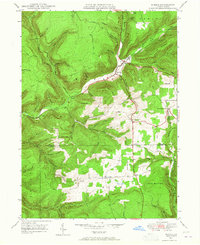 1946 Morris1965 Print · USGSThe mountain valleys of Tioga County come into focus in the 1940s, centered on the creek-side communities of Morris and Hoytville. Researchers can trace the rural network of family cemeteries like Lewis Cem and upland settlements such as Oregon Hill.3 unique versions available
 - 1947 Map of Galeton, 1953 Print
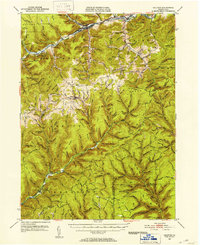 1947 Galeton1953 Print · USGSThe Pennsylvania Wilds around Galeton are captured here just after the war, showing a deeply timbered landscape of mountain ridges and narrow hollows. Genealogists can locate family cemeteries like Phoenix Cem and the legendary ruins of Ole Bull Castle.3 unique versions available
 - 1947 Map of Lee Fire Tower, 1954 Print
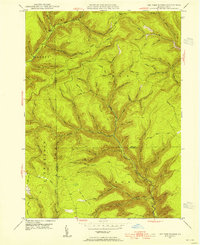 1947 Lee Fire Tower1954 Print · USGSTioga, Potter, and Lycoming counties meet in this 1940s survey of the Pennsylvania Wilds. Researchers can trace historic industrial and forestry landmarks including the Lee Fire Tower, the Clay Mine Trail, and a remote Gas Well along the Cushman Br.5 unique versions available
 - 1948 Map of Cedar Run
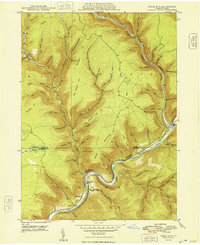 1948 Cedar Run1948 Print · USGSThe Pine Creek Gorge in Tioga County was a center for rail and mountain industry shortly after the war. Local researchers can trace the Central New York rail line through Blackwell, locate Cedar Run Ch, and find the Lloyd P O post office.2 unique versions available
 - 1948 Map of Slate Run
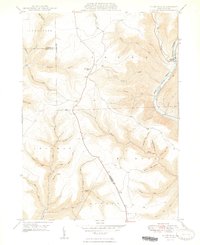 1948 Slate Run1948 Print · USGSThe Pine Creek Valley near the Lycoming and Clinton county line is shown here just after the war, when the New York Central railroad still served the riverside. Genealogists and hikers can trace the remote hollows and high points like the Pump Station Fire Tower and the Gorge near Slate Run.2 unique versions available
End of results
Showing maps 1-11 of 11
Top cities near Brown Township
- Morris Township historical maps
- Gaines Township historical maps
- Gallagher Township historical maps
- Abbott Township historical maps
- Duncan Township historical maps
- Stony Fork historical maps
Top neighborhoods of Brown Township
- Cedar Pines historical maps
- Cedar Run historical maps
- Hilborn historical maps
- Beulah Land historical maps
- Slate Run historical maps
Frequently asked questions
- What are the different types of historical maps available for Brown Township?
- What is the oldest map of Brown Township?
- Where can I purchase historical maps of Brown Township for my home or office?
- Where can I download high-res historical maps of Brown Township?
- Are there historical topographic maps available for Brown Township?
- Is there historical aerial imagery available for Brown Township?
- Where are historical maps of Brown Township sourced from?